Saturday, November 23, 2019

Marilla Ricker: NH's First Woman Attorney and Change Agent


Episode 11B 
When Hope & History Rhyme: 
Marilla Ricker: NH's First Woman Attorney and Change Agent
Marilla Marks Ricker (1840-1920) was a suffragist, philanthropist, lawyer, and freethinker. She was the first female lawyer from New Hampshire, and she broke open a path for women to be accepted into the bar in New Hampshire. She was also the first woman to run for governor in New Hampshire, and the first woman to apply for a federal foreign ambassadorship post. She made significant and lasting contributions to the issues of women's rights and irreligion through her actions and her writings.


Marilla Ricker: Attorney and Change Agent

Featuring UU Farmington Sermon about Marilla by Paul Bailey, Darryl Thompson, Historian, Maureen Raiche Manning, Attorney and Recipient of the Ricker Award 2019, Rep Robert "Renny" Cushing.

Podcast Episode 11A: Marilla Marks Ricker Suffragist
Podcast Episode 11B: Marilla Marks Ricker Lawyer and Reformer
Podcast Episode 11C (Coming): Marilla Marks Ricker Free Thinker


Today the NH bar association has nearly 2000 active female members, about 35 percent of all active attorneys in the state. According to the historical record of the NH Bar Association, the first woman admitted to the New Hampshire Bar Association was Agnes Winifred McLaughlin admitted in 1917.  But McLaughlin was NOT the first woman lawyer practicing in New Hampshire. That honor, and the shoulders upon whom all women attorneys stand belong to Marilla Marks Young Ricker.  Learn about this extraordinary woman's career as a lawyer and advocate for the poor and downtrodden, and hear NH's recipient of the Marilla Ricker Award Attorney Maureen Raiche Manning interviewed about the honor.


Today almost anyone from NH can name dozens of exceedingly fine women lawyers. Jean K. Burling, was the first female judge in NH in 1973.


Attorney Linda S. Delianis was first appointed to the NH Superior Court and then served with distinction as NH's first female Chief Justice of the NH Supreme Court.

Today Associate Justice Carol Ann Conboy from the NH Supreme Court carries on the tradition of service.

Landya Boyer McCafferty (born September 19, 1962) is the Chief United States District Judge of the United States District Court for the District of New Hampshire. She is the first female judge to serve in the District of New Hampshire.

Even today one cannot miss the impact that Kelly Ayotte (1993): First female Attorney General of New Hampshire (2004-2009) continues to have, now in the political arena.

Bar Associations[edit]
  •  
  • Patti Blanchette and Susan B. Carbon:[13][14] First females to serve respectively as the President of the New Hampshire Bar Association (1992-1993; 1993-1994)
  • Maureen Raiche Manning:[15] First female to serve as President of the New Hampshire Women's Bar Association (1998)
  • And there are scores of others: Tina Nadeau, Ellen Arnold, whom I first met when she was counsel to the New Hampshire Senate and has represented Dartmouth College among others, Leslie Nixon, Cathy Green, Donna Brown, Congresswoman Ann McLane Kuster,
  •  
  • All of these remarkable women stand on the shoulders of one extraordinary woman named Marilla Ricker of New Durham, NH.  Who was never formally recognized by the NH Bar Association, though she practiced Law in New Hampshire for the latter part of her life by special dispensation from the NH Supreme Court often in partnership with other NH Attorneys.


True Light: The Life of Marilla Ricker

Elbert Hubbard

I believe in my own divinity — and yours.


UU Farmington Sermon about Marilla by Paul Bailey


Congratulations to the 2019 Marilla M. Ricker Achievement Award Recipient:
Attorney Maureen Raiche Manning


The NHWBA is pleased to announce the selection of Attorney Maureen Raiche Manning as the recipient of the 2019 Marilla M. Ricker Achievement Award.
The Ricker Award honors an outstanding woman lawyer in New Hampshire who has achieved professional excellence and paved the way to success for other women lawyers, advanced opportunities for women in the profession, and/or performed exemplary public service on behalf of women. Attorney Manning clearly exceeds all of these criteria.
Attorney Manning was nominated for this award by four different attorneys over multiple years. They wrote of her with clear admiration and appreciation. She was described as "always available to help other women lawyers and to mentor newer women lawyers" and as someone "I can always reach out to."
Attorney Maureen Raiche Manning has experience in all areas of civil litigation, including representing victims of personal injury, workers’ compensation, wrongful death, and medical malpractice cases with a proven record of success in New Hampshire federal and state courts. She is a lifelong resident of Manchester and the mother of three adult sons.
Maureen has served on the New Hampshire Commission for Human Rights, the New Hampshire Supreme Court Advisory Committee on Rules, and was Chair of the New Hampshire Women’s Lobby. Maureen was a nominee for a seat in the New Hampshire Senate in 2014 and served three terms in the New Hampshire House of Representatives. First elected at age 19, Maureen remains the youngest woman ever elected to a seat in the state legislature.
Maureen is a founding member of the New Hampshire Women’s Bar Association and served as its first president. She has served on the Board of Governors of the New Hampshire Bar Association and the New Hampshire Bar Foundation. She was honored by the Bar Association’s Gender Equality Committee as the recipient of its Annual Award. Maureen is a past-President of the New Hampshire Association for Justice and received the Board of Governors’ Award for her advocacy before the New Hampshire legislature.
Attorney Manning is well-deserving of this award, as, in the words of one of her many nominators, she "was instrumental in starting" NHWBA. Another noted her "path of exemplary public service on behalf of women" and "commitments to preserve the Winnie McLaughlin Scholarship."

Tuesday, October 15, 2019

Saving Forest Lake: The Reluctant Warrior of Forest Lake

Saving Forest Lake


In 1935 New Hampshire created Forest Lake State Park. One of the original 10 state parks. On land donated by the Newell family, New Hampshire created a "little slice of heaven" for working families from the area.  In the ensuing years, it would become a refuge for working-class families in the North Country. 396 acres of woods and trails and a beautiful North Country lake where - on hot summer days - the families of working folks could escape from the heat of a hot summer day. Many of them would pack a lunch or a picnic and rest, swim and play until mom or dad could join them after a hard day's work in one of the local mills. It was - and still is- a gem in the crown of New Hampshire’s state park system. 

Jon Swan
Six months ago a Vermont company announced plans to create a landfill in the Forest Lake area and a firestorm of opposition was ignited. The people of Dalton, Whitefield, Bethlehem and nearby Littleton, led by a reluctant warrior named Jon Swan. Jon had come to the North Country from Texas by way of Iraq - where he was stationed after signing up at 38 following the 9-11 attacks. After two years in Iraq, Jon returned to upstate New York and finally settled with his wife in Dalton, NH where he believed he had found his "spot on the porch" to quote Carlos Castaneda.
  
When I heard about this David and Goliath fight to protect one of the gems of the North Country I made arrangements to visit Jon at Forest Lake State Park. Now we'll get back to Jon and the fight for Forest Lake in a few moments but I want to provide just a little background.

Boof surveys Mt Lafayette and Mt. Garfield
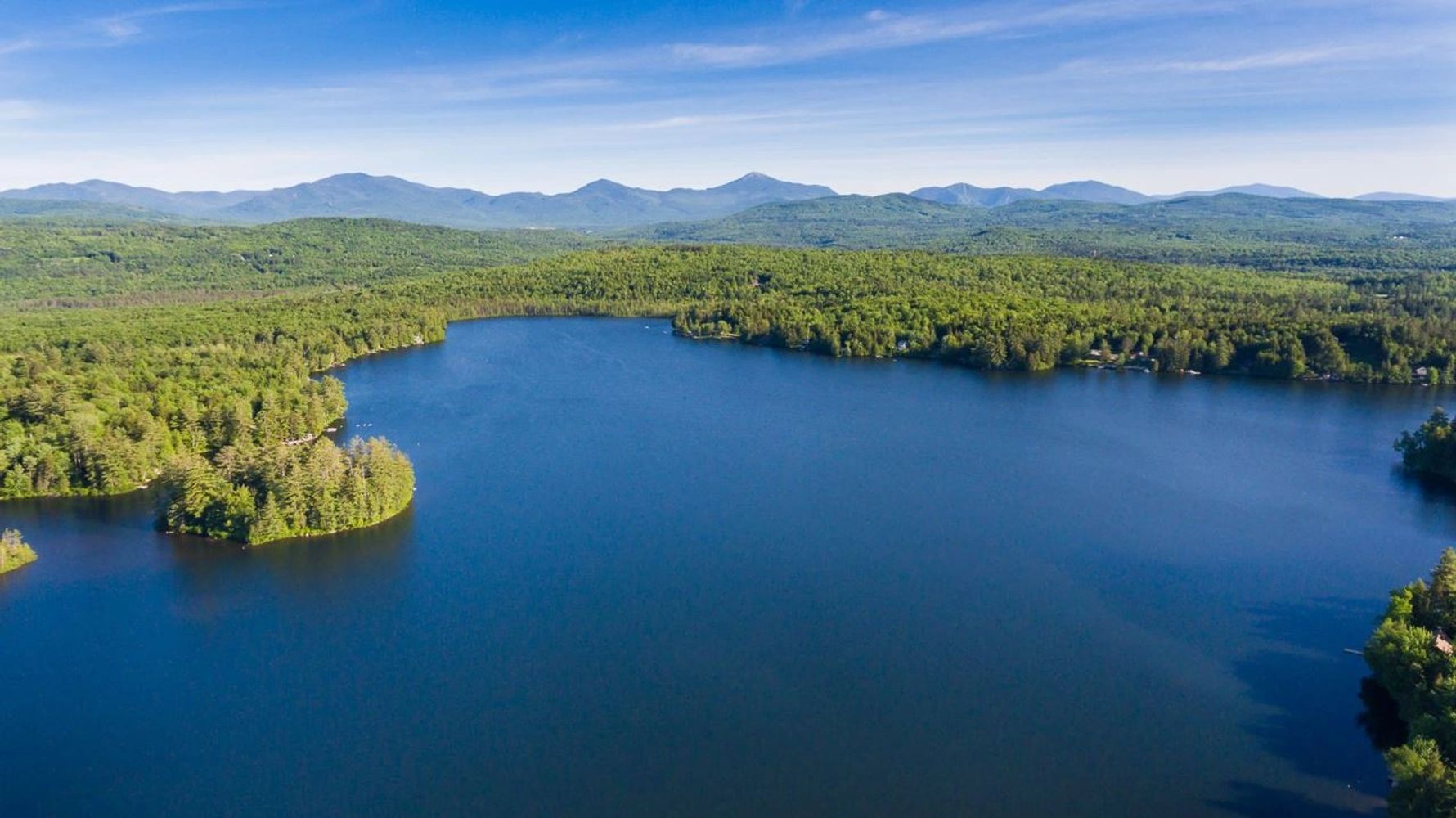
As I stood on the shores of Forest Lake recently and looked south to Mt Lafayette and Garfield and the Twins thinking about guiding trips on those very peaks in my own younger days, I was overwhelmed with a feeling of nostalgia and remembered that my friend Gary Ghioto, whom I had met back in the days when he was a journalist for the Boston Globe, had grown up in this area as well. I recalled his stories about working at the park as a young man and during summers while he was in college. Today he is a professor of Journalism at the University of Northern Texas' Frank and Susan Mayborn School of Journalism.  So I called him up for a little background-color

Forest Lake State Park is a 397-acre (161 ha) state park in Dalton, New Hampshire. The park is free to use, open year-round, and offers a 200-foot sandy beach on the shore of Forest Lake.[1] Activities in the park include swimming, picnicking, mountain biking, fishing, and boating.[2][3] (Wikipedia)


Facebook Page

Forest Lake Petition


Forest Lake State Park, one of the ten original state parks, was created in 1935. The park spans 397 acres and its 200-foot sandy beach lies on the shore of ...
You've visited this page 2 times. Last visit: 10/12/19
Forest Lake State Park (10 miles) 397 forest Lake Road, Dalton, NH 03598 603-837-9150. Pets: NOT permitted. Recreation: Swimming, fishing, kayaking, ...
Photo courtesy of Ellen Edersheim Forest Lake State Park, one of the ten original state parks, was created in 1935. The park spans 397 acres and its 200-foot ...
Forest Lake State Park is a 397-acre (161 ha) state park in Dalton, New Hampshire. The park is free to use, open year-round, and offers a 200-foot sandy beach ...
Forest Lake State Park, one of the ten original state parks, was created in 1935. The park spans 397 acres and its 200-foot sandy beach lies on...


The Whisper of Wind - Signed Original


Saturday, September 21, 2019

Kookooland - Gloria Norris


Author Gloria Norris on Journalism, InDepthNH, her memoir KooKooland, The NH Primary, Climate Change, Film Making with Woody Allen, Brian DePalma, Robert Deniro, Martin Scorcese and Writing her memoir.

Gloria Norris talks about joining the board of Directors of the NH Center for Public Interest Journalism and InDepthNH.org as well as her memoir KooKooland about a young greek girl growing up in the "Projects" of Manchester NH.

Gloria Norris was raised in a tight-knit Greek family. She attended Bennington College and graduated from Sarah Lawrence College. She began her career in New York as an assistant to film directors Brian De Palma, Martin Scorsese, and Woody Allen. Since relocating to Los Angeles, she has worked as a screenwriter, with assignments that have taken her from Paris to the Amazon. As an independent producer, her films have premiered at the Sundance, Toronto, and Tribeca Film festivals.

Gloria writes from the perspective of her 9 year-old self and in doing so she explores a world that she knew but rediscovers through writing the dialog that reflected her family and their interactions.

Gloria will be headlining an upcoming fundraiser for the NH Center for Public Interest Journalism/InDepthNH.org on November 12th at the Derryfield Restaurant in Manchester. She has recently joined the Board of Directors of the organization.  


Kookooland


The Whisper of Wind - Signed Original


Dance of a Woodland Elder

The Whisper of Wind Quote Poster


Tuesday, August 27, 2019

Episode 11 Marilla Ricker


New Hampshire Secrets, Legends & Lore

https://soundcloud.com/nhsecrets/nh-secrets-ep11-hope-history-rhyme-marilla-ricker-suffragist

Marilla Marks (Nee: Young) Ricker

Episode 11 
When Hope & History Rhyme: 
Marilla Ricker Suffragist and Republican


Marilla Marks Ricker (1840-1920) was a suffragist, philanthropist, lawyer, and freethinker. She was the first female lawyer from New Hampshire, and she broke open a path for women to be accepted into the bar in New Hampshire. She was also the first woman to run for governor in New Hampshire, and the first woman to apply for a federal foreign ambassadorship post. She made significant and lasting contributions to the issues of women's rights and irreligion through her actions and her writings.

Podcast Episode 11A: Marilla Marks Ricker Suffragist
Podcast Episode 11B: Marilla Marks Ricker Lawyer and Reformer
Podcast Episode 11C: Marilla Marks Ricker Agnostic and Free-Thinker


 True Light: The Life of Marilla Ricker, Documentary, Directed by Catherine O'Brien

Marilla Ricker Biography


The National Women’s Rights Historic Park isn’t a single park, but rather a collection of historic sites in Seneca Falls and the surrounding communities. The Visitor’s Center is located right in the middle of town, next to the Wesleyan Chapel. Stop by here to learn more about the various sites associated with the Park, and check out Sculptor Lloyd Lillie's "The First Wave" installation, featuring life-size bronze statues of key figures at the First Women's Rights Convention.

Anyone who met Marilla as a very young child would have recognized that here was a person who would leave her mark. At only three she was cutting headlines from local newspapers and asking her mother and father to explain the meaning of large words. By 4 she was reading herself.  At 16, having been turned down in her application to become a nurse for Union troops in the Civil War, she became a teacher and would subsequently teach in both Dover and Lee, NH
She refused to read from the Bible during class, preferring instead the literary works of Emerson.[5] The school committee approached Ricker and informed her that she was required to read from the Bible in class. Ricker refused to hide her freethought beliefs, and left the teaching profession.[6]
In 1863, Marilla Young married John Ricker, a man 33 years her senior.[7] She became a widow, however, five years later. The inheritance left to her by John made her financially independent. 
as she later wrote: "Give me then the man who is not a Christian, and who has no religion, for if the man who loves his wife and children, who gives to them the strength of his arm, the thought of his brain, the warmth of his head, has not religion, the world is better off without it, for these are the highest and holiest things which man can do."[8]


1870 She first tried to vote in Dover and each year thereafter for 30 years
1882 - Admitted to the DC Bar 
1891 - Admitted to practice Law before the US Supreme Court (51 years old)
1897 Applied to be Ambassador to Colombia (57 Years old)
1910 (60 years old) Applied to run for Governor but was refused a place on the ballot because of her gender., yet she campaigned vigorously throughout the campaign nonetheless, insisting that she was seeking to get people used to the idea of a woman governor.


Resources:

19th Amendment to the US Constitution
https://www.history.com/topics/womens-history/19th-amendment-1


Darryl Thompson - Consulting Historian: shakersleuth(at sign)gmail
Catherine O'Brien: cob916(at sign)Gmail
Hon. Robert "Renny" Cushing (D, Hampton) renny.cushing(at sign)leg.state.nh.us


"When Hope and History Rhyme" is a line from a poem by the Irish poet by Seamus Heaney


Autumn Rainstorm Fine Art Poster
Special Offer
Signed Limited Edition 250
To order a different size poster in open 
edition or a different size, click here:


Saturday, May 4, 2019

Episode 09 Ralph Hough: New Hampshire treasure, Radical Centrist and education warrior!


When Merit Guides Governance


An Interview with Former New Hampshire Senate President Ralph Hough: New Hampshire treasure, Radical Centrist and education warrior!

The Way we Were - Part 2

Ep 09 NH Secrets Sen Ralph Hough - When Merit Guides Governance by New Hampshire Secrets, Legends & Lore


For those who long for more civil times when Republicans and Democrats saw one another as the loyal opposition. State Senate President Ralph Hough Gave New Hampshire A Senate to Remember in 1992.

Named as a Defendant in the nationally renowned Claremont v NH lawsuit over educational funding because of the constitutional office he held, Hough was a profile in courage when, he filed a brief on behalf of the Plaintiff School Districts and testified before the NH Supreme Court, asking them to side with the Schools. That year the Supreme Court Ruled on behalf of the Schools and the Children, though the struggle continues, this decision will set the precedent for a new suit recently filed once again.

To my mind Ralph Hough is a hero and a living example of a Radical Centrist. Seeking to build consensus, to create both common ground and to build new ground upon which people of good-will could stand to find solutions to challenging problems.

There is a lot of talk lately about how the 2018 election was the start of a shift in the fortunes of Republicans and Democrats . . . maybe so. But there is some early evidence that the shift may be nothing more than an exchange of one group of ideologues for another. If this is the case we will be no farther along on our new American journey than we are today and the divisions that plague our country will be just as stark.

However, there is a third way and the model for it can be found in the 1992 New Hampshire Senate. It affords an example for every legislature that is closely divided or where people of good will in both parties are willing to challenge the established dogmas to create meritocracies where what you know is more important than who you know . . . where allegiance is to country and state, not to political party.
Spirit Buffalo Before a Frozen Lake

In 1992 the NH Senate elections left the body divided 13 to 11 with the Republicans holding a slight advantage. In the typical spoils system that has afflicted us all too often, this would usually have resulted in the election of a Senate President and the Senate leadership from the majority party. Likewise all committee chairs would also be of the majority party, no matter how little they knew of their assigned committee’s responsibilities.

Just after the election then State Senator, and now US Senator Jeanne Shaheen and I, two Democrats, along with Concord’s beloved Senator Susan McLane and Ralph Hough of Lebanon, two Republicans, met quietly in Madbury to craft a bold plan: To create a Senate where party took a second seat to merit and where Democrats and Republicans worked together for the good of the state.


I honestly don’t remember who contacted whom with the idea and it doesn’t matter. Senator Hough had a reputation as a moderate to progressive Republican whose political hero was Teddy Roosevelt, Susan McLane was a progressive Republican, undeterred by the slings and arrows from the far right within her own party. Both represented the great historic tradition of pragmatic Republicans in the mold of Warren Rudman, Perkins Bass, Sherman Adams and Charlie Bass.

Senator Hough we surmised would not have won an election among Republican partisans, but if the 11 Democrats held together, along with at least 2 Republicans he could win.

Ultimately, that is just what happened; but on that day in Madbury we asked ourselves the more fundamental questions. How would we create a legislative body where people worked together; where Chairs and Vice Chairs were chosen for their expertise and their leadership ability; where fairness, transparency and achievement were the rule and not the exception?

At first we toyed with the idea of dividing everything equally between Republicans and Democrats, but that just seemed to be the same old wine in a different bottle.

Cannon Tram in the Clouds

We decided that parity would be considered a value but not the be-all-and-end-all. We obviously needed to have a Senate President as a presiding officer but what required us to have vice presidents, or other titles that established some kind of formal or informal pecking order within the Senate? So in our brainstorming – and later after Senator Hough had won, we did away with all these titles.

Since the goal was to create an atmosphere where Republicans and Democrats worked together for the common good developing consensus where possible and respecting differences where matters of personal principle made consensus impossible, we considered completely eliminating the separate pre-session caucuses, an age old tradition that generally has been a partisan planning session.

Senator Hough felt that he did not want to issue an edict preventing either party from gathering together when they felt it was important. Instead he announced that the entire Senate would be invited to lunch together before the session, in effect creating a bi-partisan caucus where we would have a final opportunity to develop consensus on contentious issues and if consensus were not possible to civilly alert one another that we were going to have a “floor fight.”


It was at these lunches that I developed a real and abiding respect for many of the Senators whom I had previously seen in a very adversarial way. Suddenly Senators, whom I had viewed only as adversaries, were no longer political enemies but colleagues with whom I often disagreed but who were human beings with whom I could break bread, talk, and, from time to time, compromise.

Senator Hough began the Senate term with a team building retreat for the entire Senate challenging us all to move beyond the constraints of party and to take risks for the good of our state. The retreat included not only Senators but staff members as well.

That year, as the country struggled to get its economy moving again the New Hampshire Senate – with a full sponsorship of both Republicans and Democrats passed five omnibus economic development bills creating an Office of International Trade; supported the creation of The Center for Earth, Oceans and Space at UNH - one of the first institutions in the Country to initiate studies of Climate Change - , expanded the Port of New Hampshire, strengthened the Business Finance Authority, took the first steps toward development of a Community College system throughout NH among other things, all while balancing the State’s budget

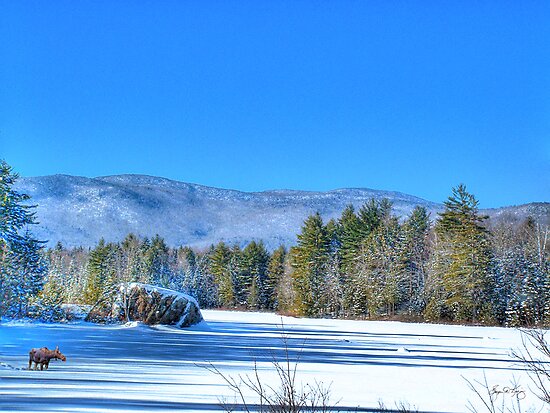
Lone Moose on Robartwood Pond

By the end of the two-year term I considered many of my former adversaries among the finest, most principled people with whom I had ever served. They had not changed. The dynamic had.

In years past, legislators had opportunities to experience one another as human beings, whether it was because they would gather together at the Highway Hotel for dinner or because they carpooled to legislative sessions. Today it is harder to find such opportunities but with some effort this small group of Senators upended years of partisan tradition to create what I believe was the most collegiate and cooperative group of Senators that I had seen in all my 12 years in the NH House and Senate.

I will never forget what Ralph Hough said at the end of one of our early meetings. “They will probably throw us all out for this, but it will be worth the ride.”

I won’t represent that we changed the face of politics in New Hampshire – we didn’t.

In the next election, Newt Gingrich's Contract with America election, Republicans dominated the election and the Senate returned to business as usual, more partisan than ever. It may have been the same if Democrats had dominated. But for one brief, shining moment, we glimpsed how things might be if change were built from the center out.

I hope that Ralph Hough still thinks it was worth the ride. I know I do.

Painted Fungus


Ralph Hough returned from Vietnam in early 72 and ran for the legislature. He lost that first election by 1 vote.


News & Politics, Claremont Lawsuit, Educational Adequacy, Education funding, NH, New Hampshire, Merit Guides Governance, NH Senate, Senate President, Radical Centrist, Centrist, Civility, bi-partisan, beyond partisan


Tuesday, April 30, 2019

Episode 08 Ripples of Hope - The Plymouth Area Renewable Energy Initiative PAREI Sandra Jones and Peter Adams


Episode 08 Ripples of Hope - The Plymouth Area Renewable Energy Initiative PAREI Sandra Jones and Peter Adams

"It is from numberless diverse acts of courage and belief that human history is shaped. Each time a man (or a woman) stands up for an ideal, or acts to improve the lot of others, or strikes out against injustice, he sends forth a tiny ripple of hope, and crossing each other from a million different centers of energy and daring those ripples build a current which can sweep down the mightiest walls of oppression and resistance." Robert F. Kennedy

This is a joint podcast of The Radical Centrist and New Hampshire Secrets, Legends & Lore and cross broadcast on both podcasts because of the unique nature of what PAREI has achieved and the tremendous promise that the work they do holds not only for the state of New Hampshire but as a model for similar organizations all across the country.

Last Light on the Mt. Washington Hotel

In this podcast - part 3 of our "Beyond Carbon" series I interview Peter Adams and Sandra Jones, Founders of what may very well be the first non profit in the country to focus exclusively on sustainable energy and conservation. Since their founding in 2003 a growing army of community volunteers and environmental patriots has worked with Peter and Sandra to help others plan their energy future. No one is asked what their beliefs are, what they drive, their political party, who they voted for. There are open arms and open hearts beginning with Peter and Sandra and the infectious effect of that openness and acceptance has spread throughout not only the organization but the community. It is one of the most important keys to their success. Another is the axiom, "don't talk . . . do." Experiment, take risks, make mistakes, learn from them and move on, celebrate your victories by sharing your knowledge so that others might benefit from it all. Today as many as 150 other communities from across America have requested the primer developed by PAREI to form their own Energy Initiatives.

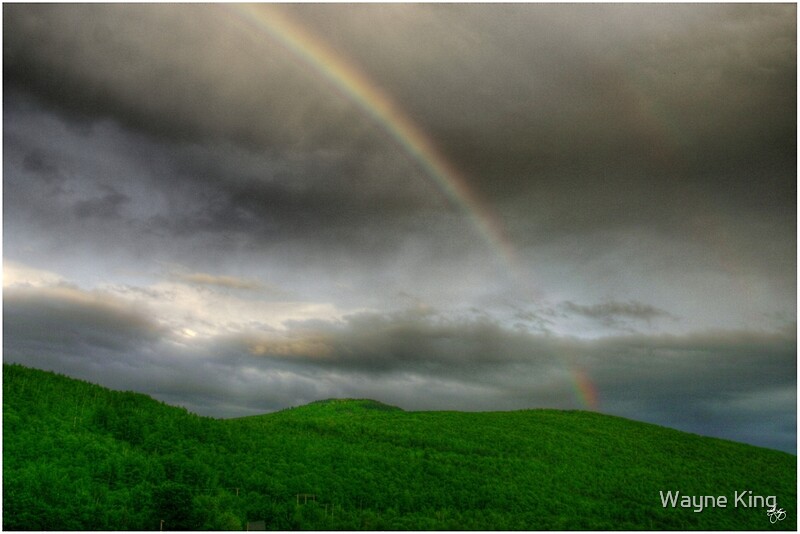
Rainbow Over the Mahoosucs

So when Sandra and Peter and the army of PAREI began it may have seemed at times a lonely business, but in part from their efforts, A Renewable Energy Revolution has flowered. That Renewable Energy Revolution taking place in this country has many points of light, to use a phrase from President George H.W. Bush, each of them spread their warmth and illumination moving us with growing momentum and enthusiasm toward a distributed energy future that will allow us to live comfortably and still care for the planet and our neighbors, both humans and critters of all shapes and sizes, or as Free Joseph says, the earth and all its inhabitants.

To me, Sandra and Peter are living proof that heroes and patriots walk among us every day in our own communities. People who recognize that the changes we make here at the grassroots are the ripples of hope that build to create change at every level.

Now if they were here right now, both of them would deflect the attention from themselves to the hundreds of volunteers now engaged with them in the work of PAREI. Of course they are right. But without the catalyst; without the stone dropped into the pond, the ripples would not rise up.

If it seems like I am immensely proud of my old friends, I plead guilty. How could I not be when their work gives me such hope for the future. For as long as citizens reach for the stars, it won't matter that our leaders are temporarily lost in a black hole of partisanship and ideology. Time and again throughout our history we have seen that If the people lead, the leaders will surely follow.

Plymouth Area Renewable Energy Initiative (PAREI)

Solar energy equipment supplier in Plymouth, New Hampshire
Address: 79 Highland St, Plymouth, NH 03264


Links:


RFK Ripple of Hope Speech

Saturday, April 27, 2019

Episode 07 New Hampshire’s Outsized Role in The Renewable Energy Revolution


Ep 07 NH's Outsized Role in The Renewable Energy Revolution
With an Amendment inserted in the 1974 PURPA act, one short paragraph, authored by John Durkin and his team, successfully wrested monopoly control over the electric grid from the utility companies and opened the gates for a flood of small alternative power producers and eventually individual homeowners and businesses.

Listen here:

Originally printed in The View From Rattlesnake Ridge column
Ruminations from an Unabashed Optimist, an Environmental Patriot and a Radical Centrist
Want to Know who to thank for The Renewable Energy Revolution? Start with NH Senator John Durkin. . . and President Jimmy Carter
By Wayne D. King

Last year as the fleeting pleasures of a North Country summer were quickly yielding to the bittersweet days of autumn along Rattlesnake Ridge where I live. I was ruminating on the book I had just finished "Sacred Trust" and thinking of how Autumn always seems to summon forth the highs and lows of our inner spirits; one moment we want to run and jump and throw our hands in the air, rejoicing at the beauty of the world around us and the next we are close to tears, often for reasons that seem completely unfathomable . . . careening between joy and sadness, though I suspect that the passage of time, more acutely felt, is the primary motivating force.


In a week or two the hills would be ablaze with color. At least so we all hoped. The effects of climate change seem to be having an effect on autumn foliage, but we really don’t know what the effect is. Some climate scientists say it will enhance colors, at least in the short term.

Whisper of a Winter Wood Haiku

Others insist the leaves will turn from green to brown and simply fall off the tree, but we don’t know how much of that is because of climate change and how much is because of an extremely dry summer and fall. Scientists differ wildly in their predictions of the effect but there is not the slightest difference on the causality side of the equation . . . the changing climate of our earth mother.


In Sacred Trust, an existential environmental time bomb, in the form of a massive powerline, is about to explode an entire way of life for the people of the North Country. Nine unlikely oddballs: rock climbers, paddlers, a deer farmer and a former spook, are all that stands between the people and the powerline.

Most readers find themselves praying for the Oddballs. . . If the storyline sounds familiar it is at least in part because I was seeking a vicarious way to express my own frustration with the current situation here in New Hampshire, but also in states across the nation where the same scenario is taking shape.


The novel is somewhat unique, I think, in that the story divides itself between the heroes – citizens engaged in creative civil disobedience as the last defense against the powerline; a group of writers, calling themselves the Gazetteers, writing against the powerline project in the style of the authors of the Federalist Papers; and, finally, a serious-minded journalist who is writing a well researched analysis about both the project and the national and international challenges of the advancing “Age of Electricity.”


It was, and is, my hope to create a work of fiction that was enjoyable to read but that also helped readers to understand some of the challenges and nuance of the world in which we are all living and the world we are beginning to see emerge . . . the post-carbon world. Whether this education occurs on an individual basis or as a creative tool for the classroom, or both, it was my hope that art could be harnessed to facilitate change and dialog.

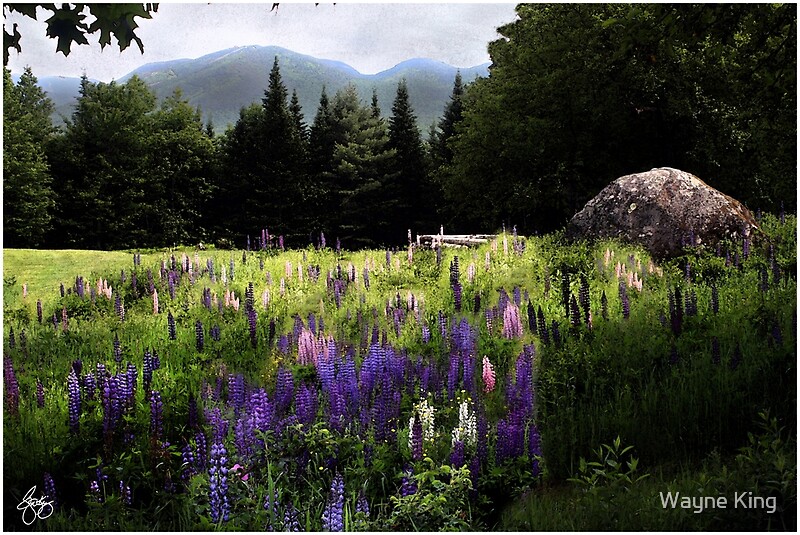
Dance of Lupine and Birch Poster


In doing research for Sacred Trust I learned a great deal and found to my delight and surprise that New Hampshire played an outsized role in today’s Renewable Energy Revolution. Furthermore, there were some civics lessons that also could be gleaned from the process that has brought us to this place.


Most of the remainder of this column is taken, almost verbatim, from Chapter 57 of Sacred Trust, in which journalist James Kitchen discusses the renewable energy revolution and New Hampshire’s role in its genesis.


Kitchen begins by describing a shifting paradigm that replaces carbon-based energy sources with sustainable green energy and some of the choices, challenges and dilemmas associated with the changeover.


Understanding the choices that our nation faces as we struggle to build a new energy paradigm requires that we have at least a basic understanding about how we got to where we are today and that journey – strangely enough – winds right through New Hampshire. In more ways than one . . .


Most politicians and even most citizens in New Hampshire consider the place of our state in the national election process as sacrosanct. The First-in-the-Nation presidential primary provides a jolt of cash to the state’s economy every four years but most people, particularly the staunchest defenders of the Primary, will tell you that there are more important reasons for protecting our place as first in the nation.

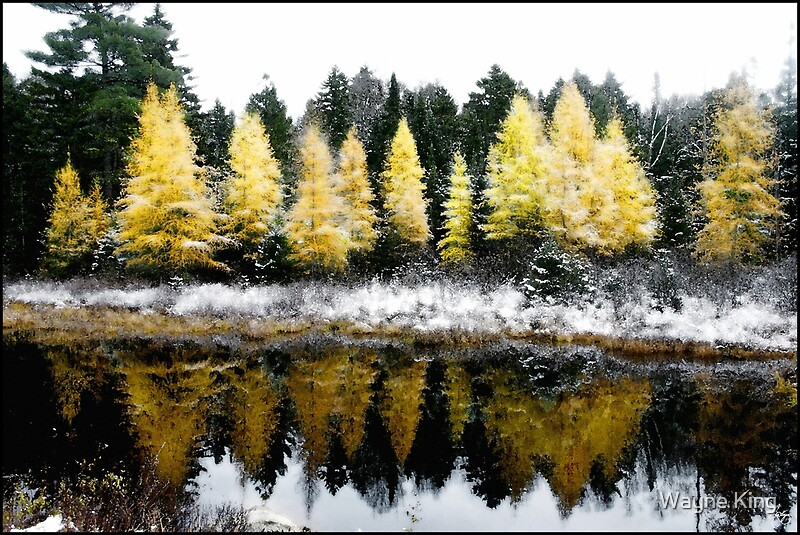
First Snow on a Larch Bog

They will explain that only in a small state like New Hampshire does a candidate with limited money – but a great message – have a chance. In larger states, where the election is dominated by big business, big labor, and exorbitant media costs a great candidate without deep pockets will never have such a chance.


New Hampshire folks take their role in the process of winnowing down the field of candidates in their primary very seriously. They study the issues, they vigorously question the candidates, and then, once they have made up their minds, they roll up their sleeves and get involved in one campaign or another.


To understand where we are today we need to go back to the mid 1970s. Richard Nixon had resigned, to avoid being impeached, and Gerald Ford, appointed by Nixon after the untimely (and from many accounts unseemly) death of Nelson Rockefeller, was our first unelected President.


The Presidential primary of 1976 saw a very crowded contest among Democrats. Depending on who you count there were almost twenty people testing the waters or outright campaigning for the nomination. From that process, an unknown Governor named Jimmy Carter emerged and swept to the nomination as the “un-politician.”


Carter won in Iowa and during the last three weeks of the New Hampshire Primary, capitalized on his Iowa win and zoomed from a 2% standing to over 30%, capturing New Hampshire. These two wins would serve to create a groundswell and Carter would go on to win the Democratic nomination. By the time the General Election rolled around James Earl Carter had sold himself as the first “outsider” candidate of the modern era and he won handily over Gerald Ford.


Carter’s one-term presidency was roiled by controversy and crisis, from an Arab Oil Embargo to the taking of American hostages at the American Embassy in Iran and a disastrous attempt to rescue those hostages.


Hidden in the layers of these controversies and crises is a legislative record that created the framework for a renewable energy revolution that has, of late, taken the country by storm. Carter’s team shepherded through Congress the landmark Nation Energy Policy Act, including a section called PURPA – the Public Utility Regulatory Policies Act. These massive pieces of Federal legislation included the first national policies on renewable energy and energy conservation, among other things.


Two years before Carter ascended to the Presidency, New Hampshire held an election for a United States Senator to replace the retiring Norris Cotton. A close contest between the Democrat John Durkin and the Republican Louis Wyman led to two recounts; the first won by Durkin, by ten votes; and, the second, won by Wyman, by 2 votes. Any citizen who wonders if their vote counts, need only look at the outcome of this election. Finally, at an impasse, a new election was declared by the US Senate an election that Durkin won handily. Two years later, as the Carter Energy policy was moving through the Congress, John Durkin quietly and without fanfare, added an amendment into the PURPA act. The amendment required that utility companies purchase power – at market rates – from any producer of electricity generating fewer than 80 megawatts from a renewable energy source.


Durkin originally believed that he was helping to establish a foothold for wood to energy biomass and trash to energy co-generation, and he was; but the door that he opened with his amendment turned out to be big enough for every dreamer and entrepreneur, with a viable idea for generating electricity renewably, to walk through. Thus began the renewable energy revolution.


Soon proposals for small hydro (also called low head hydro), solar power, wind power and other renewable resources were on the drawing board and underway.

Painted Sky Over Umbagog

The Energy Policy Act passed the Senate by 1 vote. Again, a civics lesson in the importance of every vote in a democracy.


Over the years since then a few changes have been made to the Energy Act, but all continuing to move the country toward the day when renewable energy would account for a larger and larger portion of the power produced.


The changes of the 70s represented the first step in a changing relationship between America’s public utilities and the people and businesses who consumed the energy. Utilities no longer held complete monopoly power over both the sale and the purchase of electricity as well as its transmission.


To be fair to utility companies, it is important to note that these changes have created serious disruption in the model that they had been employing to govern their business plans and for many would come to represent an existential threat to their economic viability.


Different utility companies have approached the challenges posed by this deregulation in different ways. Almost immediately Vermont utilities formed a working group among utilities to come up with approaches that would allow them to create sustainable business models and one of the first things they did was to add ratepayers and citizens to the process to create forward momentum and a consensus building approach that made everyone a participant in a process that strengthened utility companies and encouraged the development of renewable energy.


Those who simply tried to squeeze more from a diminishing set of profit centers hastened toward crisis. The changes that have taken place over the past twenty years represent an existential challenge to many utility companies. They are casting around for ways to generate more profits in an era of shrinking opportunities.


The more progressive utilities are doing this by working to build an infrastructure that enhances the opportunities for renewable energy and the organic job growth that comes with it. Others are simply clinging to the past and trying to enhance their bottom line through transmission proposals that link together large generators of power with lucrative markets.


There are many lessons to be learned from the approaches employed to enhance their sustainability by utility companies all across America. But there is no doubt about one thing.


One short paragraph, authored by John Durkin and his team, had successfully wrested monopoly control over the electric grid from the utility companies and opened the gates for a flood of small alternative power producers and eventually individual homeowners and businesses.


For the first time the American people, just beginning to experience a growing environmental consciousness back in the 70s, had a say in the kinds of energy that we were using and could participate in the creation of that energy. For that we can thank Jimmy Carter, John Durkin and the 95th Congress of the United States.