Wednesday, August 31, 2022

Episode 73: The New Hampshire Legacy of Walter Richard West Sr. - Wah Pah Nah Yah


Listen here:

NH Secrets, Legends & Lore

The New Hampshire Legacy of Walter Richard West Sr. -  Wah Pah Nah Yah


Walter Richard West Senior was born in 1912.


West was not born with that name. His name was Wah Pah Nah Yah, translated into english, “Lightfoot Runner”. He was born in a Tipi near the Darlington Agency in Oklahoma, then known as Indian Territory, a member of the Southern Cheyenne Nation.


If you are wondering how a Native American, born halfway across the country, figures into the “Secrets, Legends and Lore” of New Hampshire you will find out in the next 35 minutes and you will meet one of the 20th century’s most acclaimed artists who left a legacy that touched the Granite State in a profound and lasting way.


The West family has a long and storied history. His grandfather “Thunderbow” fought Custer at what the Cheyenne and the Sioux knew as the Green Greasy Grass river battle, today referred to as the Little Bighorn. Both of Wah Pah Nah Yah’s sons, Rick and Jim, would also establish their own NH legacies as you will hear. Each would make their own respective marks, both here and throughout their lives: Jim as the director of “Futures for Children” working with native children to help them achieve a college education; Rick (W. Richard West Jr.) would become the founding director of The Smithsonian Museum of the American Indian in Washington, DC. But I’m getting ahead of myself here.


From 1936 to 1938, Wah Pah Nah Yah attended Bacone College in Muskogee, Oklahoma,[1] where he earned an associate's degree. At Bacone he played football and worked in oil fields.


West then enrolled at University of Oklahoma (OU), where he would earn a BFA degree in 1941. He later returned for graduate work, earning the very first MFA degree ever awarded to a Native American artist in 1950. 


It was during his years as a student at Bacone that his connection to New Hampshire began when his friend and teacher Edmund Shaw introduced him to Alcott Farrar Elwell, a retired WWI Army Colonel who was the Assistant Director of Mowglis, School of the Open, a camp for boys on the shores of Newfound Lake. Established in 1903 by Elizabeth Ford Holt.


Elwell had an abiding interest in Native American people, possibly as a result of serving, at 20, as a camp cook in 1908 for the U.S. Geological Survey in Wyoming where he met many Native people while serving on the USGS mission. 


A future episode of NH Secrets will feature Elwell, but one interesting aside from this story is that Elwell had NO experience as a cook! It happened that the only position open to join this great adventure was as a cook so Elwell applied and was hired. Elwell, an East Coast boy had never been west before. 


Edmund Shaw, who would be Wah Pah Nah Yah’s best man at his wedding, and the godfather of Wah Pah Nah Yah’s two boys later on, had been spending his summers teaching photography at Camp Mowglis and he encouraged Colonel Elwell to invite Wah Pah Nah Yah to join the staff of Mowglis. 


Wah Pah Nah Yah arrived in 1939 and remained through three successive seasons. Returning twice more in the 70’s and 1990’s for extended visits.

The boys who were campers during his staff years became keenly aware of the Cheyenne traditions, and some of them became quite proficient at the dances he taught them. In later years both his sons Rick and Jim would share the same skills and traditions with the boys of Mowglis. Tim Coons, a music producer who introduced and produced “The Backstreet Boys” to the world was one of those boys. Tim recalls creating full regalia for each boy in the dance club, under Dick’s son Jim West, and being taught many of the unique dances of the Cheyenne. 

Stories of Wah Pah Nah Yah have taken on legendary proportions over the years. The late Frank Punderson recalls a game of capture the flag in 1939. "I was hiding in the bushes waiting to capture someone from the other side as they approached our flag, I peered out of my hiding place and realized that Wah Pah Nah Yah had just run by and I had never heard his footsteps . . . never realized he was near, until I saw him running by at full speed. It’s no wonder, then, that his Cheyenne name translated to “Lightfoot Runner”.


In 1942 Dick joined the Navy, became a commissioned officer, and continued in the U.S. Naval Reserve until his retirement in 1962. Through it all he continued to document the culture of plains Indians. As one of his colleagues has written, he was "on the cutting edge of the Native American art movement that added vibrance, fluidity and dimension to the flat-painting style of the early 1900s, a style in which he was schooled and which he admired."

Stories of Wah Pah Nah Yah have taken on legendary proportions over the years. Stories of his ability to fire his bow from beneath the belly of a galloping horse, or his ability to accurately shoot five arrows into a 5 of spades card placed on a target at 50 yards flawlessly. 


The late Frank Punderson recalled a memorable game of capture the flag in 1939. "I was hiding in the bushes waiting to capture someone from the other side as they approached our flag, I peered out of the hiding place and realized that Wah Pah Nah Yah had just run by and I had never heard his footsteps . . . never realized he was near, until I saw him running by at full speed. It’s no wonder, then, that his Cheyenne name translated to “Lightfoot Runner”.


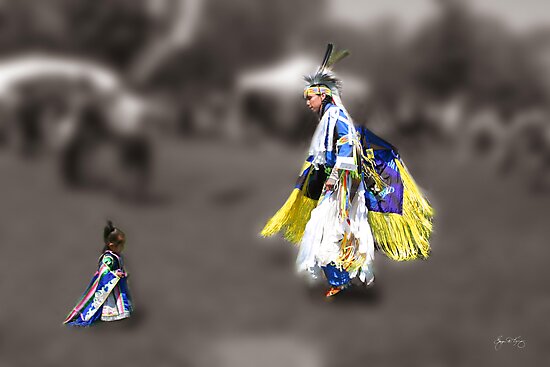
Wah Pah Nah Yah inspired young boys and staff members at Mowglis during his days as a counselor. Creating both a sense of pride and respect for the cultures of Native American people. He also created a number of his most unique works at the camp, including several depictions of scenes from Rudyard Kipling's Jungle Books.

Wah Pah Nah Yah's years at Mowglis came at a very important time to both Mowglis' own traditions and the legacy of this great man. 


In 1937 Mowglis had experienced a terrible fire that had leveled the main gathering place at Mowglis. The fire destroyed the entire building including a mural called the "Lone Wolf" on the stage of the building. Two staff members perished in the fire. 


1938 was the year of the fateful 1938 Hurricane that swept through New Hampshire. The late Myron Braley described the effects of the hurricane on the area around Newfound Lake in his hometown of Hebron: “Trees were down everywhere. I could travel the half mile between Route 3 and the lake walking on the trunks of trees and never need to set foot on the ground,” 


The hurricane was a tragedy but ultimately provided all of the timber that would be required to rebuild the main building that had burned the summer before. A local craftsman was brought into the camp and milled the beams and boards right on site to rebuild the large hall.

The rebuilding of the hall created a new curtain, but without the uniqueness of the original. Wah Pah Nah Yah created a mural depicting the scene of Mowglis' admission to the wolf pack as the central scene as well as depictions of Mowglis with Kaa, the Rock Python; and Mowglis with Baloo the Bear and Bageera the Black Panther on either side of the main scene. The original paintings were modified in 1976 when Dick West and his wife Rene visited Mowglis again to provide needed repairs to the work.


Another example of the legendary sense of humor that characterized Wah Pah Nah Yah came in the latter years of his life when he was asked by the Guggenheim museum to provide three paintings that represented examples of abstract art.


Wah Pah Nah Yah submitted three pieces to them and the director wrote to thank him, saying that they would be using two of the paintings but could not use a third, entitled “The Red Pond”, because it did not fit the kind of representational abstract painting that they were featuring which required colors to be accurate, within the context of an abstract image. “A red pond” , wrote the Director, “was just not realistic.” Wah Pah Nah Yah read the letter and said nothing as he walked out the door of his home in New Mexico and scooped up two fist fulls of red clay, dumping them in a box destined for the Gugenheim. A few days later a sheepish letter arrived from the Gugenheim’s director announcing that they would be including The Red Pond in their exhibition.


Throughout his life Wah Pah Nah Yah continued to grow and develop his art, pushing the bounds from the original - but exquisite - examples of early Native American “skin or hide” painting to the more sophisticated, yet authentic, style that would characterize his later work and secure his place in the firmament of great 20th century painters. 


With his rendering of the Kipling scene at the Council Rock and the mural of Mowgli with his friends, Kaa, Baloo, and Bagheera, New Hampshire has a priceless remembrance of W. Richard West’s affection for this place and his great talent as an artist. 


Some of these images are available from Camp Mowglis at Mowglis.org


Sunday, July 10, 2022

Episode 72 "Claremont III" - Steve Rand Steps into the Breach

"Claremont III" Steve Rand Steps into the Breach


Steve Rand is not what one might describe as an educational zealot or a fellow who tilts at windmills.  His family is about as steeped in tradition within the town of Plymouth as it gets. He took over the family business in Plymouth from his dad and, despite Walmart, the migration of business away from the town center, and all the odds, Rand’s Hardware continues to thrive on the main street in Plymouth. He is a blend of pragmatic Yankee and street-smart entrepreneur. But behind that wry smile lies a philosopher and a visionary; a man who wants to “leave the woodpile just a little higher” when his days are done. 


So when the opportunity arose for him to be a plaintiff in New Hampshire’s ongoing litigation over educational funding he did not hesitate. The lawsuit, we’ll call it Claremont 3, though, to my knowledge, no moniker has yet been assigned to it - may be the culmination of more than 3 decades of legal action (and political inaction) based on the New Hampshire constitutional obligation to provide funding for an adequate education to all public school children.


Listen here:

https://feeds.podetize.com/ep/L1J4tAFUi/media


I wanted to speak with Steve Rand, not because he can recite chapter and verse about the legal history of the Claremont cases or the numeric minutia of tax disparities between towns or their relationship to the quality of schools from high-income or low-income school districts. Rather, I wanted to speak with someone who came at this from an experiential basis; someone who has lived the disparities on a day-to-day and year-to-year basis. Someone who has seen how the system short-changes our kids and our communities.


There are many heroes in the long arc of this story. The late Arpiar Saunders, who (perhaps purposefully) cornered Andru Volinsky, stark naked, in the gym locker room to recruit him to the Claremont team. Andru Volinsky of course. John Tobin, who has spent his life advocating for those living in the shadows of life. Senate President Ralph Hough (R-Lebanon) who despite being named as a defendant in the second suit, filed an Amicus brief and testified on behalf of the children of New Hampshire against the state. 


Today, Steve Rand and the other plaintiffs have stepped into that line. But, they would all be the first to say that the greatest heroes of this story are the good people of towns like Claremont, Berlin, Plymouth, Rochester, to name a few towns, who despite having to dig four to five times deeper into their own pockets to fund education in their communities, continue to step up for their kids, to make sure that they have a shot at a future worth living. 


A procedural history of the Claremont lawsuit

Staff WriterPortsmouth Herald

https://www.seacoastonline.com/story/news/2003/04/09/a-procedural-history-claremont-lawsuit/51281033007/


30 Years Since Claremont: The Monumental Ruling and the Work That Remains

ANDRU VOLINSKY

https://indepthnh.org/2021/06/15/30-years-since-claremont-the-monumental-ruling-and-the-work-that-remains/


Nebraska Law Review

2005 New Hampshire 's Education-Funding Litigation: Claremont School District v. Governor, 635 A.2d 1375 (N.H. 1993),modified, 703 A.2d 1353 (N.H. 1997) 

Andru H. Volinsky Bernstein, Shur, Sawyer and Nelson, P.A., avolinsky@bernsteinshur.com


https://digitalcommons.unl.edu/cgi/viewcontent.cgi?article=1281&context=nlr


Sunday, July 3, 2022

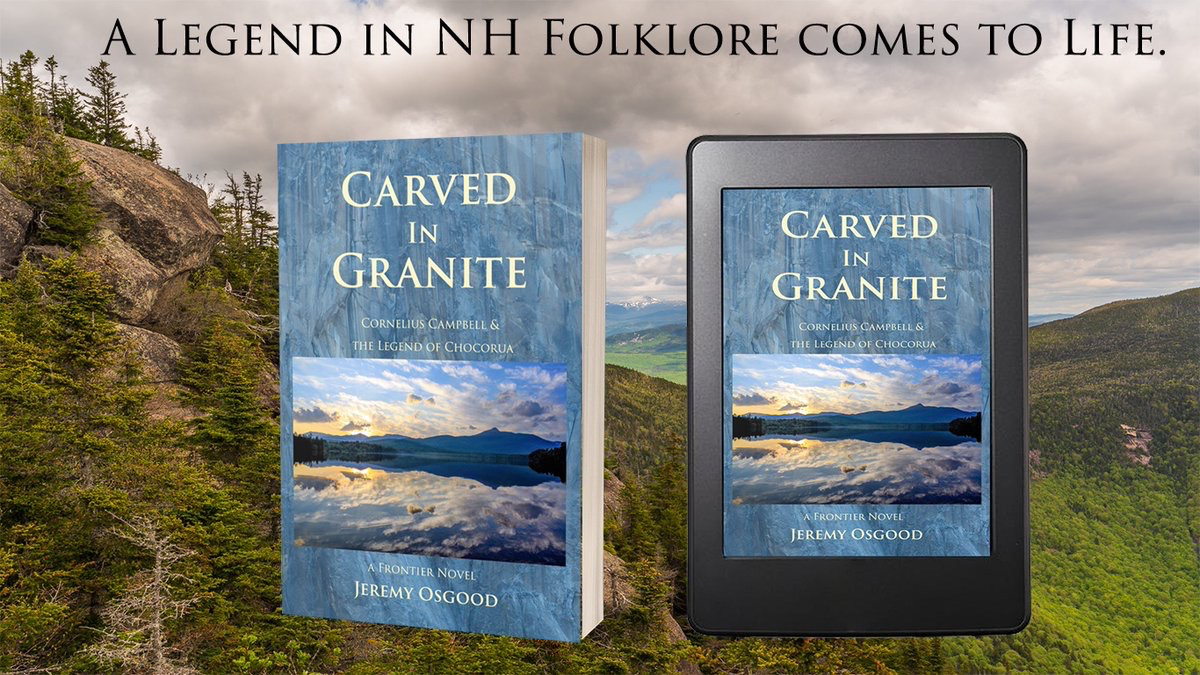
EP 71 Carved in Granite: Author Jeremy Osgood


Carved in Granite - Jeremy Osgood author

Historic Fiction

osgoodjeremy@gmail.com


Jeremy Osgood grew up in Wolfeboro, New Hampshire, a small New England town in the lakes' region, affectionately known as "the oldest summer resort in America". With the picturesque setting as the perfect backdrop, he developed a love for the outdoors, photography, and writing. He combined his passions with a photoblog called Wolfeboro Chronicle while working in town as a real estate agent and basketball coach.


Some of his earlier influences included his time out west where he earned a Bachelors Degree in Environmental Conservation and Political Science at the University of Colorado at Boulder. He spent six years working with National Geographic Maps as the Eastern Sales and Support Manager and eight years selling real estate while coaching basketball at various levels during that time. Currently, he owns and operates Jeremy Osgood Photography.


Fun Fact Jeremy thru-hiked the Appalachian Trail end-to-end in 1997. He hiked 2,180 miles in five months and proposed to his high school sweetheart at the trail's end.


When not taking photographs, or writing, he enjoys spending time with his wife, two daughters, and their rescue dogs near their Nashville, TN home.


Why writing and photography? “I find inspiration from the natural world: the people from all walks of life, the landscapes that make you feel insignificant and the assortment of creatures, big and small, we share the planet with. And every once in a while, when the time is right and the light is just so...magic happens.  I try and find the essence of my subject and capture it for a brief second. Not to hoard it, but to let it shine bright, and maybe give off a little inspiration to someone else.“ 


My prints are available in high resolution with sizes and products carefully selected to ensure a quality finish. Images are available for commercial, marketing, advertising, media, or other projects.   You can also order prints and wall art, with an assortment of options, directly from the gallery and it will be fulfilled by a professional print lab and drop shipped to your door.


https://www.jeremyosgoodphotography.com/


LIFE 
A LEGEND IN NH FOLKLORE COMES TO 
ARVED 
IN 
GRANITE 
f CHOCORUK 
JEREMY OSGOOD 
ARVED 
GRANITE 
JEREMY OSGOOD


Buy Carved in Granite


Friday, July 1, 2022

EP 70 Congressman Dick Swett:: Civility, Vision, and Honor Matter


 Congressman Dick Swett:: Civility, Vision, and Honor Matter


In an era where civility is a rare commodity, recalling the way that Dick Swett conducted himself as a US Congressman and later as an Ambassador to Denmark is a reminder that civility, humility and conscience are still honorable and - perhaps even possible again.


Listen here:

https://feeds.podetize.com/ep/BHmNgP7Bh/media


Dick was elected to the second congressional district seat in congress in 1990 and in 92 he was handily re-elected for another term.


The turning point of Dick's political fortunes came in 1994 with the successful passage of the assault weapons ban. Despite the danger to his own career, Dick voted for the measure and it became law. He lost his reelection bid by less than a percentage point.  FOLLOWING ON THE HEELS of the ban,  there was a decline in gun violence but when the ban was not extended under George W. Bush we reverted to the status quo ante and we all know what that has looked like for our country.


In 1998 he was named Ambassador to Denmark by President Bill Clinton a post he held until 2001.


In this podcast I speak with Dick Swett about his political journey and his life journey since his act of courage led to the passage of the (temporary) assault weapons ban in 1994 and his razor close loss, fueled by the NRA, in the subsequent election.


From Dick to FB friends.

Saw this great quote tonight:

"The person who cannot listen to an argument which opposes his or her views either has a weak position or is a weak defender of it. No opinion that cannot stand discussion or criticism is worth holding. And it has been wisely said that the person who knows only half of any question is worse off than the person who knows nothing of it. He or she are not only one sided, but their partisanship soon turns them into an intolerant and a fanatic. In general it is true that nothing which cannot stand up under discussion and criticism is worth defending."

Elder James E. Talmage


Richard Swett. Richard Nelson Swett (born May 1, 1957) is an American politician from the U.S. state of New Hampshire who served as the U.S. representative for New Hampshire's 2nd congressional district from 1991 to 1995. He also served as the U.S. Ambassador to Denmark from 1998 to 2001.


Richard N. Swett

Ambassador to Denmark

Richard Swett was nominated by President Clinton to be U.S. Ambassador to Denmark on April 2, 1998 and was confirmed by the Senate on July 31, 1998.

In 1990, Richard N. Swett was elected to the U.S. House of Representatives 2nd Congressional District of New Hampshire. In Congress, he served as a member of the Committee on Public Works and Transportation; a member of the Committee on Science, Space, and Technology; and a member of the Congressional Delegation for Relations with the European Parliament and the Congressional Human Rights Caucus. Congressman Swett co-authored the landmark Congressional Accountability Act. He also authored the Transportation for Livable Communities Act and introduced bills to encourage energy conservation and use of renewable energy. In 1996, after winning a primary contest, Congressman Swett was the Democratic nominee for the U.S. Senate. He was narrowly defeated in the general election.

In the private sector, Congressman Swett's range of business experience encompasses architectural design, project management, corporate management, project development, and finance. He has been active in real estate design and development, alternate energy development, energy conservation, industrial development, and export promotion. For several years he has operated a consulting firm doing business in the United States and eastern and central Europe. He is a licensed architect in California and New Hampshire.

Congressman Swett is a member of the American Institute of Architects, is the state Chair of the U.S. Olympic Committee, and is involved in various other civic organizations. He is also a contributing author to the book, A Nation Reconstructed: A Quest for the Cities That Can Be, and had numerous articles published as a Member of Congress.

Congressman Swett was born on May 1, 1957, in Lower Merion, Pennsylvania. He received a Bachelor's Degree in Architecture in 1979 from Yale University. The U. S. Junior Chamber of Commerce named Congressman Swett one of the Ten Outstanding Young Americans in 1993. He was also named one of the Ten Most Influential People in New Hampshire by New Hampshire Business Magazine that same year. He has been awarded the Presidential Citation by the American Institute of Architects, as well as numerous honorary degrees including an Honorary Doctor of Laws Degree from Franklin Pierce College in Ringe, New Hampshire. He received the National Award from the Residential Caregivers Association for work on behalf of residential care facilities throughout the United States. The American Legion awarded him the National Economic Commission Citation of Appreciation.


https://www.climateprosperitysolutions.com/

Climate Prosperity Enterprise Solutions (CPES) is a community-focused development firm working to create sustainable local economies through an innovative wealth creation model.


Sunday, June 26, 2022

EP 69. Here Comes the Sun - Daniel Weeks, Revision Energy and the Fight for a Livable World


EP 69. Here Comes the Sun - Daniel Weeks, Revision Energy and the Fight for a Livable World.

My conversation with Dan Weeks was a refreshingly optimistic moment in these troubling times. He’s no Pollyanna about the challenges that we face but he definitely sees the magnificent and expansive view from the summit, even as he recognizes the mountains still to climb.

Listen here:

https://feeds.podetize.com/ep/XjHX_LDuK/media

A 12th-generation Granite Stater, Dan Weeks is well steeped in New Hampshire history but he is also a citizen of the world. Dan left New Hampshire after high school to serve with AmeriCorps and attend Yale and Oxford on scholarships. He lived and worked on four continents before returning to NH with his South African wife Dr. Sindiso Mnisi Weeks, a human rights lawyer and academic. Dan and Sindiso are the proud parents of three young children.

Today Dan is a director at ReVision Energy, an employee-owned solar company in Brentwood. and lives in Nashua with his wife and kids.

Dan is an outspoken clean energy advocate and entrepreneur on a mission to transition New England and the world from fossil fuels to renewable energy. As Vice President of Business Development at ReVision Energy, Dan leads commercial sales, project finance, and development for the region's largest clean energy company while promoting climate action at the state and federal level. He has been named one of New Hampshire's “Most Influential Business Leaders” by NH Business Review, “Young Professional of the Year” by Stay Work Play New Hampshire, and "Forty Under 40" by the New Hampshire Union Leader.


Wind on the Floodplain Forest Floor

Prior to ReVision Energy, Dan was Executive Director of Open Democracy, where he continues to serve on the Advisory Board, and president of Americans for Campaign Reform (now Issue One). In 2012-13, he traveled the United States by Greyhound Bus on a poverty-line budget of $16/day researching poverty and political exclusion on a fellowship from Harvard. He is the author of "Democracy in Poverty: A View From Below" and has written for The Atlantic, New York Times, Boston Globe, Christian Science Monitor, and other outlets. He continues to write and speak on public affairs and serve on numerous nonprofit boards.


Revision Energy
https://www.revisionenergy.com/


A CALL TO CONSERVATIVES

https://www.fosters.com/news/20190920/call-to-conservatives

By Dan Weeks

Posted Sep 20, 2019 at 6:06 PM


When my family first joined the Republican Party in the 1800s, they were conservatives in the original sense of the term. As farmers and businessmen, soldiers and public servants, my forebears were intent on conserving New Hampshire’s most precious assets, from our land and water to our self-reliant way of life.

The first John Weeks was elected to Congress in 1828 as a member of the original Republican Party, defined by its Jeffersonian embrace of rural life and against a centralizing aristocracy and corporate corruption. He is best known for leading an 1820 expedition into the White Mountains, which resulted in the naming of New Hampshire’s highest peaks. He died in the shadow of that Presidential Range at the same time a young Illinois Congressman named Abraham Lincoln was helping found the second Republican Party.

Decades later, another Republican John Weeks of Coos County would make his name in Congress as author of the Weeks Act of 1911, establishing the Eastern National Forest as a landmark in land and water conservation. In a letter to his son (my great-granddad) Sinclair Weeks, who would follow in his footsteps as a senator and secretary of commerce under President Eisenhower, John summarized his notion of principled, pragmatic leadership: “A man is a leader, legislatively, when he knows more than those who are serving with him. He does not need to be an orator, have wealth or any other qualifications than to have the facts.”

Although their time has passed, the time for such a brand of fact-based conservatism in Congress and Concord has not. Indeed, all I know of these three men and the conservative tradition out of which they came leads me to believe they would follow the science and act with urgency to conserve our common home for future generations, were they faced with today’s climate crisis.

Against this backdrop, I have been saddened to see New Hampshire’s Republican governor question climate science and pressure his fellow “conservatives” in the N.H. House and Senate to sustain a slew of vetoes denying climate action this week.

When asked about climate change in a 2016 gubernatorial debate, Gov. Chris Sununu stated simply, “No, I don’t believe in it.” To back up his position, Sununu provided the following perplexing logic from his position as then-CEO of a family-owned ski resort: “I don’t believe in [climate change] because I know we might have had an awful mild winter this year, and we saved an awful lot of money in our snow budget but I can tell you that next year, we may not be as lucky.”


Day Lilies in Fog


Even more perplexing are Gov. Sununu’s oft-repeated assertions that “I’m an environmental engineer” and “you’ve never had a governor with the experience that I bring to the table...when it comes to understanding the environment and climate change.” A NHPR investigation subsequently found that Sununu was never licensed as a professional engineer, never sat for the exam, and more than a decade has passed since he worked in the field of civil or environmental engineering – small comfort for a citizenry that overwhelmingly accepts the scientific consensus on global warming.

But denying scientific fact and exaggerating your own credentials are one thing; blocking the will of the people when it comes to conserving New Hampshire’s natural environment and way of life is something else.

Which brings me to HB 365, the bipartisan bill to raise the net metering cap for homegrown renewable energy projects and cut climate-warming carbon emissions, which was vetoed by Gov. Sununu and narrowly failed an override vote this week.

In the ordinary course of events, this bill would be anything but controversial. It passed the New Hampshire House with over 70% support for the second year in a row (including dozens of Republican backers) and won a unanimous voice vote in the Senate. It is a top priority for environmental advocates and the clean energy industry, which employs thousands of Granite Staters and brings billions in local investment to increase our self-reliance and energy independence.

Beyond the usual suspects, the policy is backed by many of the state’s leading businesses seeking to offset their high electricity rates with homegrown renewable energy, who gathered at the Statehouse this summer in advance of the governor’s veto. Dozens of New Hampshire cities and towns have also called on Concord to raise the arbitrary cap so they can turn old landfills into solar farms while saving taxpayer money and combating climate damage.

Most importantly, surveys find that fully 85% of registered voters nationwide – including seven in 10 Republicans – support far more aggressive climate action than a 5 MW net metering cap: requiring utilities in state to produce 100% of their electricity from renewables by 2050 rather than the measly 0.7% currently sought from solar.

Yet in spite of this overwhelming public and legislator support, HB 365 died this week after numerous Republican representatives switched their votes under pressure from Gov. Sununu. According to multiple reports, Sununu told a closed-door caucus of Republican lawmakers that sustaining his veto wasn’t about the issue or the people of New Hampshire – it was about him. He even went so far as to attack New Hampshire’s fledgling solar industry as “crony capitalism at its worst.” Did he forget the tens of thousands of dollars he has raised from fossil fuel companies and utilities? Or does he remember them all too well?

The time has come for a return to the old tradition of fact-based conservatism and a Grand Old Party that places conservation at its core. After all, what could be more conservative than preserving this one and only planet we call home by stemming the climate crisis before it is too late?


Dan Weeks is a director at ReVision Energy, an employee-owned solar company in Brentwood. He lives in Nashua with his wife and kids.

--


TedTalk

Power to and From the People; Creating an Energy Democracy | Dan Weeks | TEDxWolfeboro


Against All Odds


The Winter Warrior


Monday, June 20, 2022

Chocorua The Man, the Mountain, and the Myth - Three Centuries of "Fake News" that open our minds to a set of truths.

Μτ. CHOCORUA


Chocorua The Man, the Mountain, and the Myth - Three Centuries of "Fake News" that open our minds to a set of truths.


Listen here:
https://feeds.podetize.com/ep/F-2xbgsmZ/media

This podcast episode is not sponsored by but rather dedicated to the Mount Kearsarge Indian Museum in Warner NH. Mt Kearsarge is one of the finest museums of its kind in the entire country and has been recognized as such. It's emphasis on the beauty of the art and the spirituality of the lives of indigenous people, rather than the violence and savagery of life in those earlier days is inspirational and moving. It also emphasizes the fact that these people continue to live on despite the concerted efforts of empire to exterminate them.

You can make a contribution directly to the museum by going to their website: IndianMuseum.org . Or, you may go to my gallery site, WayneDKing.com and choose from among my original art, under the MK Indian Museum Heading and 1/2 of the purchase price will be donated in your name to the Indian Museum. You will receive a signed, numbered, limited edition original image printed on fine art museum quality rag paper and the good folks at the Indian Museum will gratefully receive your donation.


Mount Chocorua is one of the most distinctive mountains in all of New Hampshire, jutting sharply into the sky above the town of Tamworth. Seen from the summits of the northern White Mountains and other more northern vantages like the Bear Notch Road between the Kancamaugus Highway and Bartlett, its peak seems even more pronounced.

No matter where you are from, If you have been in New Hampshire for almost any length of time you have probably heard about the legend of Chocorua and chances are pretty good that you have also seen the mountain or photographs of it.

This story and episode strikes very close to home for me. My grandfather's parents were Native American: His mother Abenaki and his father Iroquois.

My Grandmother's people were the colonial side of my family. The Georges were among the earliest colonial settlers in the area. In fact in the very area where this legend arose.

The Native American side of my family. with whom I most closely identify, are shrouded in mystery. Raised in an orphanage in St Francis Quebec, born of two different Native groups I will describe later.

Because the orphanage and the records are long-vanished, we will never know the Iroquois name of my Great-grandfather Simon Gideon Roy (Roi) or my Great Grandmother Amelia Roy's Abenaki name. They were laid to rest in a Whitefield Cemetary - probably with their secret still unknown.

The George family, on the other hand, has been quite well documented since they first settled in the Albany Intervale - on the north side of the mountain where legend holds that Chocorua made his home.

It was a cold and unforgiving area from all that we know today. Corn and wheat were impossible to grow and it seems that only hay and root crops survived long enough to sustain them. After a few years, the Georges moved to Bartlett and North Conway. But it is this first location that most closely tied them to the legends of Chocorua.

The George family first settled in the area now marked as a national historic site - the Russell Colbath House on the Kancamaugus highway. It is believed that the first home they built is no longer there, but some years later another cape-style house was built there that remains today. We always called it the George House when we were growing up but Ruth Colbath was a descendant of the George family and now it bears her name. A number of family members are buried in the cemetery adjacent to the Russell-Colbath House, the rest of the George family are buried in a cemetery in Bartlett, except of course for those who continue to live in NH. As far as I know, my grandfather never revealed his heritage to members of the George family. I say that mostly because my father’s cousin Ben George, who died last year, use to describe my Grandfather as “a friendly but secretive man”.

Of course that’s because he had a well-kept family secret. While my father and his sister knew this secret, they were sworn to keep it because generations of pain had taught them that they held a secret that could change the course of their lives. It was not until my father was well over 60 that he revealed it to me. For years after my father had died, my aunt continued to insist that this was not true. It was not until a family reunion about 10 years ago that she finally came clean and admitted the story was true.

In this podcast you will hear me, as well as others, use various terms for the original inhabitants of the area, Native American, Indian, Indigenous people, these terms, today, are all acceptable ways of referring to the people, both Abenaki and Iroquois.

Because over the years there has been a mixing of terms that describe rank within a Native American group I'll try to provide some background and historic context on what terms were used by the Abenaki originally but you will often hear terms like “chief” - a European term - used interchangeably with Abenaki terms like Sachem or Sagamore.

Now before we get to the primary subject of this podcast, let's begin with a quick primer on the native people of the area.

At the time of first contact, meaning the period in which the Native Americans of this area first had sporadic encounters with colonial people, the Abenaki and their Algonquian and paleo-Indian ancestors had been around for at least 12,000 years based on today's evidence. First contact in this region was around 1600, though contact had taken place in both northern and southern regions outside of the White Mountain somewhat earlier.

At the time of first contact, Passaconnaway was the principal leader of the Abenaki. He was the force behind the creation of an alliance named for his band, the Penacook, from which the alliance took its name.

The Abenaki are estimated to have numbered around 40,000 at this time. Their numbers had already been dramatically reduced by more than a century of diseases introduced by traders and animals - especially pigs.

In the early 1600's a pandemic known as "The Great Dying" killed an estimated 70-95% of the indigenous population. Initially, the epidemics of smallpox, influenza, typhus and other diseases were most likely simply the result of diseases introduced accidentally by the many encounters between traders and native people, who had no immunity to these European diseases.

Sadly, later on, these diseases were also employed as instruments of war against native people as documented by a letter written by none other than Lord Jeffrey Amherst, for whom both a community and a university was later named. Amherst encouraged a fellow officer to deliver a “gift” of wagonloads of smallpox-infected blankets to the Native people of Saint Francis, based on the belief that it would be the most effective way to “completely extirpate” the Abenaki.


This is believed to have been the first documented instance that such an attack had purposefully taken place, perhaps even the first documented case of germ warfare. Sadly, it would be repeated over and over again as first colonists, and then Americans following the Revolution, operating under the doctrine of Manifest Destiny engaged in a centuries-long campaign of genocide against the indigenous people of North America.

Current estimates of the total number of Indigenous people in North America at the time of the first Columbus voyage range from 10 million on the conservative side, to more than 100 million. Though, in 1492 Columbus was not the first European to reach the shores of North America, he did not actually set foot on the continent.

For the first century following 1492 most encounters were with ships of traders who at first made only brief stops along the coast to trade goods for furs to be sold in the lucrative European market.

Though it was not unusual for them to take slaves to assist in the financial rewards of their voyage. This was usually done by deception. Inviting the native people aboard the ship and then seizing them.

The backstory of the Chocorua legend and the historic context within which it was said to have taken place involves Two great Indian linguistic families that dominated the eastern United States, the Algonquians and the Iroquoians.

The realm of the Algonquians stretched from the Atlantic Ocean to the Great Lakes and beyond, and from the Carolinas to Hudson Bay. Within this area was a small section where the Iroquois ranged and ruled - Mostly northernmost sections of the eastern US and Canada.

Although not living in New Hampshire, the Iroquois certainly ventured into the State for hunting and sometimes against their Abenaki neighbors.

Today, the term Algonquian is now more of an anthropological characterization, because the various groups were among a large number of tribes that spoke various dialects of the Algonquian language.

But Native American nations that have a connection to the early Algonquian people today come from a vast array of nations all across the country, including the Cheyenne of the great plains, the Yurok in California, the Cree, Chippewa, Blackfoot and Shawnee are other examples.

The Indians living in the immediate vicinity of Maine and New Hampshire are known generally by the name Abenaki although they are often referred to by their more localized groups names.

Over the centuries the Abenaki had joined with others in coalition to protect their collective interests. Before first contact those coalitions were generally to provide protection from encroachment by the Iroquois. Following first contact, the Abenaki joined in an active coalition of nations called the Wabanaki Confederacy (People of the Dawnland), formed in 1680 in response to both Iroquois and English aggression and expansionism.

The Wabanaki Confederacy never had a formal "grand chief" or single leader of the entire confederacy,. This would continue throughout the entire history of the Wabanaki Confederacy. The confederacy remained decentralized so as to never give more power to any of the member tribes. This meant that all major decisions had to be thoroughly debated by sakoms at council fires, which created a strong political culture empowering the most respected and influential leaders.

Members of the Wabanaki Confederacy were the:

(Eastern) Abenaki or Panuwapskek (Penobscot)


(Western) Abenaki


Míkmaq (Miꞌkmaq, L'nu)


Peskotomuhkati (Passamaquoddy)


Wolastoqew, Wolastoq (Maliseet or Malicite)


In other words, All Abenaki are Wabanaki, but not all Wabanaki are Abenaki.

The homeland of the Wabanaki Confederacy stretched from Newfoundland, Canada to the Merrimack River valley in what is now New Hampshire and Massachusetts, United States. In 1862 the colonial government declared the Wabanaki Confederacy forcibly disbanded. However, despite this, the five Wabanaki nations still continued to meet. The Confederacy was formally re-established in 1993.

The Abenaki were organized as patrilineal bands, led by sagamores (sogmoh), the heads of high-ranking families who inherited their status (often today referred to as hereditary leaders) who acted as stewards of their lineages and homelands. Sachems (sakhem) were elected leaders of allied bands.

Today, Chocorua is spoken of in reference to both a man and the mountain which ostensibly bears his name.


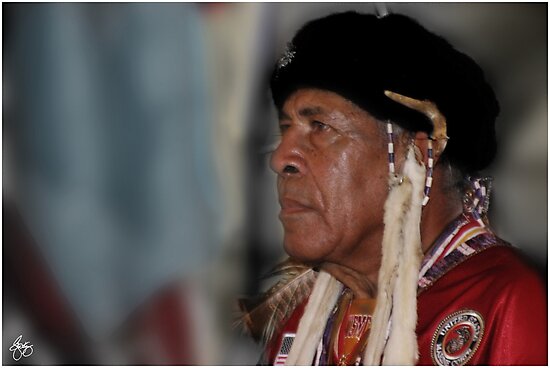
A Marine's Pride

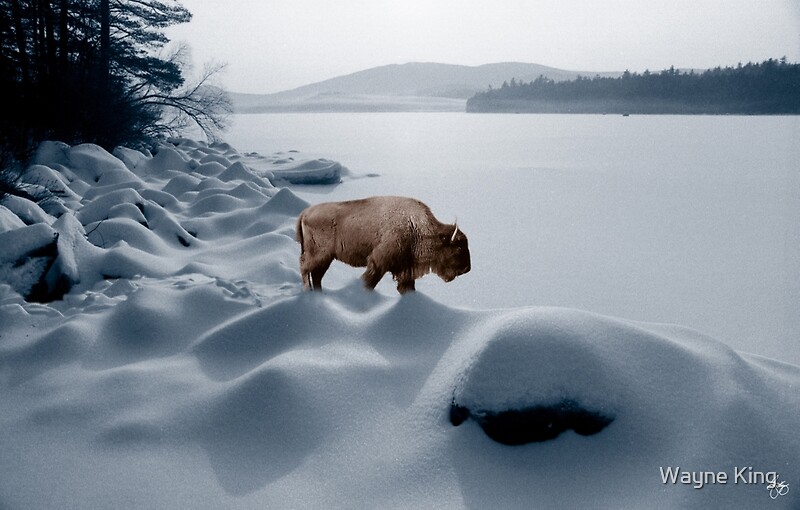
Spirit Buffalo Before a Frozen Lake

Let's first start with the Mountain.

There may have been previous Abenaki names accorded to the mountain that now bears the name Chocorua, after all the Algonquin people - of which the Abenaki were a sub-group - had been in the region for at least 12 thousand years.

The first mention within the written record seems to have come from Jeremy Belknap in 1784. Belknap was a well-known historian and writer who first referred to the Mountain as Corua, an Algonquin/Abenaki word roughly translated as "place of serpents" probably for the snakes regularly found in the watershed region. the Northern Water Snake (Nerodia sipedon) is found within the Mt. Chocorua watershed today.

Seven years later in 1791, Belknap refers to the mountain as Chocorua. There's no evidence to indicate how or when Belknap had learned this version of the name but it is likely that the rest of the name sprung from another word - Choc, an Abenaki word meaning rocky outcrop. This appears consistent with the Abenaki name for Mt. Washington, Agiocochook, as well as several Canadian mountains and ranges, whose names also contain the sound.

Its also worth noting that the Mountains in New Hampshire that bear the names of other Native Americans, created by white colonists and their descendants, were named many years after the individuals for whom they were named had died. Including the names of many that never likely walked these woods and hills. The Abenaki names for these mountains, if they existed, were replaced by those colonists and have largely been lost to time.

The name Chocorua for the mountain, however, predates the naming of these other mountains.

According to historian Mary Ellen Lepionka, "The mountain would (probably) already have had its name from pre-contact times, well before there was any individual to be recorded in 18th-century history or folklore.

The first written mention by Belknap, referring to the mountain, pond, and river, and came nearly 50 years after European contact, and it was another 30 years after that before the word Chocorua appears in records along with reference to a person by that name."

As for Chocorua the man, according to the legend - which appears in various forms - particularly with respect to Chocorua's death, had moved away from the villages of the remaining Pequaket Abenaki - ostensibly because he wanted to live in peace.

The story of Chocorua and the family of a Scottish pioneer named Cornelius Campbell is said to have taken place in the 1720s. This was approximately 40-50 years after the formation of the Wabanaki Confederacy, formed in response to the growing threat from the two main colonial powers, England and France, as well as territorial threats from the Iroquois.

According to the legend, Chocorua was already an adult with a young son, he is said to have lost his wife to disease shortly after his son's birth. According to the legend. Chocorua befriended Cornelius Campbell, who had settled in the area around what was known first as Burton, then as Albany and is today called Tamworth.

According to the story Chocorua had sufficient confidence in his relationship with Cornelius Campbell and his family that he was willing to leave his son in the care of the Campbell family. One day Chocorua was called away for tribal business and asked if the Campbells could watch his young son while he was gone.

While Chocorua was away, the boy found and drank or ate poison that Cornelius Campbell had made to kill wolves and foxes. Chocorua returned to find his son had died.

Chocorua, distraught with grief, took revenge on the family, while Campbell was away. Shortly thereafter, Campbell returned home to find his wife and children had been slain.

Campbell suspected Chocorua and pursued him up the mountain that today bears his name.

Chocorua climbed atop the highest boulder on the summit and, knowing that death was at hand, raised his arms to the sky and shouted a curse:

Now, I'm going to read the most common version of his curse here, mostly because it is so clearly recounted by someone speaking with the "King's English" - if you will - that it is amusing and a clear red flag within the context of the story.

“A curse upon ye, white men! May the Great Spirit curse ye when he speaks in the clouds, and his words are fire! Chocorua had a son—and ye killed him while the sky looked bright! Lightning blast your crops! Wind and fire destroy your dwellings! The Evil Spirit breathe death upon your cattle! Your graves lie in the war-path of the Indian! Panthers howl, and wolves fatten over your bones! Chocorua goes to the Great Spirit—his curse stays with the white men!”

Here various accounts have Chocorua shot by Campbell or committing suicide by jumping from the mountain falling to his death on the rocks below.

Most "accounts" of the man whom legend refers to as Chocorua call him "Chief" Chocorua.

Although the Abenaki did not have such a term at the time of first contact. Many years later they - and most other tribes and nations would yield to the European conventions, but at the time of first contact, Algonquin (of which the Abenaki, remember, were a sub-group) Leaders were either elected Sachems or heriditary leaders called Sagamores. So the individual referenced as "Chief" would not have actually been a “chief”.

If Chocorua inhabitated this lofty position among his people his name would certainly have been oft repeated in the oral histories of his people - as were Kancamaugus, Paugus, Passaconaway and Wonalancet. It is not.


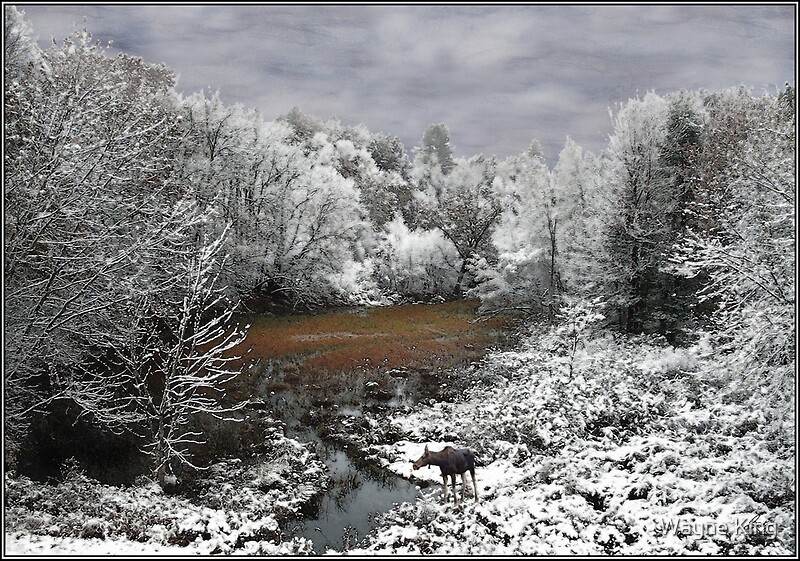
Lone Moose on a Snowy Oxbow

If he had held either an elected position or a hereditary one, or if he had been a warrior, as is often depicted, he would not have lived separate from his people as the myth itself holds. He would have lived right in the thick of things - so when the Pequawkets, fleeing from the scalp hunters and English onslaught, moved north to St Francis and its environs Chocorua would have gone with them or joined another local grouping of Abenaki.

Later colonial legends depict him leading both the Cocheco "Massacre" in Dover in 1689 and the Battle of Lovewell Pond in 1725, well over 100 years after he was said to have met and befriended the Scottish immigrant Campbell.

The battle at - what is today called - Lovewell Pond, in Fryeburg Maine, is considered to have been a draw, with serious losses on both sides. Both Captain Lovewell, commander of the scalp hunters, and Abenaki war leader Paugus perished in the fighting.

The historic records show that the Abenaki leader Paugus died at Lovewell Pond and the colonial scalp hunters proudly and ceremoniously presented his scalp upon their return from the battle, collecting 100 pounds for his scalp alone.

No mention of Chocorua is included in the English written records of this battle. Nor is there any mention of a Chocorua in Abenaki oral tradition. Since Lovewell Pond was the last major battle before the remaining Abenaki moved north to Quebec, participation by a warrior named Chocorua would quite likely have been prominently featured in storytelling about the battle.

Let me interject a quick word about scalping here. For many years the practice of scalping victims of a fight was attributed almost solely to Native American fighters but - in fact - it was a common colonial practice and several so-called colonial "Scalp Acts" were passed encouraging the taking of scalps and paying very high bounties on such scalps.

In the early days of conflict between European colonists and native people there was no organized military and the fighting was between what we would today consider mercenaries, sometimes referred to as Rangers, who were paid based on the number of scalps taken and the value of slaves taken.

So, A Chief Chocorua is not mentioned in Abenaki legends, and there is no leader by that name in surviving Abenaki oral traditions, as one would expect of someone in such a revered position. Early English primary-source accounts also do not mention any Chief Chocorua.

The best guess of the genesis of the Chocorua legend itself is that it involves a bit of a mashup. The seeds were probably planted by local legend and an 1815 short story written by Longfellow about an Indian named Jeckoyva who became lost in the woods and died of starvation - an unlikely scenario for a Native American.


Painted Fungus

15 years after Longfellow's story, another fictional account, written in 1830 by Lydia Maria Francis, better known by the name Lydia Marie Child (1802-1880), who had also written other popular fictional stories, one titled "Hobomock". These were then likely woven into the tapestry.

The legend evolved over time until it was recorded in the notes of the famed landscape painter Thomas Cole who paused on a trip to the Conway area for a few days in Tamworth and hiked Mt Chocorua during his stay (1886).

The impression made on Cole was not only documented in words but in the winter of 1828-29 Cole painted one of his most celebrated works "The Death of Chocorua". A full century after the events had been said to have taken place, this painting fired the legend of Chocorua in the public's imagination.

Like a children's game of telephone - for the young people, that was a game where the first child in a circle would begin by whispering a phrase in the ear of the next child in line and everyone would enjoy a good laugh when the last child would audibly speak the phrase surviving its evolution - of course it would be completely different from when it began upon completed the circle.

So the legend of this fellow - now named Chocorua evolved among local folks and visitors, morphing from the highly unbelievable story in Longfellow's tale to a "Chief" who was friendly with many of the settlers and particularly the family of Cornelius Campbell.

Accordingly, while Chocorua’s bones bleached in the sun, his curse settled on Albany and great calamity befell it from hurricanes and hailstorms to cattle dying mysteriously. Ultimately the settlers of the area moved to other areas and Campbell became a hermit and was found dead two years later.

So the existence of Chief Chocorua is likely what today we call fake news. He likely never actually existed.

Nor, by the way, is there any evidence in the written record of a Cornelius Campbell, except in association with the legend. Had Campbell been a real person it is likely that there would be some record of the man who ostensibly ended the life of the "Great Chocorua". Surely when his body was "discovered" two years after the events on the summit of Mount Chocorua were said to have taken place he would have been buried in a well-marked grave somewhere in the Ossipee Range. But the record remains blank.


Maple Ablaze

I spoke with Jeremy Osgood, author of "Carved in Granite" a fictional account of the legend of Chocorua and here's an encapsulation of what he had to say.

He found not evidence for the existence of either Chocorua or Cornelius Campbell - outside of the specific legend. As for the legend itself the most cogent version came from a Chamber of Commerce (obviously written hundreds of years after the period depicted in the legend.)

Note: A Recording of Osgood, from a yet-to-be-released Podcast about his book, is included in the podcast.

For those inclined toward historic fiction and the romantic legend of Chocorua, "Carved in Granite" is a good read, and a plausible depiction of the story sensitively written, but not romanticized, providing insight into not only the legend but the tableau in which it developed from Osgood's obviously rich imagination. Osgood weaves a tale that is believable and consistent with the bloody and savage life that existed at the time whether you were Native or colonist, particularly if you were trying to live a life that was free of the warring colonial empires that fomented so much of the violence that defined the ongoing genocide of Indigenous people.

But if this is true - if Chocorua and Cornelius Campbell were nothing more than figments of colonial settlers' imaginations, how is it that such a rich and evocative narrative developed about these men and the mountain in whose shadow they were said to have lived?

Jeremy Osgood, ponders the following observation which encapsulates the same questions. He notes that one has to wonder if the phrase "where there's smoke, there's fire." applies here as an unasked thought or observation. In other words: How does such a rich and interesting story develop if it is made up out of whole cloth?

For a clue about that I spoke with NH Secrets, Legends & Lore's official historian Darryl Thompson of Gilmanton Iron Works. Darryl is a graduate of UNH, where he and I became friends. He is also the son of the legendary "Bud" Thompson who founded both Canterbury Shaker Village and the Mount Kearsarge Indian Museum. He grew up steeped in history so it's no wonder that he became a repository for so many of the stories that define our state and our country.

In a nutshell, Darryl says, "legends like this usually develop because they serve to help tell a story about us or about the time in which the story takes place."

Note:  Again a recording of my conversation with Darryl is included in the podcast.


So, if the legend of Chocorua is not history but mythology how did it develop and what is the story that it seeks to tell?


Now this where I, admittedly, wander into the deep woods of speculation.

Let me begin by saying that - despite the casual and simplistic interpretation of myth as falsehood - the term myth is far more complex than that. Myths, as Darryl Thompson says, symbolize ideas, values, history and other issues that are important to a people. Parts of the myth may be true or false, dull or engagingly fantastic; their significance is their meaning, not their specific narrative content.

We have already seen that the beginnings of the myth of Chocorua developed over 100 years - after the supposed events - before anyone gave the mythic Native American of this story a name, probably based upon the Abenaki name for the Mountain.

It's generally accepted that for a mountain to bear the name of an Abenaki man or woman that coincidence most likely occurred in the fullness of time. In other words, it would happen as a historic tribute, not as a co-terminal event.

It would have been considered bad luck, for example, to name a mountain for an individual who had just been murdered on its summit. If only because the repetition of the name might be presumed to be a call capable of summoning the spirit - in not necessarily good humor, I might add.

Mary Ann Lapoinka speculates that "he may have been a composite persona with an emblematic identity representing the local group of Native Americans as a whole. This conflation of identities was a common practice in life as well as in fiction, in which a single person, real or invented, hero or villain became famous as a projection or representation of the larger population. "

The Chocorua legend evolved in a region that was the most dangerous area of all New England at the time, the tip of the spear if you will. It was also an area where even the most simple aspects of survival, the growing of crops, and raising a family, were an existential challenge.

Within a few years of the time in which this story was said to have taken place, all of the European settlers had moved out of Albany because their crops- especially corn and wheat, would not grow in the cold climate and hail. Wind, rain, and flooding added additional challenges to their existence.

Finally, when cattle began to die from an unexplained sickness they called the "Burton Ail" it was all just too much and they moved to the more hospitable climes in Conway, Bartlett and Fryeburg, Maine.

Over the decades these things and the legend of Chocorua, evolved, entwining themselves into the legend.

Some claimed that the curse of Chocorua explained all these tragedies, but it is far more likely that these tragedies were woven into the story itself, along with Campbell and Chocorua. 

 One can easily see how some aspects of the legend of his curse may have evolved purely from the vagaries of the climate in this high mountain intervale.

The "Burton Ail" added additional fuel to the fire, though it was discovered years later that the region had a high concentration of murate of lime in the ground which was causing the cattle to die.

For those colonists who were attempting to build a new life as well as Native people who were facing a genocide, intent on extirpating them from the land that had been their home for thousands of years, it seems the die was cast.

Even in instances where friendships developed between Native people and colonists - and there were surely cases where this happened - the relationships were doomed to end in tragedy.

The way in which the story has been crafted over generations - from the perspective of Colonial people for whom superstition was more likely to guide their thinking than science, "explains" why they would tell and retell this legend and, further, makes both Chocorua and Campbell the sad and inevitable victims of circumstance beyond their control.

Whether, in the telling of this tale, European colonists were attempting to rewrite the historic record to alleviate their own guilt for the genocide inflicted on the Abenaki people or simply reflecting the ignorance and superstition of the times, ultimately the story reveals a truth underneath decades and centuries of fabrication and prevarication.

It became the story that explained the sad complexity and savagery of life "at the edge of the world". Where even the best of intentions fell victim to the ignorance of common folks and the greed and the evil of men bent on empire and the elimination of Native people.

We will never know what intentions existed in the hearts and minds of many of those who crafted this legend. Most of them were but proxies in the march to Empire. but we know that the genocide happened and that cannot be changed.

Yet, still, the Abenaki live on. Many, like my great-grandmother because they quietly blended into the background while still maintaining their cultural memory - until it was safe to reemerge. Others persisted like the Red Oak, remaining strong in the winds of time. Passing on their culture and wisdom to succeeding generations.

Now they have their own story to tell that just might help us all to live more gently on this good earth. If only we have ears and hearts to listen.


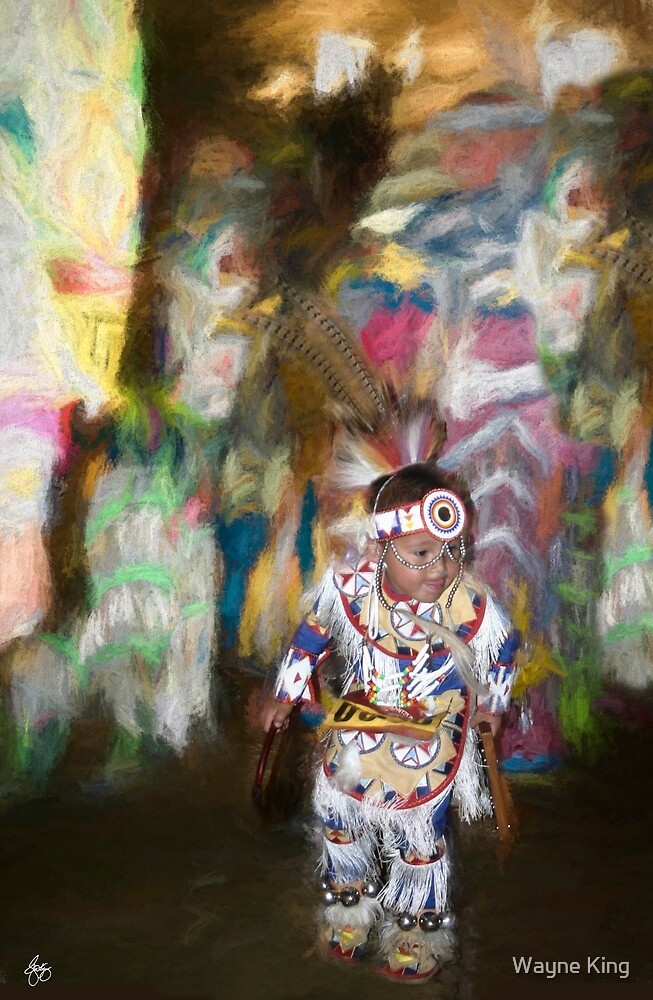
Passing the Torch at Dartmouth Pow Wow


The show notes for this episode can be found at NHSecrets.blogspot.com. Where you can find more information and links. You can make a contribution directly to the Mount Kearsarge Indian museum by going to their website: IndianMuseum.org . Or, you may go to my art gallery site, WayneDKing.com and choose from among my original art, under the MK Indian Museum Heading and 1/2 of the purchase price will be donated in your name to the Indian Museum. You will receive a signed, numbered, limited edition original image printed on fine art museum quality rag paper and the good folks at the Indian Museum will gratefully receive your donation.


Notes and Links

Wabanaki Confederacy
https://en.wikipedia.org/wiki/Wabanaki_Confederacy


WPA (dated) history of Indians of NH - worth a read
https://www.livingplaces.com/NH/New_Hampshire_Indians.html


Indigenous New Hampshire
Indigenousnh.com

Carved in Granite - Jeremy Osgood author
Order the book here

Chocorua Redux: Revisionist History of a Name
Mary Ellen Lepionka
https://static1.squarespace.com/static/5c6c20254d8711284e8b9a6b/t/5d0bee26d7c9fe00010ea0ac/1561062950571/Chocorua+Redux.pdf


Important summary points

Native American Indians had a completely different cultural map by which their lives were lived and governed. Ownership of land was not part of their culture. The notion of selling land was akin to selling your mother, or grandmother. 

Most, if not all, Indian cultures were "sharing cultures". A persons "worth" or status within the community was measured by what he, or she, shared with others. In other words, where individuals from the European cultures were judged by what they accumulated, a "great man or woman" among Indian people was one who generously gave away his or her possessions, shared his food, helped to feed her people, provided for the community in good times and bad.

On the other hand, European cultures were often composed of people who had been forced to "share" by those who ruled them or by the government thru taxation of one sort or another.

Religious traditions for most, if not all, Native people were not enforced upon other members of the community. Their spirituality was tied to the land and a belief that all creatures, and most often all animate and even inanimate things had a spirit that defined them and made them worthy of respect and honor: two-legged, four-legged, those that flew, crawled and slithered, even. Taking the life of a fellow creature was done with reverence and recognition for the spirit of the animal.

You may remember from earlier in this episode that I remarked upon the unusual nature of the marriage between my great grandfather and grandmother, noting that they were traditional enemies. It is true that there was conflict over the more than 10,000 years that the Abenaki and the Iroquois had inhabited the lands of the northeast but what additionally made the conflicts much worse was that each nation had become the pawns of two (often) warring colonial powers, largely as a survival strategy on their parts. Regular war and ongoing conflict between the French and the English was the rule, not the exception, with the Iroquois Confederacy allying itself with the English and the Abenaki siding with the French.


The Rose and the Headdress