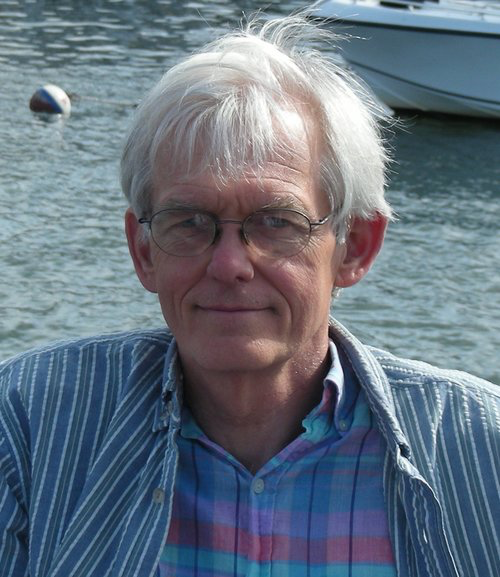
Jim Rousmaniere
Journalist and Author: “Water Connections” What fresh water means to us; What we mean to water
 Jim Rousmaniere is a soft spoken fellow, but these still waters run deep as the saying goes. He has the curiosity and insight of an oracle to many of his admirers. He is also straight out of central casting when it comes to the role of an editor, glasses at just the right level on his nose so he can look over them at you and make you feel like his BS meter is always on full alert.
After a stint in the Peace corps, he began his career in journalism at The Baltimore Sun in Baltimore and Washington DC, where he covered national economics, and in the early 1980s he took over the editorship of the daily Keene (NH) Sentinel. He retired from newspaper management in 2013, at which time he began researching the subject of his book: "Water Connections."
While he clearly has a deep respect for the natural environment, it is the intimate and immediate connection with people and their stories that feed his imagination and enthusiasm and allow him to take what might seem a simple story and weave it together with the artistry of a symphonic composer. Art, history, science, and business all figure into the story that Jim tells.
Beginning with the White Mountain Art movement that helped fuel a tourism boom and a deep connection with the landscape, Jim then leads us into the devastation of northern forests that spurred both citizens and businesses to action resulting in the Weeks act and the White Mountain National Forest.
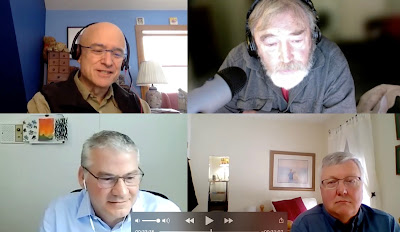
Now normally when I do one of these podcasts I cut out the small talk with which they inevitably begin but with Jim Rousmaniere, there's really no such thing as small talk and the journalist is ever present. So I've included some more personal reflections that Jim managed to "drag" out of me because they may be of interest.
You see, one of my very first encounters with Jim was in 1994 when I was a nominee for Governor in a longshot bid to unseat a popular governor. This conversation was the first opportunity that I had to thank Jim for ignoring the odds and endorsing me in that race. Jim managed to also turn that into a moment of candor about the nature of politics from my perspective.
In his new book "Water Connections" as in every moment of his working life, Jim Rousmaniere is deploying his journalistic sensibilities to seek out the deeper meanings that help to give all of us greater insight into the richness and meaning of our lives, including the trials and tribulations, the successes and the defeats.
In this conversation we talk about Water Connections as well as his reflections on the state of Journalism in this new era of fake news and digital delivery.
Here is my conversation with one of New Hampshire's media giants. Jim Rousmaniere.
Listen here:
https://feeds.podetize.com/ep/J8PiG5stU/media
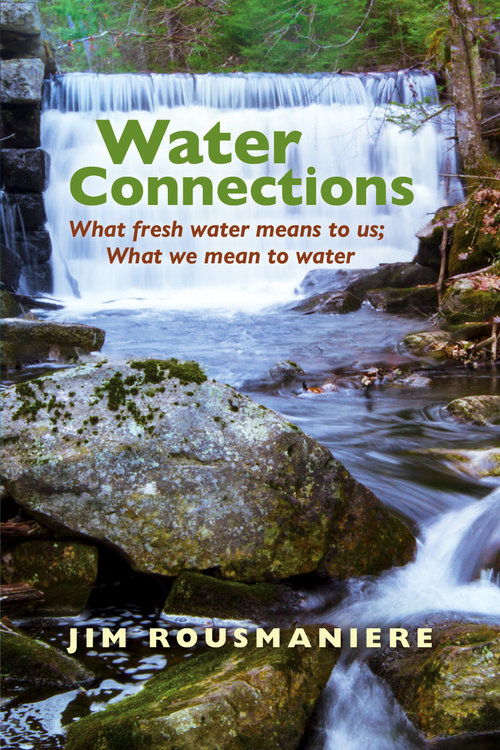
WATER CONNECTIONS
A book for readers interested in human stories about New England’s environmental history.
A unique look at how rivers, lakes, and streams have been affected by changes in technology, citizen initiatives, evolving methods of conservation, and the unintended consequences of human action.
“There are sobering lessons in this book. There is also beauty and eloquence and passion, in Jim Rousmaniere’s voice and the watery places he takes you to. He is guide and companion, knowledgeable and engaging, and when you part company with him—a sad moment—you will be grateful for what you have learned and the hope he has left you with.”
--- JACK E. DAVIS
Author of “Gulf – The Making of an American Sea”
winner of the 2018 Pulitzer prize for non-fiction
BAUHAN PUBLISHING 2019 SOFTCOVER, 207 PAGES PETERBOROUGH NH $22.50 SBAUHAN@BAUHANPUBLISHING.COM (603) 567-4430
Introducing a fresh look into
our changing ways around fresh water
by Jim Rousmaniere
Over the years Americans have changed what they do in and around water. They no longer send raw sewage into rivers. They no longer fill in swamps to make space for farmland or shopping centers. They no longer build huge power dams. They don’t flush unused medicines down the toilet any more. So, we’re capable of change, but are we up for more change at a time when chemicals we know little about are getting into public waters, and when harder rains from climate change are doing real flood damage and when water shortages have become more common?
Journalist and historian Jim Rousmaniere introduces you to the wide range of people — many of them in New England — who are asking these questions. They include volunteer citizen-scientists who test the quality of water in rivers and lakes; they include government workers who are fashioning new ways to prevent urban floods; they include inventors who vie for prizes at water technology competitions. He gives you artists who’ve made a difference around polluted ponds. Rousmaniere shows how the people behind modern hydropower — the largest source of renewable energy in the United States today — are thinking about their impact on the environment in new ways.
Rousmaniere takes you into the past when mistakes around water were made and in some cases later unmade. Ultimately the author shows how history happens. “Water Connections” is as much about the ways of people as it is about the ways of water that flows through their lives.
ORDER THE BOOK NOW
Here’s what others are saying…
ANDREW FISK
Executive Director, The Connecticut River Conservancy, Greenfield, Mass.
“Understanding and protecting our water resources doesn’t have to mean wading through a morass of technical data and engineering reports. Engaging stories about people and the places can inspire the ever-continuing work needed to ensure our rivers, streams, and lakes are clean, healthy, and full of life. Jim Rousmaniere’s Water Connections tells these stories well and leaves readers both encouraged by the work already done, and emboldened to take on the work still to do.”
NICOLE SILK
President and CEO, River Network, Boulder, Colorado
“Water Connections is a wonderful meditation on rivers and their importance to each of us, our communities, and our future. With New England as the primary backdrop, and his own Roaring Brook and other local streams as central characters, Rousmaniere has uncovered lost stories of human ingenuity and engineering prowess as well as public health emergencies and regulatory failures. The examples from 1870 and 1945 lace together with those from 1982 and 2013, punctuating his points while encouraging a new look at history.
“He comfortably integrates systems thinking about complex problems into his prose, allowing the reader to increase their ecological literacy with little effort. His examples also draw our attention to the remarkable ability of our rivers to restore themselves when given the time and space to do so. By the end, I was left with a deep sense of hope for the future and profound curiosity about the untold stories of salvation and calamity from rivers all over the world.
“Don’t miss this book – it is full of surprise and wonder.”
PAUL SUSCA
Supervisor of the planning unit in the drinking water program at the New Hampshire Department of Environmental Services, Concord, NH.
“At the same time entertaining and immensely informative, Water Connections weaves together a broad collection of stories about the people who shaped and continue to shape the relationships among New England's people, land, and water.
“To understand any aspect of New England, one must know something about its history, and Jim Rousmaniere shows that's no less true of our multi-faceted relationship with water – in many ways the backdrop of our lives and – historically and currently – the lifeblood of our economy.
“The book is populated with historical figures like John Wingate Weeks (author of legislation that enabled the establishment of the White Mountain National Forest, spurred by the devastation of rivers brought about by clear-cutting), resourceful 19th-century figures who used “water rams” to pump water uphill, and modern-day heroes like the Nashua River's Marion Stoddart and the generation of watershed defenders she inspired. Water Connections' sweep is broad, reaching into every aspect of water in our lives, providing lessons that extend well beyond New England and the Northeast.
“It's a hopeful book, showing how much progress has been made in undoing the damage done to our life-giving rivers, lakes, and groundwater. It also strikes a cautionary note, reminding us of past blunders, failures to anticipate the consequences of new technologies and practices, and pointing to the troubling proliferation of emerging contaminants whose health and environmental effects we as yet know little about. Water Connections is a must-read for every New Englander who is drawn to water.”
ABOUT
“Water Connections” (Bauhan Publishing, June, 2019) is about the consequences of human action around water. Such as: the fouling of lakes by the engines of commerce, the decline of migrating fish in dammed-up streams, and what sorts of things can happen to public lands around reservoirs when people are let in — or kept out.
Jim Rousmaniere is a longtime journalist, having covered national economics in the Washington bureau of The Baltimore Sun before being named editor and president of The Keene(NH) Sentinel, positions from which he recently retired. He is the author of Water Connections: What fresh water means to us, what we mean to water (Bauhan Publishing, 2019). Rousmaniere lives with his wife Sharon in Roxbury, a tiny town just outside of Keene. He's a participant in municipal governance, economic development and historical education programming, among other activities.
Contact
Jim Rousmaniere
603-903-3459
jamesrousmaniere@gmail.com
James Rousmaniere's Programs
How Fresh Water Has Shaped New Hampshire
Granite Staters' impact on fresh water - and, conversely, inland waters' impact on Granite Staters - has evolved over time. Our pollution has changed, as has our hydro-power, our experiences with floods, our watershed protections, our exposure to invasive vegetation, and our use of water in the home. This illustrated presentation by Jim Rousmaniere explores the roles of industry, innovation, and citizen action in assuring clean and plentiful water supplies in a state that in many ways has been defined by water.
How Jim got his feet wet
https://www.waterconnections.net/projects/
Contact Jim
https://www.waterconnections.net/contact
Questions for Readers
https://www.waterconnections.net/questions-for-the-reader
Jim’s Water Blog
https://www.waterconnections.net/blog