Saturday, April 27, 2019

Ep 06 The Books He Didn't Write: The Legacy of Bud and Nancy Thompson


Listen here:
https://feeds.podetize.com/fRnCHEXPOt.mp3


All men dream, but not equally. Those who dream by night in the dusty recesses of their minds, wake in the day to find that it was vanity: but the dreamers of the day are dangerous men, for they may act on their dreams with open eyes, to make them possible.

~ T. E. Lawrence

This story, of one - and then two - such "dreamers of the day" begins in the pastures of Canterbury New Hampshire, passes modestly through Concord, the state capitol, and winds up finally in the rolling meadows beneath the shadow of Mount Kearsarge in Warner.

With each step Bud Thompson has used his keen sense of place and humor and history to create a lasting legacy for New Hampshire and the nation and ultimately for himself and his beloved Nancy though the personal legacy came about by accident. The result of lives lived, for more than 90 years now, selflessly in service to others. Always calling down the spotlights like directors cueing our attention with their quiet competence and always redirecting the camera's focus from themselves to their mission.

It is a story of saving and preserving one people's history and then pivoting at the age of 68 - when most people would have "Called it Good" as they say; and crafting, from raw land and love, a living homage to the original inhabitants of this state and this country.
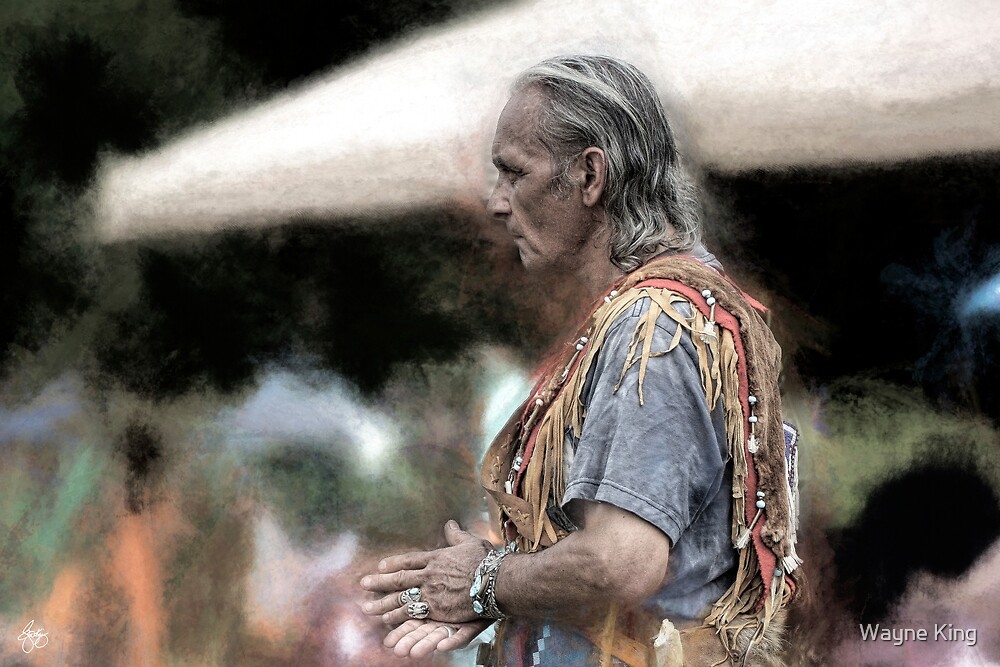
Dance of a Woodland Elder

In his 96 years Bud Thompson played the pivotal role in the founding of the Canterbury Shaker Village and, with his wife Nancy at his side, The Mount Kearsarge Indian Museum, honoring the art and spiritual oneness of the Native American people of this continent. Along the way offering up their help to also preserve the legacy of New Hampshire's only US President, Franklin Pierce.

He never had time to write the books. There was no author's signing for "Preserving the Shaker Legacy", There was no publisher crowing about the "Ride of the Pierce Brigade"; and there was no shelf at Gibson's Books in Concord, or Main Street Bookends in Warner dedicated to celebrating Native American Heritage in the shadow of the Mountain that the Penacook call Carasarga - today known as Mount Kearsarge. 
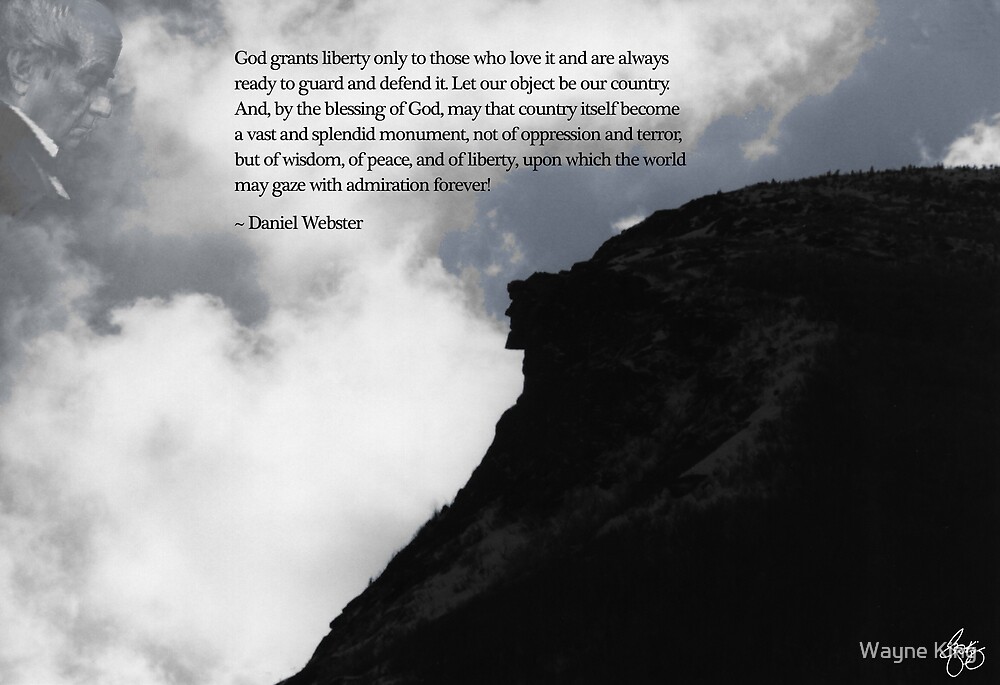
Webster - Wisdom, Peace, Liberty

These were as Bud himself says "The Books He Didn't Write." Today with some help from his son and previous guest on NH Secrets, Legends and Lore, Darryl Thompson and of course from Bud himself we bring you the story of Charles "Bud" Thompson. Founding catalyst of Canterbury Shaker Village, member of the Pierce Brigade and, with his wife Nancy, Founders of the Kearsarge Indian Museum.

The story begins more than 60 years ago when Bud joined together with three of the last remaining Shakers: Sister Marion Phelps, Sister Bertha Lindsey, Sister Marguerite Frost. He had a dream and the Shakers believed in him and trusted both his vision and his character. Ten years later, legendary New Hampshire Lawyers Richard Morse and John Sheehan stepped up to help make it all legal and official and in 1969, at what we now know as Canterbury Shaker Village they all joined together to form the Canterbury Shaker Village Incorporated, the legal entity that protected the land and the legacy of the Shaker people through an historic restoration of the village.

But in 1957, when Bud first met the Shakers, the future seemed uncertain at best.

Links

Canterbury Shaker Village

Mt. Kearsarge Indian Museum
https://www.indianmuseum.org

Pierce Manse


Episode 08 Ripples of Hope - The Plymouth Area Renewable Energy Initiative PAREI


The Plymouth Area Renewable Energy Initiative

Listen here:


"It is from numberless diverse acts of courage and belief that human history is shaped. 
Each time a man (or a woman) stands up for an ideal, or acts to improve the lot of others, or strikes out against injustice, he sends forth a tiny ripple of hope, and crossing each other from a million different centers of energy and daring those ripples build a current which can sweep down the mightiest walls of oppression and resistance." Robert F. Kennedy


This is a joint podcast of The Radical Centrist and New Hampshire Secrets, Legends and Lore and cross broadcast on both podcasts because of the unique nature of what PAREI has achieved and the tremendous promise that the work they do holds not only for the state of New Hampshire but as a model for similar organizations all across the country.

In this podcast - part 3 of our "Beyond Carbon" series I interview Peter Adams and Sandra Jones, Founders of what may very well be the first non profit in the country to focus exclusively on sustainable energy and conservation. Since their founding in 2003 a growing army of community volunteers and environmental patriots has worked with Peter and Sandra to help others plan their energy future. No one is asked what their beliefs are, what they drive, their political party, who they voted for. There are open arms and open hearts beginning with Peter and Sandra and the infectious effect of that openness and acceptance has spread throughout not only the organization but the community. It is one of the most important keys to their success.  Another is the axiom, "don't talk . . . do."  Experiment, take risks, make mistakes, learn from them and move on, celebrate your victories by sharing your knowledge so that others might benefit from it all. Today as many as 150 other communities from across America have requested the primer developed by PAREI to form their own Energy Initiatives.

So when Sandra and Peter and the army of PAREI began it may have seemed at times a lonely business, but in part from their efforts, A Renewable Energy Revolution has flowered. That Renewable Energy Revolution taking place in this country has many points of light, to use a phrase from President George H.W. Bush, each of them spread their warmth and illumination moving us with growing momentum and enthusiasm toward a distributed energy future that will allow us to live comfortably and still care for the planet and our neighbors, both humans and critters of all shapes and sizes, or as Free Joseph says, the earth and all its inhabitants.

To me, Sandra and Peter are living proof that heroes and patriots walk among us every day in our own communities. People who recognize that the changes we make here at the grassroots are the ripples of hope that build to create change at every level. 

Now if they were here right now, both of them would deflect the attention from themselves to the hundreds of volunteers now engaged with them in the work of PAREI. Of course they are right. But without the catalyst; without the stone dropped into the pond, the ripples would not rise up.

If it seems like I am immensely proud of my old friends, I plead guilty. How could I not be when their work gives me such hope for the future. For as long as citizens reach for the stars, it won't matter that our leaders are temporarily lost in a black hole of partisanship and ideology. Time and again throughout our history we have seen that If the people lead, the leaders will surely follow.


Plymouth Area Renewable Energy Initiative (PAREI)
Solar energy equipment supplier in Plymouth, New Hampshire
Address: 79 Highland St, Plymouth, NH 03264


Links:


RFK Ripple of Hope Speech

Thursday, April 18, 2019

EP 05 NH Secrets: The Way We Were Pt 2 - The Battle Over Computer Access, Right to Know, and Open Access to Information with V. Michael Hutchings and Susan Clay of Common Cause


EP 05 NH Secrets: The Way We Were Pt 2 - The Battle Over Computer Access, Right to Know, and Open Access to Information with V. Michael Hutchings and Susan Clay of Common Cause

The First Debate Over the Access to Digital Information May Have Taken Place Right Here in NH.

Listen here:


In 1985, before the Internet was much more than a twinkle in DARPA's eye. Governor John H. Sununu asked the NH Legislature for money to computerize the system by which the state raised and spent what was more than $1 billion a year at that time. It was termed the Integrated Financial System.

But when the new financial system was about to go into use, some lawmakers, particularly Michael Hutchings (R-Plymouth) and myself began to fear that we had created a bank of information to which the executive branch would have access while the legislature did not.

Initially the battle lines related to the balance of power between the legislative branch and the executive branch, a tussle that has been occurring since the Republic began.

However, it quickly became evident, from the fact that the fight made the pages of the Financial Times of London, the NY Times, and Wall Street Journal as well as Newsweek magazine, that this battle had huge ramifications not just in NH but beyond that. As it turns out, this fight was the opening salvo in what would become a long term debate over the access to information.

It would be more than a decade before the Internet would ramp up the debate even more dramatically but it appears that this was the first public debate over the access to information in the computer era -an issue that has occupied the nation ever since.


Here's the conversation with Former Representative Michael Hutchings and Susan Clay, Director of Common Cause NH who was also engaged in the debate.


Sunday, April 7, 2019

The Way We Were. A conversation with Fmr State Rep V. Michael Hutchings (R, Plymouth NH 1983-1986) (Part 1)

The Way We Were. A conversation with Former NH State Rep V. Michael Hutchings (R, Plymouth NH 1983-1986) (Part 1).


EP 05 NH Secrets: The Way We Were Pt 1 - V. Michael Hutchings

V. Michael Hutchings served as a Republican State Representative in the NH House from 1983-1986. He has a special place in his heart for New Hampshire's political system and is a fierce advocate of our democracy and a life long observer of the political scene and its historic context.

Listen here:


Thursday, March 7, 2019

Growing Up Among the Shakers - Darryl Thompson, Shaker Historian

Umbrellas in a Museum

Listen here:


What most people know about the Shakers could be summed up in a few words: cool furniture, practiced celibacy.

But there is a world of interesting things about the Shaker people waiting to be explored for those who have an interest.

Yes the Shaker’s were extraordinary craftsmen creating everything from simple and beautiful furniture to basketry and weavings. But they were also inventors, scientists, philosophers, civil libertarians, abolitionists, songwriters and much, much, more. Did you know that the Shakers invented the washing machine? The circular saw? The clothespin? Did you know that they were horticultural pioneers, developing hundreds of new species of plants and herbs through genetic cross breeding? Did you know that they created hundreds of other time saving devices and have even been credited with developing mass production before Henry Ford made it world-famous? 

Darryl Thompson grew up among the last of the Shakers more as a accident of birth than anything else, his father Bud Thompson, who you will hear about in a future podcast, was the founder of the Shaker Museum in Canterbury, New Hampshire. However, accident of birth or not, Darryl has become one of the foremost Shaker experts in the US, helping to keep the Shaker legacy alive through his work.

The Shakers are considered to be an offshoot of the Quakers. The sect originated in Manchester, England in around 1772. Strict believers in celibacy, Shakers maintained their numbers through conversion and adoption. Once boasting over six thousand adherents, today the Shakers, with the exception of a small contingent of people living in Sabbathday Lake, Maine, are but a memory.

Originally and properly called the United Society of Believers in Christ’s Second Appearing, the Shakers, like the “Yankee Doodles” of the same era, derived their common name from a pejorative appellation adopted by the group as a source of pride. 

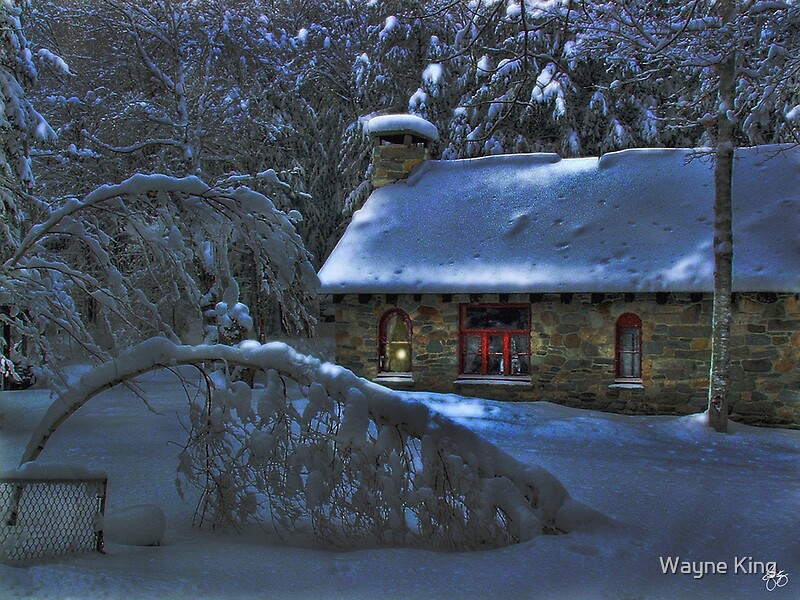
Moonlight On the Stone House
  
Under the leadership of James and Jane Wardley, a husband and wife team; and, most notably, by Mother Ann Lee, the group became known for their intense, ecstatic worship including shaking or quaking during religious activities and at times speaking in “tongues” - both of which were considered signs of divine intervention and inspiration.

Today in New Hampshire the Shaker life and legacy and heritage remains alive through the work of the Canterbury Shaker Village. Founded in 1969 to preserve the heritage of the Canterbury Shakers, Canterbury Shaker Village is an internationally renowned, non-profit museum and historic site with 25 original Shaker buildings, including the only intact, first-generation 18th-century Meetinghouse and Dwelling House, both on their original sites. There are also three reconstructed Shaker buildings and 694 acres of forests, fields, gardens and mill ponds under permanent conservation easement. 

If you visit the village and you are very fortunate, you may find Darryl Thompson leading your tour a rare treat.

Designated a National Historic Landmark for its architectural beauty, integrity and significance, Canterbury Shaker Village is dedicated to preserving the 200-year legacy of the Canterbury Shakers and to providing a place for learning, reflection and renewal of the human spirit.

Visitors learn about the life, ideals, values and legacy of the Canterbury Shakers through tours, programs, exhibits, research and publications.

In addition to the daily tours, during the course of the year, the Village sponsors many community events that draw local folks and visitor from far and wide. For example the annual “Wool Day Festival” at the Shaker Village takes place this year on September 23. We detail it in the “50 Autumn Adventures” story elsewhere in this issue.

Canterbury Shaker Village is a treat for the heart, soul and palate. If you haven’t yet been, it should be on your list. If you have been, it may be time to recharge your spirit with another visit. 

Links:

Darryl is available for consulting and lectures and can be reached at ShakerSleuth@gmail.com

Darryl Thompson
PO Box 42
Gilmanton Iron Works, NH 03837
shakersleuth@gmail.com
Home Phone: 603-364-7356

Darryl is, among other things, a guest lecturer for the NH Humanities Council. Learn more about his lecture series here.


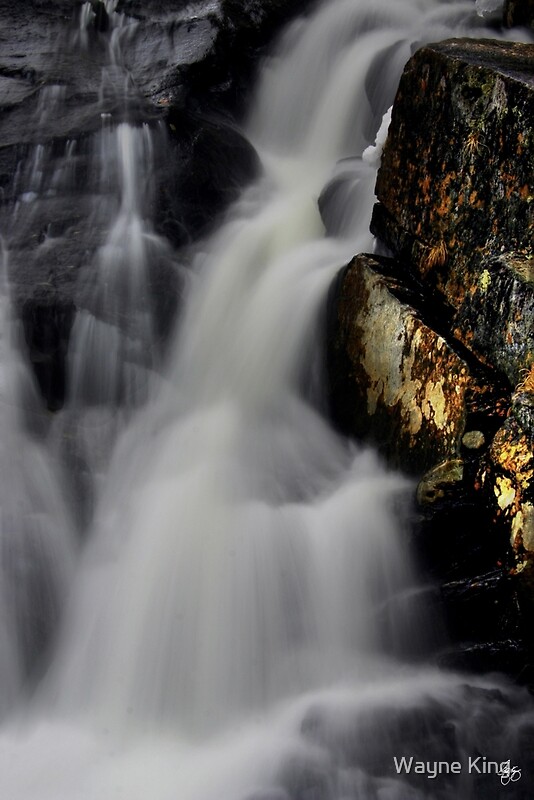
A small cascade flows past a colorful rock outcropping on Stinson Brook in Rumney, NH. Only one edition of 10 original prints of this image is created, signed, dated and with a certificate of authenticity.  The image is used for creation of a digitally initialed open edition but otherwise archived and kept only for historic purposes and publications. To purchase an original, printed on 100% cotton rag fine art paper with archival inks or an open edition print click here: http://bit.ly/2d2pR7o

To purchase this image on a 5x7 card with an envelope click here

Tuesday, February 26, 2019

Sugaring Off - The Old Fashioned Way

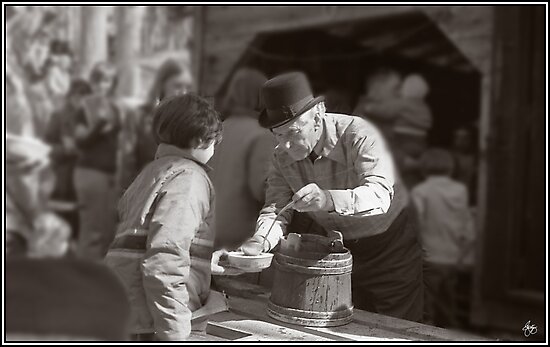
Uncle Harry ladles the syrup


"Uncle" Harry Uhlman's Sugaring Off Parties
by Wayne D. King

I remember as if it were yesterday, though at least 45 years have passed. Warm spring Sundays, filled with the hope that spring always brings. Sun shining on my face as I left church and greeted Uncle Harry at the door.

Uncle Harry was a deacon in our church and he wasn't my uncle - he was everyone's uncle. His kindly face, worn with the seasons of a Yankee native's life, would beam as he leaned down to remind me of the sugaring off party at his sugarhouse that afternoon and called me "dear" in that rich North Country accent that resonates still in my brain. Read the full piece here.


HOW MAPLE SYRUP IS MADE

Pure maple syrup is made by boiling down the slightly sweet sap of the sugar maple tree. In late February or early March, syrup producers (called sugarmakers) prepare for their annual harvest of the maple sap. The sugarmaker prepares his sugarbush (maple orchard) by clearing access roads in the snow, removing fallen branches, and setting up his buckets or sap tubing systems. Whether they use tubing or buckets, commercial sugarmakers must be sure that all their sap gathering, collecting, evaporating and bottling equipment is absolutely clean and in good condition before the beginning of the season. You could do it in your backyard without the careful preparation, but those who provide it for our tables must meet very strict codes created by the United States Department of Agriculture.

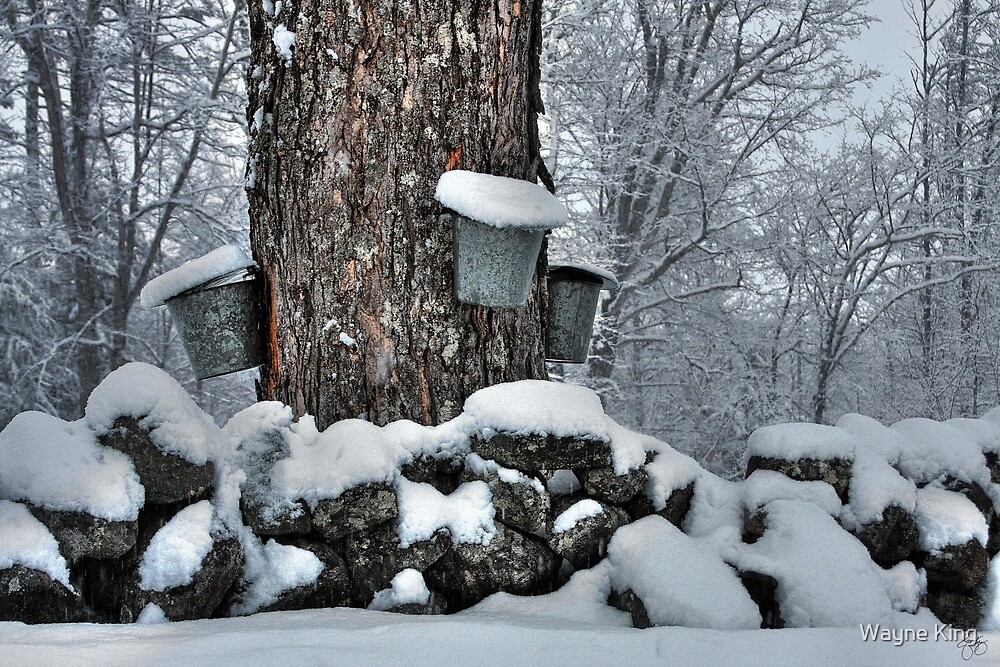
Memories of Sugaring
A sugarmaker must be completely in tune with his/her environment because there is no set time at which sugaring begins.. The sugarmaker must be aware of the clues of nature to tell him or her when the time is right: Days become warmer, the streams run with melting snow, icicles drip faster, the birds announce the not-too-distant arrival of spring. This is the time known as "sugar weather," . Nights fall below freezing but the days are mild. These conditions make the sap flow. More

Saturday, February 9, 2019

Episode 2 - Robert Rogers Frontier Hero, White Devil Part 1 - Stephen Brumwell Interview


Subscribe or donate to NH Secrets, Legends & Lore

Help me keep this podcast advertiser free by making a donation or becoming a subscriber to the podcast. Click here.

NH Secrets, Legends & Lore Episode 2 Presented in 2 parts a and b
Part A
Part B

Podcast notes

The Many Faces of Robert Rogers

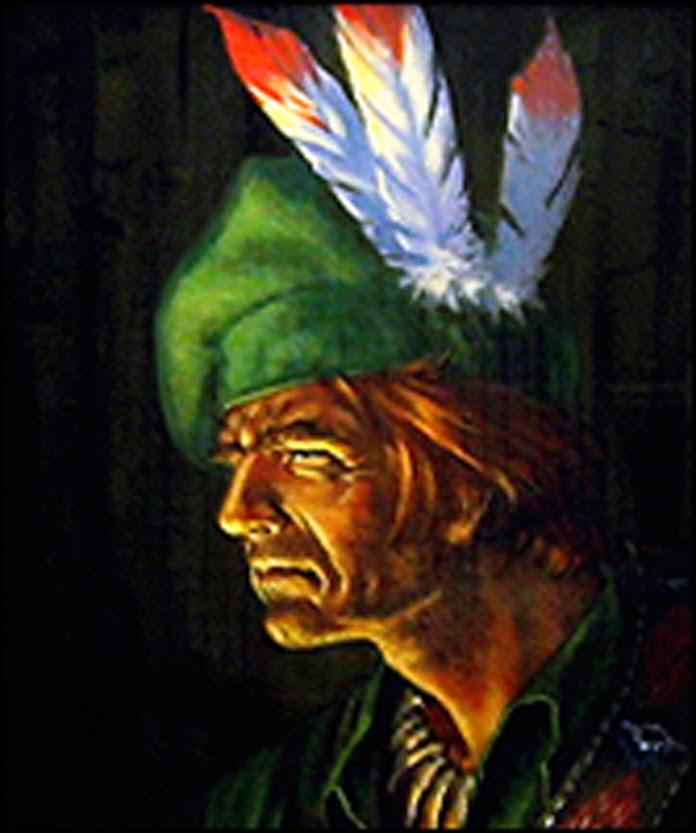
Robert Rogers – Frontier Hero
Wobomagonda - White Devil


Few New Hampshire citizen’s played a more unique and controversial role in the pre-revolutionary period of what would come to be The United States of America than Robert Rogers.

Robert Rogers, or Rodgers (7 November 1731 – 18 May 1795), was a New Hampshire resident and colonial frontiersman. Born in November of 1781 in Methuen, Mass, his family soon moved north to what is now New Hampshire settling in a town Roger's refers to in his writings as Mountalona and today encompassing the towns of Dunbarton and Bow.

His service to the people of New England, particularly in the war known in the colonies as the French & Indian War (in Europe the Seven Years War) is well documented and a study in the fame and controversy that surrounded this remarkable man. At only 14 years of age he became a member of the militia in King George’s War (1744–1748).


Many military historians attribute the seeds of the American Revolution’s success to the ideology, tactics and strategies of the famed Roger's Rangers, started under his leadership. Indeed, one of his favored rangers was John Stark who would later set aside his "Ranger temperament" to become a General in the Colonial Army and utter the famed phrase "Live Free or Die" in the heat of battle.

Legend has it - though no documented evidence exists - that, after a brief stint in England where he was feted as a British hero of the frontier, Rogers returned to America and offered his services to George Washington who turned him down for fear that he was a loyalist spy. Rogers, perhaps in spite, or perhaps simply because he knew no other life than that of frontiersman, joined the British and fought as a loyalist.

We will, likely, never know if Washington was right about Rogers and the legend may, in fact, be nothing more than revisionist history fostered by the likes of the peripatetic historian Francis Parkman who nearly one hundred years after Rogers day, set his sights on rehabilitating Rogers in the eyes of a public that remembered only his final betrayal in his service to the army of King George.

Yet, the legend of Washington's actions - true or not - and certainly the work of Parkman, may contain the seeds of Roger's historic rehabilitation. After all, today Rogers is revered as the father of the Rangers and the Green Berets, while his fellow loyalist Benedict Arnold's name has become synonymous with treachery and betrayal.


Lest we fall into the Parkman trap of romanticizing the frontiersman, it should be pointed out that Native American’s of the time – with the exception of a small number of Mohicans who served as scouts and fought beside him – referred to him as Wobomagonda, translated to “White Devil” because Rogers and his Rangers could be every bit as ruthless as any of their rivals.

The truth about Rogers probably lays somewhere in between. The Rangers may have been pitted by history against the native indigenous people – but they drew much of their strategies, dress and temperament from the very same people and many historic documents evidence their admiration for the bravery, courage and skills of their foes.

Today it’s our good fortune to have author and historian Stephen Brumwell speaking with us from his home in Amsterdam. Stephen Brumwell is the author of numerous books including White Devil: A True Story of War, Savagery, and Vengeance in Colonial America about Robert Rogers and his Rangers.

Stephen Brumwell is a former newspaper reporter - so he knows well the process for digging up a story and appreciating the nuances of that story. Stephen received his Ph.D. at the University of Leeds. In addition to White Devil his works include: Redcoats: The British Soldier and War in the Americas, 1755-1763, a story about ordinary soldiers who fought the French and Indian War. George Washington: Gentleman Warrior; Paths of Glory: The Life and Death of General James Wolfe; The St Francis Raid: Vengeance and Survival in Colonial America; and his most recent book Turncoat: Benedict Arnold and the Crisis of American Liberty - from Yale University Press; a must read for anyone who wants to truly understand the role of Benedict Arnold in the American Revolution in its broadest sweep. Brumwell also is the author of many journal and magazine articles and a recipient of the Authors’ Foundation Elizabeth Longford Grant. He lectures regularly in the US and the UK.

After the Revolution Rogers returned to England where he died unappreciated and impoverished in London - far from his family and the woods and mountains of his native New England that he loved so much.


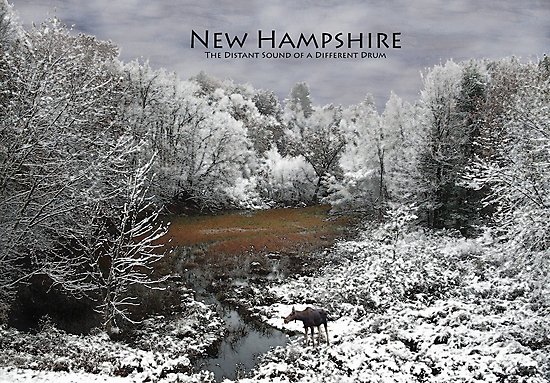
“The Distant Sound of a Different Drum”

Links


White Devil by Stephen Brumwell


Benedict Arnold Is America’s Most Famous Traitor. But You Probably Don’t Know His Whole Story
By Stephen Brumwell for Time Magazine


Redcoats by Stephen Brumwell


Braddock’s Defeat in the French and Indian War


John Stark


Fort Ticonderoga


Fort Number 4


St. Francis Raid

Tumplines for carrying supplies

The Battle on Snowshoes

King George’s War

The History of American Newspapers - First section on colonial newspapers

The Siege of Fort William Henry

NH Abenaki Heritage Weekend - Milton, NH

The Abenaki of Vermont

Subscribe or donate to NH Secrets, Legends & Lore
Help me keep this podcast advertiser free by making a donation or becoming a subscriber to the podcast. Click here.


Keywords: Stephen Brumwell, Abenaki, Indian, Native American, Wobomagonda, Colonial Period, North America, French Canadian, French and Indian War, Black Watch, british military history, Canada, Catholic Church, Crown Point, Fort Ticonderoga, french and indian war, Jeffrey Amherst, Jesuit, Lake Champlain, Marquis de Montcalm, mohican, Mahican, New Hampshire, Massachusetts, Mountalona, Tump Line, Nipmucks, Robert Rogers, Rogers Rangers, Seven Years War, St Francis Raid, William Pitt, Benedict Arnold, George Washington, Revolutionary War, John Stark,


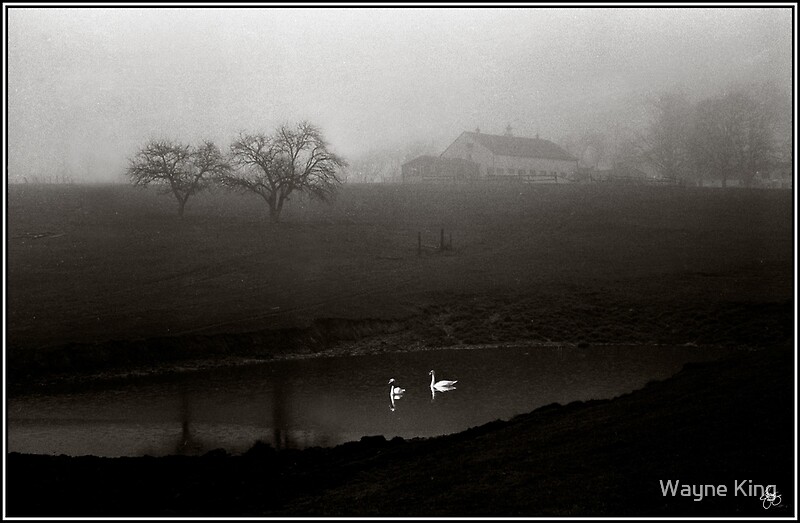
Swans on Scamman Pond