Sunday, February 27, 2022

Ep 59 Richard "Dick" Backus: Actor, Writer, New Hampshire Icon


A Conversation with Actor, Writer and NH Icon Richard “Dick” Backus


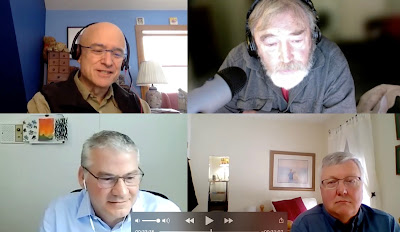
If you saw a photograph of Dick Backus and you thought - "I know him!" it may be because you are of a certain age when you watched daytime soaps like Ryan's Hope or went to see Eugene O'Neill's "Ah Wilderness" at the Ogunquit Playhouse, or you even went to see "Butterflies are Free" on Broadway. These are just a few of the gems that Richard Backus, born, and still living, right here in New Hampshire, has to his credit. I caught up with Dick recently over Zoom and we chatted about his illustrious career.


Listen to the Podcast here:

 https://feeds.podetize.com/ep/68Mazpx0JG/media 


Back when I was a student at UNH in the 70's I spent a good deal of time at the Memorial Union Building where I was running the photo school for MUSO and eventually Photo Editor of the New Hampshire, our student newspaper.


I'll never forget one of the first times that I walked into the MUB at midday to find hundreds of students crowded around every available TV watching the day's episodes of their favorite soap opera. The General Hospital crowd was in one room and Guiding Light fans in another, etc.


I had no idea that so many of my fellow students were so invested in the day-to-day drama's of what were TV's hottest and most profitable productions in that era.


New Hampshire's roots in the acting and performing community run deep and Dick Backus has been an important part of that legacy over the years. 


Though his first love has always been the stage, Dick is An Emmy-nominated soap actor ("Ryan's Hope"), he eventually went behind the scenes as a daytime serial writer. In fact He has been nominated for four Daytime Emmy Awards for writing and one for acting.


In 1972 he won the Theatre World and Clarence Derwent Awards for his multiple roles in the Broadway comedy "Promenade, All!".


He also understudied Keir Dullea on Broadway in the original "Butterflies Are Free" (1969) and eventually took over the role.


Richard Backus was born on March 28, 1945 in Goffstown, New Hampshire, USA. Where

His dad was a local physician.


He discovered his love for acting, the theatre and writing at a relatively early age and made his Broadway theatre debut at the Booth Theatre in the Theatre District of Manhattan in the original production of Butterflies Are Free. The production began in October 1969 with Backus cast as the understudy for Keir Dullea in the role of Don Baker. He was first appeared in the role, which we would later take over, in 1971.

Since then, he has appeared in several other Broadway productions, including Ah, Wilderness!, Camelot, and most recently You Never Can Tell.[5] Other venues at which Backus has appeared include the American Shakespeare Theatre, the Ensemble Studio Theatre, and the Brooklyn Academy of Music.[3]


Backus has also acted in film and television. In the seventies, Backus was in Deathdream a movie that today is considered a cult classic in the horror genre. He also portrayed scheming but well-meaning Jason Saxton on Lovers and Friends. Closer to home, he appeared in several episodes of Spencer for Hire with the late Robert Urich.


On the Soap Opera circuit He replaced Eric Roberts in the role of Ted Bancroft on Another World. From 1980 through 1981, and portrayed Barry Ryan on the soap opera Ryan's Hope, a performance for which he was nominated for the 1981 Daytime Emmy Award for Outstanding Actor in a Supporting Role in a Daytime Drama Series


He married his wife Sharon Romeyko in 1985.


In 1989 he turned his talents toward screenwriting and has not looked back. Richard Backus has been a screenwriter since early 1989. He has worked on three television shows: As the World Turns, One Life to Live, and Days of Our Lives. As the World Turns and One Life to Live have each earned Backus two nominations for the Daytime Emmy Award for Outstanding Drama Series Writing Team.[2] The writing team behind One Life to Live was also nominated for the 2004 Writers Guild of America Award for Daytime Serials.[6]


Dead of Night (1974) ORIGINAL TRAILER [HD 1080p]
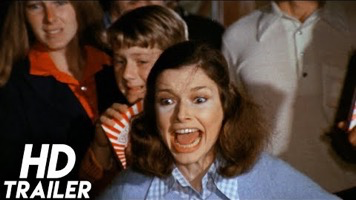


Dead Of Night/Deathdream (1974): Full Movie 


From Wikipedia

Overview (2)

Born

March 28, 1945 in Goffstown, New Hampshire, USA

Height

6' 5" (1.96 m)

Mini Bio (1)

Richard Backus was born on March 28, 1945 in Goffstown, New Hampshire, USA. He is an actor and writer, known for As the World Turns (1956), One Life to Live (1968) and Ryan's Hope (1975). He has been married to Sharon Romeyko since January 27, 1985.


Family (1)

Spouse

Sharon Romeyko (27 January 1985 - present)

Trade Mark (1)

Towering height and menacing frame

Trivia (5)

Born at 5:40pm-EWT

An Emmy-nominated soap actor ("Ryan's Hope"), he eventually went behind the scenes as a daytime serial writer.

Won the Theatre World and Clarence Derwent Awards for his multiple roles in the Broadway comedy "Promenade, All!" in 1972.

Understudied Keir Dullea on Broadway in the original "Butterflies Are Free" (1969) and eventually took over the role.

(? - Present) is a writer for "One Life to Live"

See also

Other Works |  Publicity Listings |  Official Sites

View agent, publicist, legal and company contact details on IMDbPro 

Pro Name Page Link


Richard Backus

From Wikipedia, the free encyclopedia

Jump to navigationJump to search

Richard Backus


Born

March 28, 1945 (age 76)

Goffstown, New Hampshire, U.S.

Occupation

Actor, writer

Richard Backus (born March 28, 1945) is an American actor and television writer. He has been nominated for four Daytime Emmy Awards for writing and one for acting.[1][2]

Contents

Biography[edit]

Richard Backus was born in Goffstown, New Hampshire on March 28, 1945. He attended Harvard University.[3] He has been married to Sharon Romeyko since January 27, 1985.[4]

Acting career[edit]

Richard Backus made his Broadway theatre debut at the Booth Theatre in the original production of Butterflies Are Free. The production began in October 1969 with Backus cast as the understudy for Keir Dullea in the role of Don Baker. He was first appeared in the role, which we would later take over, in 1971.[3][5]

Since then, he has appeared in several other Broadway productions, including Ah, Wilderness!, Camelot, and most recently You Never Can Tell.[5] Other venues at which Backus has appeared include the American Shakespeare Theatre, the Ensemble Studio Theatre, and the Brooklyn Academy of Music.[3]

Backus has also acted in film and television. In the seventies, Backus was in Deathdream and portrayed scheming but well-meaning Jason Saxton on Lovers and Friends. He later replaced Eric Roberts in the role of Ted Bancroft on Another World. From 1980 through 1981, he portrayed Barry Ryan on the soap opera Ryan's Hope,[4] a performance for which he was nominated for the 1981 Daytime Emmy Award for Outstanding Actor in a Supporting Role in a Daytime Drama Series.[2]

Writing career[edit]

Richard Backus has been a screenwriter since as early as 1989. He has worked on three television shows: As the World Turns, One Life to Live, and Days of Our Lives. As the World Turns and One Life to Live have each earned Backus two nominations for the Daytime Emmy Award for Outstanding Drama Series Writing Team.[2] The writing team behind One Life to Live was also nominated for the 2004 Writers Guild of America Award for Daytime Serials.[6]

Partial filmography[edit]

References[edit]

  1. ^ New York Times

  1. ^ Jump up to:a b c "Richard Backus - Awards"
    . imdb.com. 2009. Retrieved 2009-11-02.

  2. ^ Jump up to:a b c Ian Herbert, ed. (1981). "BACKUS, Richard". Who's Who in the Theatre. Vol. 1. Gale Research Company. p. 33. ISSN 0083-9833
    .

  3. ^ Jump up to:a b Richard Backus
     at IMDb

  4. ^ Jump up to:a b Richard Backus
     at the Internet Broadway Database

  1. ^ "2004 WGA Award Nominees; 2004 Producers Guild Award Winners"
    . The Futon Critic. 2004-01-20. Retrieved 2009-11-03.

External links[edit]


Splat from the Past

https://www.youtube.com/watch?v=kKtYrkFdSvU


IMdB Bio

​​https://www.imdb.com/name/nm0045741/


NH Production of “Speak Truth to Power

http://speaktruthnh.blogspot.com/2009/09/


Sunday, February 20, 2022

Plymouth State University and NH Electric Coop Launch Pilot Vehicle to Grid Project


Donald Kreis, Wayne King
Brian Callnan, Bill Johnstone


Plymouth State University and NH Electric Coop Launch Pilot Vehicle to Grid Project


Will Electric Vehicles form an important Component of Energy Storage in the Future?


Listen here:

https://feeds.podetize.com/ep/hBy3pDXDM/media


Hosts Wayne King and Don Kreis - NH Consumer Advocate before the Public Utilities Commission - speak with Bill Johnstone, business development executive, and Brian Callnan, VP of Power and Resources Access at the NH Electric Cooperative about a pilot project with big implications for energy storage and cost control with respect to electric rates.  

In a recent conversation I had with musician and environmentalist Livingston Taylor when he was scheduled to perform at the Flying Monkey in Plymouth, Liv posited that his chief concern regarding our way to solving the climate crisis was the ability to store energy so that we could rely more sustainably on renewable sources of energy. The challenge, of course, being that most renewable sources of energy are what we call "intermittent" meaning that we can only count on them under certain conditions: For wind turbines to produce energy, the wind must be blowing. For solar, the sun must be shining, etc. Taylor was talking about improving upon ways to effectively store energy so that we can use it when we need it to accommodate the lives we lead.

Now I could have just said that my co-host on this podcast episode Don Kreis, NH's Consumer Advocate before the Public Utilities Commission, and I have discussed this because we have. But now when you think of the brilliant mind of Don Kreis, you'll also associate it with the humor and musical stylings of Livingston Taylor and that will make it all the sweeter.

When I spoke with Livingston about this at the time, he was advocating for a "Manhattan Project" for energy storage to bridge the gap but Don assures me that the "holy grail" of energy storage is - in fact - something that both the private sector and the civil society sector are both in hot pursuit of and doing quite nicely.

 If you listen to the last two interviews that I did on the "Radical Centrist Podcast with Don Kreis you'll recall that Don spoke at length about interactive ways for private utility companies, cooperatives and consumers to be collaborating to minimize energy usage during peak times and shift it instead to times when energy rates could be more affordable.

Almost all of this comes under the rubric of the "Smart Grid" a term that refers to the interoperability of the nation's electric grid. The ability of the grid to interact with consumers and generators of power, especially as more and more consumers begin to serve the dual role of both consumers and generators of power.

The brilliant scientist Jeremy Rifkin coined a word for this. "ProSumer" Do you have solar panels on your home? Then you are both a consumer and a producer. Viola! A Prosumer.

Luckily for some of us who are served by the more responsive and responsible utility companies and cooperatives the majority of these companies in New Hampshire - with one notable exception -  are seeking out ways to create avenues for consumers to actively participate in the process of creating more sustainable approaches to energy use, particularly electing to use energy in ways that reflect the need to reduce energy use during peak hours and participate as prosumers in the process of leveling out supply and demand.

Today's podcast features a new pilot project that is a collaboration between Plymouth State University and the NH Electric Cooperative. Utilizing electric vehicles in the University fleet as both users of energy from the grid and contributors of stored energy that is able to be called on by the grid during peak hours.

It is a small project but its implications are huge. The next time you drive by a massive parking lot at a university or high school or business, imagine all those vehicles as one giant battery that reduces the need for other sources of energy because the vehicles in that parking area are serving as both an energy source and a consumer. 


Wednesday, January 19, 2022

Chasing Eden: A Book of Seekers by Howard Mansfield: A Radical Centrist Podcast


Howard Mansfield

Chasing Eden: A Book of Seekers

Listen here: 


Howard Mansfield is a prolific and talented writer residing in Hancock, New Hampshire. Chasing Eden is a book about seekers. Those in search of that special brand of “happiness” of which Jefferson wrote in the Declaration of Independence. The search can and does take many forms: religious, spiritual, economic, political. Mansfield leads us through an examination of believers in his chapters on the Shakers - a highly successful religious sect - as well as the man who helped them preserve their legacy for future generations, Bud Thompson, who also founded the Mount Kearsarge Indian Museum in Warner.


A reflection on the “White Mountain/Hudson River School of Painting serves as the canvas that draws the public interest into the beauty of the natural landscape of the White Mountains and spurs the building of the Mt Washington Auto road and a growing love of the landscape nationwide that would shape its future. 


Hope in the wake of Civil War victory and emancipation followed by the heartbreak of the betrayal of Reconstruction’s promise and Andrew Johnson’s betrayal of Lincoln’s legacy, stealing land intended for freed slaves and returning it to slaveholders, reminds us that not every story has a happy ending.  


Likewise Mansfield busts the myths about Thanksgiving and Native American people and leads readers through the betrayal,  by or of seekers, testifying to the reality that for some their promised lands collide with the dreams of others or only come with great difficulty; and for some, they do not come at all. 


Yet, in busting myths Mansfield gives new life to the seekers he features, whether it is new life in the opportunity for redemption based on truth and reconciliation; or new life in granting a more honest and sustainable future for all in the context of the nobility of the struggle itself.


Links:


www.HowardMansfield.com


Friday, January 14, 2022

Ep 57 Donna Sytek - Madam Speaker! Wrangling Cats with Grace and Aplomb

Donna Sytek - NH's First Woman Speaker of the House

​​

Donna Sytek - Madam Speaker!
Wrangling Cats with Grace and Aplomb

​​Donna P. Sytek, State Representative 1977-2000
Speaker of the House 1996-2000


Listen here:

https://feeds.podetize.com/ep/dr0mAazqy/media

New Hampshire’s first woman Speaker of the House was renowned for appropriating the phrase “herding cats” as her way to humorously describe the process of governing the 400 member House of Representatives aka the General Court in New Hampshire. Over time that description has caught on, not only because it accurately describes the process of trying to guide the second largest deliberative body in the US (3rd in the world, after the Japanese DIET), but because it also reflects the humor and grace that Speaker Sytek brought to the job.

First elected to the NH General Court in 1977 she served until 2000 rising to be the first woman Speaker of the House.

In this podcast Speaker Sytek reflects on her distinguished career in the legislature, the women who dominated the legislature upon whose shoulders she stood, and the current state of legislative affairs.


Portrait description:

Donna Page Sytek was the first woman to be elected Speaker of the New Hampshire House of Representatives. The portrait, set in the State House office occupied by the Speaker of the House, includes items of significance. The substantial wooden door features the first state seal dating back to 1776. The state flag symbolizes that the legislature is doing the people's business. The round table was the style Speaker Sytek preferred as it encouraged visitors to feel at ease and conveyed a more open environment. Furthering a sense of welcome and a little whimsy is the dish of chocolate kisses that was always available.

The gavel signifies the office, yet held lightly as her style was to preside without a heavy hand. Mason's Manual of Legislative Procedure was a constant source of reference to a Speaker devoted to a dignified and orderly process.

Speaker Sytek's upright stance is relaxed and her open arms signify a respectful yet welcoming attitude to thoughtful discussion. The hint of a smile signifies a leader who appreciates the gravity of the business at hand while enjoying the people who made the work worthwhile.


Artist: Ralph Stone Jacobs


Sunday, January 9, 2022

Edward Jackson Bennett

Yankee Editor, Citizen, Senator: 

The Colorful Life of Edward Jackson Bennett

Episode 56


Listen here:

https://feeds.podetize.com/ep/YdCCkk8-V/media


Born in the same year as his Groton School classmate Robert F. Kennedy, Edward Jackson Bennett “batted” his whole life for the other team - the Republicans - as an elected official; but just as often he was the fellow calling balls and strikes as a member of the media as well - both journalist and editor/publisher - where he was called upon to provide unbiased journalism and fairness to both sides. It was a balancing act no doubt, but one he performed with grace and wisdom and - most of all - a sense of humor.


Bennett’s father - a graduate of Harvard who hoped his son would follow in the family tradition gave up that ghost after Ed was expelled from his second expensive private high school. Upon questioning, Ed told him that his first ambition in life was never to return to school again. His second was to become either a fireman or a tugboat captain.  As an after-thought he suggested that he might be interested in being a newspaperman.


At 17 Bennetts mother clung to hopes that he would come around but his father arranged for him to meet  Charles Marden, editor at the time of the weekly Milton Record, who offered him a job as a production assistant and a writer of obituaries. At the close of WWII Bennett left Massachusetts for Newsweek in New York. 


It was at Newsweek that a mentor there advised him to go back to New England and get some “small town newspaper” experience, advice he took and moved to Claremont New Hampshire  where for 3 years he worked his way up from reporter to state editor of the Claremont Daily Eagle, a paper that 10 years later he would own.


Bennett dove into the newspaper business and for most of his working days he could run every machine in the shop, an experience he would never have gotten at any of the major newspapers or Newsweek. 


Wind on the Rail Trail


Canaan Saves its Paper

Before he came to own the Claremont Daily Eagle he managed to purchase a small paper on what appears to be a shoestring. In 1950, at the ripe old age of 26, Ed Bennett bought his first small town newspaper, The Canaan Reporter in Canaan, New Hampshire. It was less than 24 hours after he had procured the Reporter when he discovered that there was not enough newsprint in storage for the following day’s edition. Furthermore, because he was a new owner, the company that sold the newsprint to the Reporter required a cash payment for purchases made until a history was established, a cash payment that Edward Bennett did not have. 


As the delivery driver declared he was headed off for lunch at a local diner he announced that Bennett had one hour to round up the cash or he would be moving on to his next customer. 


Not to be deterred, Bennett went immediately to the home of a friend who promptly helped Ed go from business to business in Canaan with hat in hand seeking personal loans, sometimes they donated a few coins and others more when possible. Even the employees of the paper emptied their pockets to help.


That day, Ed Bennett would say, the people of Canaan saved their hometown newspaper. They were remunerated within a day but Edward Jackson Bennett had incurred a lifelong debt to the people who read his papers, one he happily repaid again and again. 


Edward Jackson Bennett was renowned for his sense of humor and his love of a good joke or prank and though we know little of his early years with respect to this, one can surmise from the fact that not one but two eminent private high schools asked him to leave before his tenure there was completed that their were a fair number of youthful hijinks and indiscretions from those days that formed the basis of his life in later years. But it is just as certain that these shenanigans were not deliberately cruel or malicious because Ed Bennett collected around him a cavalcade of community leaders and state dignitaries whose loyalty to him were legion.


One such story involves the acclaimed trial attorney William Phinney of Manchester, who was a NH Attorney General and whose name still is attached to one of the state’s most prestigious firms.   


Shortly after Ed Bennett acquired the Claremont Eagle he received a letter from a Connecticut Attorney claiming that his client had been humiliated by a photograph of him published on the front page of the Eagle. It seems that the fellow had participated in a late night racoon hunt and had been photographed coming down from the branches of a tree he had climbed to free the carcass of an unlucky quarry and the photographer caught him in a position that exposed his wide open fly as he descended. The lawyer was demanding compensatory damages from the Eagle. Now we’ll never know if Bennett brought the letter to Attorney Phinney as a conversational lark or simply because he was doing “due diligence” but when he showed the photograph to Phinney - who examined it with a magnifying glass - Phinney said to him, “well Eddie it appears that his fly is open all right, but I can’t see anything else. 


The two then proceeded to share the photo among the employees in Phinney’s office who were asked if they could see anything more. Phinney’s smile grew broader with each negative reply from his staff. He then called on his secretary and penned a letter to the lawyer from Connecticut.


“I have carefully reviewed your letter and the photograph which you allege humiliates and embarrasses your client.


While I do not deny that your client’s fly is open, I do protest that me client is responsible for this, or for the fact that apparently human nature passed your client by when “passing out the jewels.” 


Several in my office have also examined the photograph, and all sustain my findings. Indeed, your client should be humiliated and embarrassed, but that is not the fault of the Claremont Daily Eagle.”


Phinney summed up his case with one final jab:


“I expect not to hear from you again on this matter and suggest that you direct your litigation elsewhere - perhaps your client’s father if he is still extant.” 


Hot Off the Press by Edward J. Bennett

When radio stations began to move into smaller communities after World War II, they were staffed by an engineer to run the station, some salespeople, and an announcer or two.

Most radio people had no newspaper experience.  They were not equipped to gather, edit and process news.  In many cases the stations in small communities relied heavily for their news on the hometown daily; so fortunate indeed was the broadcaster with a newspaper in town.

One early radio station licensed to broadcast in the western part of New Hampshire was located at Claremont.  WTSV was fortunate to have in town the Eagle which has been published there as a daily since 1913.

Soon after I became publisher of the Eagle in 1961, its managing editor, Nelson Bryant, complained frequently – and often bitterly – that WTSV was cribbing local news from our newspaper, then broadcasting it over the air; of course with no attribution to the Eagle.

Bryant explained that the station would send someone up to the Eagle’s pressroom right after the papers began to roll off the press around 1 o’clock in the afternoon.  With a copy hot off the press, the radio station messenger would hightail it back to the station, just in time for the 1:30 PM news which would be read over the airwaves, direct from the pages of the Eagle.

“You can even hear the pages rustling,” complained the disgusted Bryant.  The managing editor was outraged at this blatant plagiarism and argued with ingenuity that we manufacture a special edition, “just for the radio station”.

The Eagle’s news staff were pitched into this project with alacrity.  Assignments were handed out by Bryant for all sorts of bogus stories, and when the work was done and set into type, it was a work of geniuses, motivated in their work as never before.

Before the plates of the regular afternoon edition of the Eagle were strapped to the press, this very special page passed through the stereotype room to the pressroom, where only one or two were in fact run through the press.

When WTSV’s representative arrived at the Eagle on schedule, he unknowingly picked up this bogus edition and hurried back to the station.  Everyone at the Eagle gathered around the radio that afternoon for the news.  And startling news it was.

“The fire department had been called out for suspicious fires at the Moody Hotel,” one story read.  The broadcaster continued, “And the police report that the chief’s car was stolen right in front of the station.”  Also, “the school superintendant was apprehended for impaired driving – and in a school bus.”

WTSV had swallowed the Eagle’s bogus front page hook, line, and sinker.  The entire newspaper’s staff was rolling in the aisle.  It was the best show to hit Claremont in a year.

Pretty soon the radio station’s phone was ringing off the hook.  “What the hell do you mean,” asked the chief of police, “that my car was stolen?  And the school superintendent (a known teetotaler) driving a bus under the influence?”

The station’s distraught manager soon admitted that its source of information had been that afternoon’s Eagle.  “Blame them,” he said, “not us.”

But no copy of the Eagle to match the one at WTSV could even be found, and for good reason: Theirs was the only one extant.

A Tangle with Meldrim Thomson

Unlike the majority of Republican officeholders today, Bennett was a part of the Grand Old Party’s early tradition of centrism. After all, he was born toward the end of the Progressive era of American politics where the Republican Party was the progressive party in politics. Where Republican Teddy Roosevelt had been busting trusts, standing up for the little guy, and launching the environmental protection movement.  He also had a very strong sense of duty as a citizen. For much of his life Ed served in elected capacities from selectman to State Rep and later Senator. 


He was always his own man, however. When then-Governor Mel Thomson appointed him as the Director of Economic Development for the state, Thomson did what he characteristically did with all his appointment . . .  he made them sign an undated letter of resignation. This allowed him to get rid of an appointee even if they were protected by a specific law or term. 


Not long into Ed’s term, the Governor - without consulting him - came out in favor of the development of a paper plant along the Connecticut River. A plant which would have polluted the river from Walpole to the sea. Ed Bennett was asked what he thought of the proposal at a Chamber of Commerce meeting in the Upper Valley and his response was “I think it stinks! Literally and figuratively! Governor Thomson dated his letter of resignation the following day.


Ed Bennett smiled when he told me this story - especially because he could say that the Paper Mill was never built.


Highland Storm 4 - Glow in the Lupine


Father Bennett's Boy's Club

On the mantle at my home there are two mugs that bear the writing “Father Bennett’s Boy’s Club.” When I was a third-term State Representative I was invited to speak to Father Bennett’s Boy’s Club for the first time. At the time I saw it as a bit of a lark. I’d been invited by my friend Ed Bennett who had downplayed it as a group of folks from the Newfound Lake community who liked to get together once a month to talk about issues of importance to them. But when I walked into the room I realized that many of the most important community leaders of the central New Hampshire area were there. They clearly looked at this social gathering as an important part of their lives. Years later I would notice in obituaries for these people that Father Bennett’s Boys Club would be listed as an important part of their lives, a fact that I am certain they insisted be included in their final notice of passing. Edward Jackson Bennett had touched their lives in a way that could only have been acknowledged as a rite of citizenship with their passing.


Hot Off the Press is taken from "Yankee Editor" Vignettes & Anecdotes by a New England Country Editor and Legislator by Edward J. Bennett. The first printing of Yankee Editor was sold out and a second printing released  November 1, 2004. You can order a copy of the book by clicking the link on the sidebar.