Wednesday, October 26, 2022

Ep 77 From Hollywood to Holy Weird! From Broadway to Oddway: Actor, Writer and NH Icon Richard “Dick” Backus takes his shot at Public office.
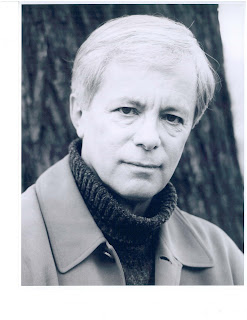
From Hollywood to Holy Weird! From Broadway to Oddway: Actor, Writer and NH Icon Richard “Dick” Backus takes his shot at Public office.


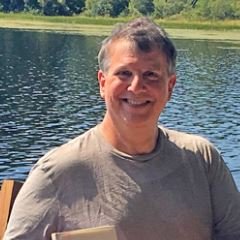
If you saw a photograph of Dick Backus and you thought - "I think I know him!" it may be because you are of a certain age when you watched daytime soaps like Ryan's Hope or went to see Eugene O'Neill's "Ah Wilderness" at the Ogunquit Playhouse, or you even went to see "Butterflies are Free" on Broadway. These are just a few of the gems that Richard Backus, born, and still living, right here in New Hampshire, has to his credit.


Today, however, you are more likely to find him going door to door in his hometown of New Boston or one of the other towns in Hillsborough District 42 running for the NH Legislature. 


This was not how Dick saw himself spending time in his golden years, but his deep concern for the loss of community among our citizens and our elected officials has drawn him into the fray. I caught up with Dick recently over Zoom and we chatted about running for the legislature, always with the thread of rebuilding community running through the discussion and how rebuilding impacts and is impacted by so many of the challenges we face in our lives. How do we rebuild a sense of community when our commitment to public education is under fire? How do we restore community when more than 50% of our population are denied bodily autonomy? These and other issues compelled Dick to do something he never expected to do, to run for public office.


Listen here:


Back when I was a student at UNH in the 70's I spent a good deal of time at the Memorial Union Building where I was running the photo school for MUSO and eventually Photo Editor of the New Hampshire, our student newspaper.


I'll never forget one of the first times that I walked into the MUB at midday to find hundreds of students crowded around every available TV watching the day's episodes of their favorite soap opera. The General Hospital crowd was in one room and Guiding Light fans in another, etc.


I had no idea that so many of my fellow students were so invested in the day-to-day drama's of what were TV's hottest and most profitable productions in that era.
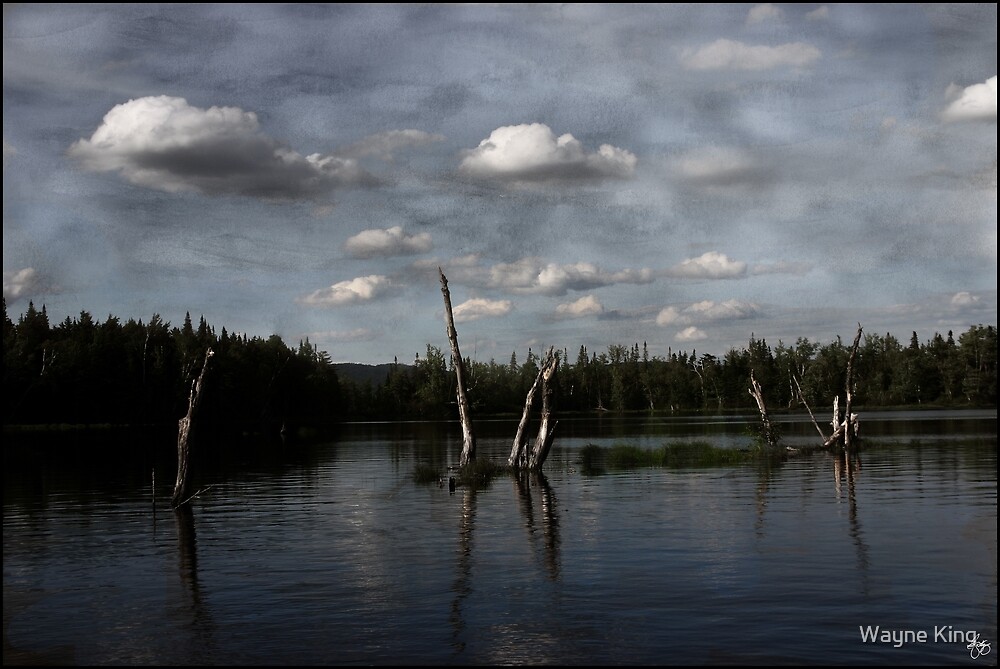


Panted Skies over Lake Umbagog


New Hampshire's roots in the acting and performing community run deep and Dick Backus has been an important part of that legacy over the years. 


Though his first love has always been the stage, Dick is An Emmy-nominated soap actor ("Ryan's Hope"), he eventually went behind the scenes as a daytime serial writer. In fact He has been nominated for four Daytime Emmy Awards for writing and one for acting.


In 1972 he won the Theatre World and Clarence Derwent Awards for his multiple roles in the Broadway comedy "Promenade, All!".


He also understudied Keir Dullea on Broadway in the original "Butterflies Are Free" (1969) and eventually took over the role.


Richard Backus was born on March 28, 1945 in Goffstown, New Hampshire, USA. Where

His dad was a local physician.


He discovered his love for acting, the theatre and writing at a relatively early age and made his Broadway theatre debut at the Booth Theatre in the Theatre District of Manhattan in the original production of Butterflies Are Free. The production began in October 1969 with Backus cast as the understudy for Keir Dullea in the role of Don Baker. He was first appeared in the role, which we would later take over, in 1971.

Since then, he has appeared in several other Broadway productions, including Ah, Wilderness!, Camelot, and most recently You Never Can Tell.[5] Other venues at which Backus has appeared include the American Shakespeare Theatre, the Ensemble Studio Theatre, and the Brooklyn Academy of Music.[3]


Wind on the Rails at Livermore

Backus has also acted in film and television. In the seventies, Backus was in Deathdream a movie that today is considered a cult classic in the horror genre. He also portrayed scheming but well-meaning Jason Saxton on Lovers and Friends. Closer to home, he appeared in several episodes of Spencer for Hire with the late Robert Urich.


On the Soap Opera circuit He replaced Eric Roberts in the role of Ted Bancroft on Another World. From 1980 through 1981, and portrayed Barry Ryan on the soap opera Ryan's Hope, a performance for which he was nominated for the 1981 Daytime Emmy Award for Outstanding Actor in a Supporting Role in a Daytime Drama Series


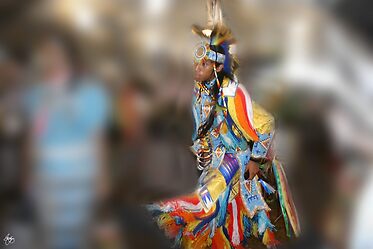
Reaching into the Past at the Powwow


He married his wife Sharon Romeyko in 1985.


In 1989 he turned his talents toward screenwriting and has not looked back. Richard Backus has been a screenwriter since early 1989. He has worked on three television shows: As the World Turns, One Life to Live, and Days of Our Lives. As the World Turns and One Life to Live have each earned Backus two nominations for the Daytime Emmy Award for Outstanding Drama Series Writing Team.[2] The writing team behind One Life to Live was also nominated for the 2004 Writers Guild of America Award for Daytime Serials.[6]



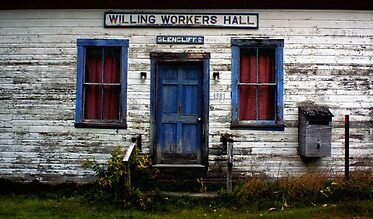
Willing Workers Red White and Blue - Study No 2


Tuesday, October 18, 2022

Ep 76 James Bradbury: Climate Change Policies that Look to the Future


James Bradbury

Climate Change Policies that Look to the Future


Listen here:

https://feeds.podetize.com/DLEf-NL4Z.mp3

From his position at the Georgetown University Climate Center James Bradbury takes the science that he has learned over the years, beginning here in New Hampshire and later at Colorado College (BS), the University of New Hampshire (MS) and UMass Amherst (PhD) and turns it into policy and strategy to help the states address the many challenges of Climate Change. 


James attributes his love of the natural environment to his years at Mowglis, School of the Open, the summer camp on Newfound Lake he attended as a boy where he developed skills that have paved the way for a life of purpose bringing him to today when he is a leader in environmental policy around the challenges of Climate Change. 


Links and notes:


https://www.linkedin.com/in/james-bradbury-729a0b4/


Buy a beautiful piece of signed art for your home or business and we’ll make a 50% contribution in your name to InDepthNH.org, the NH Center for Public Interest Journalism. 


Keywords:

James Bradbury, Jamie, Dr. James Bradbury, New Hampshire, Dover, UNH, UMass, Climate, geology, hydrology, climate change, mitigation, sea-level


Powered by Podetize

Tuesday, October 11, 2022

EP 45 Adam Finkel: In the Wake of Dobbs


In the Wake of Dobbs

Is IVF the Next Target for the Morality Police?


Listen here:

https://feeds.podetize.com/Fpj0-FsfF.mp3


Dr. Adam Finkel


Adam Finkel is a resident of Dalton, NH and Princeton, NJ. He served in leadership positions in both the Clinton and George W. Bush Administrations aimed at promulgating and evaluating risk-based regulations to protect the nation’s workers from chemical, radiological, and biological hazards. He has a Master's Degree in public policy from the JFK School of Government at Harvard and a Doctorate in Environmental Health Science from Harvard as well. In the past few years, he has jumped into important New Hampshire issues including the efforts to stop the placement of a landfill in the area adjacent to Forest Lake in Dalton as well as other local efforts to protect the NH environment. 


His concern over the ramifications of the Dobbs decision of the US Supreme Court regarding In Vitro Fertilization has started to consume additional attention of his time because he is concerned that it may be the next target of the fundamentalist forces that have gained control of the Court.


Dr. Adam M. Finkel is a Clinical Professor of Environmental Health Sciences at the

University of Michigan School of Public Health, and is also an independent consultant

specializing in plaintiffs’ exposure to toxicants in the workplace and general environment.

From 2008 to 2017, he was Executive Director of the Penn Program on Regulation, where

he was also a Senior Fellow at the Penn Law School. From 2004 to 2008, he was a Visiting

Professor of Public and International Affairs at the Woodrow Wilson School at Princeton

University, and Professor of Environmental and Occupational Health at the UMDNJ School

of Public Health. From 2000 to 2003, Dr. Finkel was Regional Administrator for the U.S.

Occupational Safety and Health Administration (OSHA) in Denver, Colorado, responsible

for OSHA’s regulatory enforcement, compliance assistance, and outreach activities in the

six-state Rocky Mountain region (Region VIII). Prior to that (1995-2000), he was Director

of Health Standards Programs at OSHA headquarters, and was responsible for

promulgating and evaluating risk-based regulations to protect the nation’s workers from

chemical, radiological, and biological hazards.


Dr. Finkel holds an Sc.D. in environmental health sciences from the Harvard School

of Public Health, a master’s degree in public policy from Harvard’s John F. Kennedy School

of Government, an A.B. in biology from Harvard College, and is a Certified Industrial

Hygienist. Dr. Finkel has pioneered methodological improvements in human health risk

assessment and cost-benefit analysis for the past 30 years, primarily in the areas of

quantitative uncertainty analysis, accounting for interindividual variability in

susceptibility, and designing regulatory processes to maximize stakeholder input and shed

light on inequitable health, economic, and employment impacts. He is one of three scholars

who served on both the “Blue Book” (1994) and “Silver Book” (2009) committees of the

National Academy of Sciences convened to evaluate EPA’s risk assessment methods. He is

co-author of four books, including the 2014 volume Does Regulation Kill Jobs? (Univ. of

Pennsylvania Press). In 2006, he received the David P. Rall Award for Advocacy in Public

Health from the American Public Health Association, for “a career in advancing science in

the service of public health protection.” In 2013, he received the Alumni Leadership in

Public Health Practice award from the Harvard School of Public Health. He lives in

Pennington, New Jersey, with his wife (a clinical psychologist) and 21-year-old daughter;

he is also a professional singer and choral conductor.


Links and Notes


https://indepthnh.org/2022/09/16/landfill-setback-legislation-re-filed-day-after-veto-override-failed-in-n-h-senate/


https://sph.umich.edu/faculty-profiles/finkel-adam.html


Preview attachment AFinkel op-ed concord NH 82820 OSHA.pdf


https://nhsecrets.blogspot.com/2022/10/in-wake-of-dobbs-is-ivf-next-target-for.html


https://centristchange.blogspot.com/2022/10/ep-75-adam-finkel-in-wake-of-dobbs.html


Thursday, September 15, 2022

EP 74 NH Secretary of State David Scanlan - A Balancing Act with Forward Momentum


NH Secretary of State David Scanlan - A Balancing Act with Forward Momentum

David Scanlan, New Hampshires new Secretary of State seeks to balance the interests of the broadest cross section of voters at the same time that he continues to move the state forward in terms of providing access to the sacred right to vote.


We caught up with him recently to discuss the First in the Nation Presidential Primary status, the balancing act entailed in assuring ready access to voting for those qualified to vote, transparency and security, as well as the newest effort to increase the voter information for those whose primary language is not english.


Listen here:

Show Notes:


Links and Notes


CONCORD New Hampshire Secretary of State David M. Scanlan announces voting information in Spanish, French, and Mandarin Chinese is available on the Secretary of State’s (SOS) website at https://www.sos.nh.gov/multilingual-election-information. The SOS is pleased to provide an important segment of the NH population multilingual information on registering to vote, voting rights and election-day procedures.

Wikipedia page: https://en.wikipedia.org/wiki/David_Scanlan


Wednesday, August 31, 2022

Episode 73: The New Hampshire Legacy of Walter Richard West Sr. - Wah Pah Nah Yah


Listen here:

NH Secrets, Legends & Lore

The New Hampshire Legacy of Walter Richard West Sr. -  Wah Pah Nah Yah


Walter Richard West Senior was born in 1912.


West was not born with that name. His name was Wah Pah Nah Yah, translated into english, “Lightfoot Runner”. He was born in a Tipi near the Darlington Agency in Oklahoma, then known as Indian Territory, a member of the Southern Cheyenne Nation.


If you are wondering how a Native American, born halfway across the country, figures into the “Secrets, Legends and Lore” of New Hampshire you will find out in the next 35 minutes and you will meet one of the 20th century’s most acclaimed artists who left a legacy that touched the Granite State in a profound and lasting way.


The West family has a long and storied history. His grandfather “Thunderbow” fought Custer at what the Cheyenne and the Sioux knew as the Green Greasy Grass river battle, today referred to as the Little Bighorn. Both of Wah Pah Nah Yah’s sons, Rick and Jim, would also establish their own NH legacies as you will hear. Each would make their own respective marks, both here and throughout their lives: Jim as the director of “Futures for Children” working with native children to help them achieve a college education; Rick (W. Richard West Jr.) would become the founding director of The Smithsonian Museum of the American Indian in Washington, DC. But I’m getting ahead of myself here.


From 1936 to 1938, Wah Pah Nah Yah attended Bacone College in Muskogee, Oklahoma,[1] where he earned an associate's degree. At Bacone he played football and worked in oil fields.


West then enrolled at University of Oklahoma (OU), where he would earn a BFA degree in 1941. He later returned for graduate work, earning the very first MFA degree ever awarded to a Native American artist in 1950. 


It was during his years as a student at Bacone that his connection to New Hampshire began when his friend and teacher Edmund Shaw introduced him to Alcott Farrar Elwell, a retired WWI Army Colonel who was the Assistant Director of Mowglis, School of the Open, a camp for boys on the shores of Newfound Lake. Established in 1903 by Elizabeth Ford Holt.


Elwell had an abiding interest in Native American people, possibly as a result of serving, at 20, as a camp cook in 1908 for the U.S. Geological Survey in Wyoming where he met many Native people while serving on the USGS mission. 


A future episode of NH Secrets will feature Elwell, but one interesting aside from this story is that Elwell had NO experience as a cook! It happened that the only position open to join this great adventure was as a cook so Elwell applied and was hired. Elwell, an East Coast boy had never been west before. 


Edmund Shaw, who would be Wah Pah Nah Yah’s best man at his wedding, and the godfather of Wah Pah Nah Yah’s two boys later on, had been spending his summers teaching photography at Camp Mowglis and he encouraged Colonel Elwell to invite Wah Pah Nah Yah to join the staff of Mowglis. 


Wah Pah Nah Yah arrived in 1939 and remained through three successive seasons. Returning twice more in the 70’s and 1990’s for extended visits.

The boys who were campers during his staff years became keenly aware of the Cheyenne traditions, and some of them became quite proficient at the dances he taught them. In later years both his sons Rick and Jim would share the same skills and traditions with the boys of Mowglis. Tim Coons, a music producer who introduced and produced “The Backstreet Boys” to the world was one of those boys. Tim recalls creating full regalia for each boy in the dance club, under Dick’s son Jim West, and being taught many of the unique dances of the Cheyenne. 

Stories of Wah Pah Nah Yah have taken on legendary proportions over the years. The late Frank Punderson recalls a game of capture the flag in 1939. "I was hiding in the bushes waiting to capture someone from the other side as they approached our flag, I peered out of my hiding place and realized that Wah Pah Nah Yah had just run by and I had never heard his footsteps . . . never realized he was near, until I saw him running by at full speed. It’s no wonder, then, that his Cheyenne name translated to “Lightfoot Runner”.


In 1942 Dick joined the Navy, became a commissioned officer, and continued in the U.S. Naval Reserve until his retirement in 1962. Through it all he continued to document the culture of plains Indians. As one of his colleagues has written, he was "on the cutting edge of the Native American art movement that added vibrance, fluidity and dimension to the flat-painting style of the early 1900s, a style in which he was schooled and which he admired."

Stories of Wah Pah Nah Yah have taken on legendary proportions over the years. Stories of his ability to fire his bow from beneath the belly of a galloping horse, or his ability to accurately shoot five arrows into a 5 of spades card placed on a target at 50 yards flawlessly. 


The late Frank Punderson recalled a memorable game of capture the flag in 1939. "I was hiding in the bushes waiting to capture someone from the other side as they approached our flag, I peered out of the hiding place and realized that Wah Pah Nah Yah had just run by and I had never heard his footsteps . . . never realized he was near, until I saw him running by at full speed. It’s no wonder, then, that his Cheyenne name translated to “Lightfoot Runner”.


Wah Pah Nah Yah inspired young boys and staff members at Mowglis during his days as a counselor. Creating both a sense of pride and respect for the cultures of Native American people. He also created a number of his most unique works at the camp, including several depictions of scenes from Rudyard Kipling's Jungle Books.

Wah Pah Nah Yah's years at Mowglis came at a very important time to both Mowglis' own traditions and the legacy of this great man. 


In 1937 Mowglis had experienced a terrible fire that had leveled the main gathering place at Mowglis. The fire destroyed the entire building including a mural called the "Lone Wolf" on the stage of the building. Two staff members perished in the fire. 


1938 was the year of the fateful 1938 Hurricane that swept through New Hampshire. The late Myron Braley described the effects of the hurricane on the area around Newfound Lake in his hometown of Hebron: “Trees were down everywhere. I could travel the half mile between Route 3 and the lake walking on the trunks of trees and never need to set foot on the ground,” 


The hurricane was a tragedy but ultimately provided all of the timber that would be required to rebuild the main building that had burned the summer before. A local craftsman was brought into the camp and milled the beams and boards right on site to rebuild the large hall.

The rebuilding of the hall created a new curtain, but without the uniqueness of the original. Wah Pah Nah Yah created a mural depicting the scene of Mowglis' admission to the wolf pack as the central scene as well as depictions of Mowglis with Kaa, the Rock Python; and Mowglis with Baloo the Bear and Bageera the Black Panther on either side of the main scene. The original paintings were modified in 1976 when Dick West and his wife Rene visited Mowglis again to provide needed repairs to the work.


Another example of the legendary sense of humor that characterized Wah Pah Nah Yah came in the latter years of his life when he was asked by the Guggenheim museum to provide three paintings that represented examples of abstract art.


Wah Pah Nah Yah submitted three pieces to them and the director wrote to thank him, saying that they would be using two of the paintings but could not use a third, entitled “The Red Pond”, because it did not fit the kind of representational abstract painting that they were featuring which required colors to be accurate, within the context of an abstract image. “A red pond” , wrote the Director, “was just not realistic.” Wah Pah Nah Yah read the letter and said nothing as he walked out the door of his home in New Mexico and scooped up two fist fulls of red clay, dumping them in a box destined for the Gugenheim. A few days later a sheepish letter arrived from the Gugenheim’s director announcing that they would be including The Red Pond in their exhibition.


Throughout his life Wah Pah Nah Yah continued to grow and develop his art, pushing the bounds from the original - but exquisite - examples of early Native American “skin or hide” painting to the more sophisticated, yet authentic, style that would characterize his later work and secure his place in the firmament of great 20th century painters. 


With his rendering of the Kipling scene at the Council Rock and the mural of Mowgli with his friends, Kaa, Baloo, and Bagheera, New Hampshire has a priceless remembrance of W. Richard West’s affection for this place and his great talent as an artist. 


Some of these images are available from Camp Mowglis at Mowglis.org