Sunday, May 8, 2022

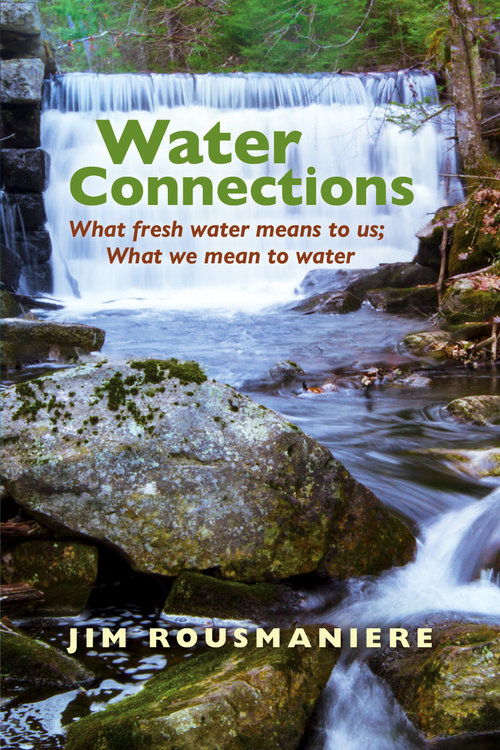
Ep 67 Jim Rousmaniere - Journalist and Author: “Water Connections” What fresh water means to us; What we mean to water

 pics%2Bfrom%2Bcamera%2B478.jpg


Jim Rousmaniere

Journalist and Author: “Water Connections” What fresh water means to us; What we mean to water

Rousmaniere_WaterConnections.small.jpgJim Rousmaniere is a soft spoken fellow, but these still waters run deep as the saying goes. He has the curiosity and insight of an oracle to many of his admirers.  He is also straight out of central casting when it comes to the role of an editor, glasses at just the right level on his nose so he can look over them at you and make you feel like his BS meter is always on full alert.
After a stint in the Peace corps, he began his career in journalism  at The Baltimore Sun in Baltimore and Washington DC, where he covered national economics, and in the early 1980s he took over the editorship of the daily Keene (NH) Sentinel. He retired from newspaper management in 2013, at which time he began researching the subject of his book: "Water Connections."

While he clearly has a deep respect for the natural environment, it is the intimate and immediate connection with people and their stories that feed his imagination and enthusiasm and allow him to take what might seem a simple story and weave it together with the artistry of a symphonic composer. Art, history, science, and business all figure into the story that Jim tells.

Beginning with the White Mountain Art movement that helped fuel a tourism boom and a deep connection with the landscape, Jim then leads us into the devastation of northern forests that spurred both citizens and businesses to action resulting in the Weeks act and the White Mountain National Forest.

Now normally when I do one of these podcasts I cut out the small talk with which they inevitably begin but with Jim Rousmaniere, there's really no such thing as small talk and the journalist is ever present. So I've included some more personal reflections that Jim managed to "drag" out of me because they may be of interest.

You see, one of my very first encounters with Jim was in 1994 when I was a nominee for Governor in a longshot bid to unseat a popular governor. This conversation was the first opportunity that I had to thank Jim for ignoring the odds and endorsing me in that race. Jim managed to also turn that into  a moment of candor about the nature of politics from my perspective.

In his new book "Water Connections" as in every moment of his working life, Jim Rousmaniere is deploying his journalistic sensibilities to seek out the deeper meanings that help to give all of us greater insight into the richness and meaning of our lives, including the trials and tribulations, the successes and the defeats.

In this conversation we talk about Water Connections as well as his reflections on the state of Journalism in this new era of fake news and digital delivery.


Here is my conversation with one of New Hampshire's media giants. Jim Rousmaniere.


Listen here:

https://feeds.podetize.com/ep/J8PiG5stU/media  


WATER CONNECTIONS

A book for readers interested in human stories about New England’s environmental history.


A unique look at how rivers, lakes, and streams have been affected by changes in technology, citizen initiatives, evolving methods of conservation, and the unintended consequences of human action.


“There are sobering lessons in this book. There is also beauty and eloquence and passion, in Jim Rousmaniere’s voice and the watery places he takes you to. He is guide and companion, knowledgeable and engaging, and when you part company with him—a sad moment—you will be grateful for what you have learned and the hope he has left you with.”

--- JACK E. DAVIS


Author of “Gulf – The Making of an American Sea”

winner of the 2018 Pulitzer prize for non-fiction

BAUHAN PUBLISHING 2019 SOFTCOVER, 207 PAGES PETERBOROUGH NH $22.50 SBAUHAN@BAUHANPUBLISHING.COM (603) 567-4430


Introducing a fresh look into

our changing ways around fresh water

by Jim Rousmaniere


Over the years Americans have changed what they do in and around water. They no longer send raw sewage into rivers. They no longer fill in swamps to make space for farmland or shopping centers. They no longer build huge power dams. They don’t flush unused medicines down the toilet any more. So, we’re capable of change, but are we up for more change at a time when chemicals we know little about are getting into public waters, and when harder rains from climate change are doing real flood damage and when water shortages have become more common?


Journalist and historian Jim Rousmaniere introduces you to the wide range of people — many of them in New England — who are asking these questions. They include volunteer citizen-scientists who test the quality of water in rivers and lakes; they include government workers who are fashioning new ways to prevent urban floods; they include inventors who vie for prizes at water technology competitions. He gives you artists who’ve made a difference around polluted ponds. Rousmaniere shows how the people behind modern hydropower — the largest source of renewable energy in the United States today — are thinking about their impact on the environment in new ways.

Rousmaniere takes you into the past when mistakes around water were made and in some cases later unmade. Ultimately the author shows how history happens. “Water Connections” is as much about the ways of people as it is about the ways of water that flows through their lives.


Rousmaniere_WaterConnections.small.jpg

ORDER THE BOOK NOW


Here’s what others are saying…


ANDREW FISK

Executive Director, The Connecticut River Conservancy, Greenfield, Mass.

 “Understanding and protecting our water resources doesn’t have to mean wading through a morass of technical data and engineering reports.  Engaging stories about people and the places can inspire the ever-continuing work needed to ensure our rivers, streams, and lakes are clean, healthy, and full of life.  Jim Rousmaniere’s Water Connections tells these stories well and leaves readers both encouraged by the work already done, and emboldened to take on the work still to do.”


NICOLE SILK

President and CEO, River Network, Boulder, Colorado

Water Connections is a wonderful meditation on rivers and their importance to each of us, our communities, and our future. With New England as the primary backdrop, and his own Roaring Brook and other local streams as central characters, Rousmaniere has uncovered lost stories of human ingenuity and engineering prowess as well as public health emergencies and regulatory failures. The examples from 1870 and 1945 lace together with those from 1982 and 2013, punctuating his points while encouraging a new look at history.

“He comfortably integrates systems thinking about complex problems into his prose, allowing the reader to increase their ecological literacy with little effort. His examples also draw our attention to the remarkable ability of our rivers to restore themselves when given the time and space to do so. By the end, I was left with a deep sense of hope for the future and profound curiosity about the untold stories of salvation and calamity from rivers all over the world.

“Don’t miss this book – it is full of surprise and wonder.”


PAUL SUSCA

Supervisor of the planning unit in the drinking water program at the New Hampshire Department of Environmental Services, Concord, NH.

“At the same time entertaining and immensely informative, Water Connections weaves together a broad collection of stories about the people who shaped and continue to shape the relationships among New England's people, land, and water.

“To understand any aspect of New England, one must know something about its history, and Jim Rousmaniere shows that's no less true of our multi-faceted relationship with water – in many ways the backdrop of our lives and – historically and currently – the lifeblood of our economy.

“The book is populated with historical figures like John Wingate Weeks (author of legislation that enabled the establishment of the White Mountain National Forest, spurred by the devastation of rivers brought about by clear-cutting), resourceful 19th-century figures who used “water rams” to pump water uphill, and modern-day heroes like the Nashua River's Marion Stoddart and the generation of watershed defenders she inspired. Water Connections' sweep is broad, reaching into every aspect of water in our lives, providing lessons that extend well beyond New England and the Northeast.

 “It's a hopeful book, showing how much progress has been made in undoing the damage done to our life-giving rivers, lakes, and groundwater. It also strikes a cautionary note, reminding us of past blunders, failures to anticipate the consequences of new technologies and practices, and pointing to the troubling proliferation of emerging contaminants whose health and environmental effects we as yet know little about. Water Connections is a must-read for every New Englander who is drawn to water.”


ABOUT

“Water Connections” (Bauhan Publishing, June, 2019) is about the consequences of human action around water. Such as: the fouling of lakes by the engines of commerce, the decline of migrating fish in dammed-up streams, and what sorts of things can happen to public lands around reservoirs when people are let in — or kept out.


Jim Rousmaniere is a longtime journalist, having covered national economics in the Washington bureau of The Baltimore Sun before being named editor and president of The Keene(NH) Sentinel, positions from which he recently retired. He is the author of Water Connections: What fresh water means to us, what we mean to water (Bauhan Publishing, 2019). Rousmaniere lives with his wife Sharon in Roxbury, a tiny town just outside of Keene. He's a participant in municipal governance, economic development and historical education programming, among other activities.


Contact

Jim Rousmaniere

603-903-3459

jamesrousmaniere@gmail.com


James Rousmaniere's Programs
How Fresh Water Has Shaped New Hampshire

How Fresh Water Has Shaped New Hampshire

Granite Staters' impact on fresh water - and, conversely, inland waters' impact on Granite Staters - has evolved over time. Our pollution has changed, as has our hydro-power, our experiences with floods, our watershed protections, our exposure to invasive vegetation, and our use of water in the home. This illustrated presentation by Jim Rousmaniere explores the roles of industry, innovation, and citizen action in assuring clean and plentiful water supplies in a state that in many ways has been defined by water.


How Jim got his feet wet

https://www.waterconnections.net/projects/


Contact Jim

https://www.waterconnections.net/contact


Questions for Readers

https://www.waterconnections.net/questions-for-the-reader


Jim’s Water Blog

https://www.waterconnections.net/blog


Wednesday, May 4, 2022

EP 66 Mark Okrant: Spinning Tourism and Travel Tales into Murder Mysteries


Mark Okrant

Spinning Tourism and Travel Tales into Murder Mysteries

Over the course of 42 years Mark Okrant has evolved from academic to tourism research guru to murder mystery author.


Mark Okrant has spent the past 42 years in New Hampshire teaching Tourism Management and establishing and then maintaining the mantle of "Tourism Research Guru" for the State of New Hampshire.


Born and raised in Connecticut, Mark came to New Hampshire in 1979 when he was hired by Plymouth State in response to a search for an individual to help establish the state of New Hampshire's first academic tourism program.


One of the grand benefits of all this was that many, perhaps all of the most interesting and majestic tourist attractions in the State of New Hampshire would roll out the red carpet for him and share with him the comfort of their accommodations and - now and then - a secret or two.


At some point Mark began to craft the idea of writing a murder mystery and staging it at one of the famous resorts in New Hampshire. Then a conversation with Steve Barba, an icon in New Hampshire tourism and owner of the Balsams Resort in Dixville Notch unleashed the dam. Mark had asked if Steve would be open to having him write a murder mystery about a crime at the Balsams. Not only did Steve say yes, he opened his doors and staff to the project. That conversation sparked a life-long friendship and Okrant's first novel "A Last Resort".


Nine mysteries, and one non-fiction book later, Okrant is still going strong and continues to write, though he is winding up his teaching career.


I caught up with Mark recently to talk about coming to New Hampshire, his academic and research career and writing novels.


Listen here:

https://feeds.podetize.com/ep/vWIDwomlG/media 


About Mark Okrant

Mark Okrant is an author and professor emeritus of tourism management at Plymouth State University in New Hampshire. He has conducted tourism research in New Hampshire, Maine, South Dakota, Alaska, Canada, Romania, and Puerto Rico, and is past president of a leading global organization for tourism researchers, the Travel and Tourism Research Association. Mark has been a guest contributor for El Coqui, a tourism magazine in western Puerto Rico, and provided a bi-weekly NH Travel Guru column for InDepthNH.org. Presently, he writes a weekly column for The Laker (thelaker.com).


– – – – – –

What reviewers are saying:


“Okrant’s writing style is crisp and quick. Kary Turnell and the police may become bogged down once in a while, but his writing never does. Add to this his research, and putting down (his books) will prove hard to do. Okrant is as painstaking a researcher as Turnell.”

Christina Van Horn, former editor at Concord Monitor, Associated Press, Boston Globe


“Mark Okrant does an outstanding job of creating a mystery that takes place at an actual resort . . . his books blend quality writing, believable characters, proficient plot building . . . not to mention the scenery.”

J.L. Campbell, author and humorist


From the author:

“My niche in the world of mystery writing is to place my lead character, investigator Kary Turnell, in a position to work crime scenes at historic resort hotels, attractions, and communities. As an author, having the opportunity to be a guest at all four of New Hampshire’s grand hotels, and at popular destinations in New Hampshire, Maine, Connecticut, Nunavut, and Puerto Rico has enabled me to add an actual sense of being-there to my Kary Turnell and Commissioner Kary Turnell mystery series.


Visit the Kary Turnell Mystery Tour page (click here).


Links


http://markokrant.com/


NH Tourism

https://www.visitnh.gov


Granite State Ambassadors

https://www.visitnh.gov/attraction/15240/granite-state-ambassadors


Wednesday, April 27, 2022

EP 65 Lake Tarleton - A Gemstone in the Balance


Rob Wipfler - Co-Director Kingswood Camp 
Director Lake Tarleton Coalition
Laketarletoncoalition.org

Zack Porter,
Standing Trees, zporter@standingtrees.org

Listen here:
https://feeds.podetize.com/ep/m-A0_xDBkG/media 

In 2000 a coalition of people including elected officials, volunteers and environmental organizations rallied to save an especially unique area in the Moosilauke region that was threatened by development and logging. Lake Tarleton is the largest lake in the White Mountain National Forest today and one of the few that has never had problems with invasive species.

Today the area is once again under threat, this time from the very agency that was charged with caring for it when $7.5 million in public and private funds secured its preservation. This is not the first time that the forest service has been charged with acting like a man with an ax whose only solution to a problem is to cut. Furthermore, it is not at all clear that the forest service would have been chosen to manage the property had the organizations and citizens who rallied to save the lake and its surroundings known that it would thoughtlessly place this gem in the box of rocks that is the lowest level of protection offered within the White Mountain National Forest.

With fewer than two weeks before final submissions are due proponents of a plan to give greater “Scenic” protection to the Lake Tarleton Watershed area are making a final push buoyed by an Earthday Executive Order from President Biden encouraging the development of Old Growth Forests that on the face of it runs contrary to the actions of the White Mountain National Forest administration.

I spoke with Zack Porter of St. Johnsbury-based Standing Trees organization as well as Rob Wipfler, Co-director of Kingswood Camp for Boys on Lake Tarleton who is also the Director of a newly formed Lake Tarleton Coalition.


A Glow of Lilies                       Cards                 Fine art Prints

Mountain Lion Poster


https://www.vnews.com/Lake-Tarleton-logging-proposal-stirs-residents-concerns-43680591


https://indepthnh.org/2022/03/08/op-ed-support-the-lake-tarleton-coalition/


https://www.concordmonitor.com/My-Turn-Lake-Tarleton-45214438


https://biologicaldiversity.org/w/news/press-releases/biden-launches-process-for-protecting-mature-old-growth-forests-on-federal-lands-2022-04-22/


https://www.whitehouse.gov/briefing-room/statements-releases/2022/04/22/fact-sheet-president-biden-signs-executive-order-to-strengthen-americas-forests-boost-wildfire-resilience-and-combat-global-deforestation/


The Bipartisan Infrastructure Law directs DOI and USDA to specifically prioritize the restoration of old-growth forests, taking into consideration their contributions to landscape fire adaptation. However, there is currently no inventory that identifies the location and condition of mature and old-growth stands.


Take Action:


https://www.standingtrees.org/post/take-action-submit-a-comment-to-protect-lake-tarleton


TAKE ACTION: Submit a comment to protect Lake Tarleton and the Appalachian Trail!

Don't wait. Click here to send a comment today using our Lake Tarleton Action Alert!


by Zack Porter

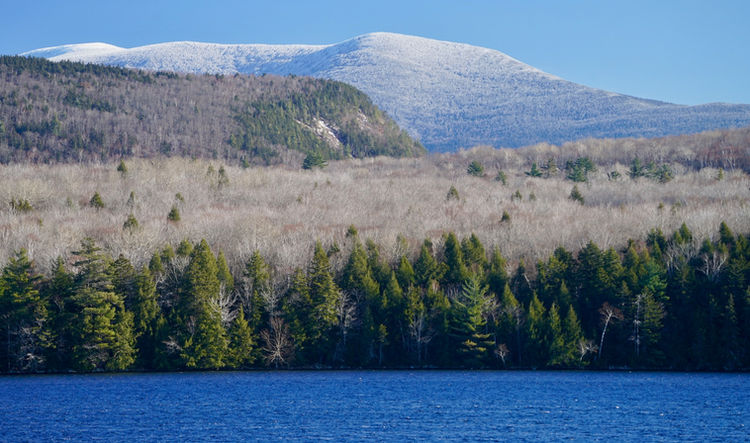
Last fall I stood on the shore of spectacular Lake Tarleton, gazing out at a snow-capped Mt. Moosilauke, trying to reconcile what I was hearing from the White Mountain National Forest with the incredible story of courage, community engagement, and perseverance that protected the lake from logging and development in the year 2000. I was at Camp Kingswood, a long-running summer camp on the western shore of the lake, to hear a presentation from White Mountain National Forest staff about their proposed Tarleton Integrated Resource Project.

The proposal was jaw dropping: 900 acres of clearcutting and other "even-aged" management from within a short distance of the lakeshore to within a stone's throw of the Appalachian Trail. How could this be possible in a landscape where $7.5 million had been raised, only two decades ago, to prevent logging in the forests surrounding the lake? The public had entrusted the White Mountain National Forest with stewardship of this iconic landscape. That trust was broken.

Mountain pond in the Green Mountain National Forest

Majestic Mt. Moosilauke frames Webster Slide and Lake Tarleton. Logging is proposed within 100 feet of the lakeshore to within a short distance of the Appalachian Trail, which runs along the ridgeline in the background of the photo.

As the meeting progressed, tension in the camp's function room escalated. Community members from the surrounding area had gathered indoors on this frigid fall day - at the risk of contracting covid -- to give the White Mountain National Forest another chance. Forest staff attempted to explain how clearcuts would be hard to notice. For a community that had sacrificed blood, sweat, and tears to prevent just such an assault from ever happening, this explanation was difficult to stomach. No amount of rationalization was going to compensate for broken promises.

It was clear that the White Mountain National Forest was unaware of the history of Lake Tarleton; that there had not been any significant attempt to reach out to essential stakeholders in developing logging plans; and that their required analysis of a range of options (known as "alternatives" in the parlance of the National Environmental Policy Act) was nonexistent -- indeed, they failed to consider more than a single option in their Environmental Assessment. A single option analysis isn't an analysis. It's a forgone conclusion. This is illegal.

Approval of the Tarleton Integrated Resource Project seemed imminent, but due to public outcry (thanks to people like you!) and glaring errors in their Environmental Assessment, implementation was delayed last December. The White Mountain National Forest is giving the public another opportunity, through May 11th, to weigh in on their Revised Environmental Assessment.

This will likely be your final chance to submit an official comment. So don't wait - submit today!

Over the past winter, the White Mountain National Forest received letters from more than 1,200 citizens opposed to their logging plans and requesting a new analysis. Instead of listening to public concerns and proposing reasonable alternatives, the White Mountain National Forest's revised proposal, released in early April, is little changed from the original, threatening water quality, endangering wildlife, and putting valuable archaeological resources at risk.

Standing Trees is working closely with the Lake Tarleton Coalition to dramatically curtail or stop the Tarleton Integrated Resource Project from moving forward. The Coalition's goal is simple: put Lake Tarleton on a path to permanent protection as was promised when the White Mountain National Forest acquired the land in 2000. Forest leadership can amend the 2005 Forest Plan at any time to establish a Lake Tarleton-Webster Slide Scenic Area, a fitting designation for this treasured landscape. To this date, no Scenic Areas have been designated in the western White Mountain National Forest. Lake Tarleton should be the first.

Standing Trees won't stop until there is justice for the forests of Lake Tarleton, and for the community that rallied to save this special place just a short time ago.

Zack Porter is Executive Director of Standing Trees


Is clear-cutting U.S. forests good for wildlife?

Critics say the idea that forests should be logged to keep them young so wildlife can thrive is based on flawed science. 

https://www.nationalgeographic.com/environment/article/is-clear-cutting-us-forests-good-for-wildlife


In New England, forests protected from logging are capable of storing 2.3 to 4.2 times more carbon than they do now, according to a 2011 report in Forest Science. And a recent study found that old-growth forests in the Pacific Northwest hold nearly twice as much carbon as trees in forests managed for timber production.

Undisturbed soil in old forests traps more carbon too. According to Moomaw, there’s more carbon in the ground in a forest that’s 150 years or older than in the standing trees themselves. That’s because over the decades, annual leaf fall and blowdowns of branches transform into soil that retains ever-greater volumes of carbon.

According to Michael Kellett, co-founder and executive director of Restore: The North Woods, a Massachusetts nonprofit, logging-for-wildlife advocates such as Dave King and Tom Lautzenheiser “are dealing in old science.” He says they “disregard the growing scientific consensus that we need to expand lands and waters that are free of ignorant human intrusion and manipulation.” Kellett says their thinking “is ecologically dangerous.”

Kellett suggests one example of a reality that’s ignored: There are no landscape-scale empirical studies over time and over a large area that show logging is needed for wildlife. “There are numerous anecdotal reports, but no long-term, multi-decadal authoritative studies show that what King or Lautzenheiser say is true,” he says.

“Every day, we work to understand and support the central role forests play in solutions to both the climate change and biodiversity loss crises,” says Michael O’Connor, a spokesperson for Mass Audubon. “If anything, the growing scientific consensus recognizes that habitat heterogeneity, including young forests, is key to long-term forest resilience and to avoiding extirpation of associated species.”

Other scientists are skeptical of young forest logging programs. “There’s no conservation reason for creating more early successional habitat,” says John Terborgh, professor emeritus of environmental science at Duke University, in North Carolina, and one of the world’s top conservation biologists. Clear-cutting trees to expand such habitat, he said, “is a bogus argument, ginned up as an excuse for more logging.”

‘Management for arbitrary human preference’

Kellett believes that the adoption of the logging-for-wildlife idea is cultural landscape nostalgia turned into management practice on public lands. “This whole thing is not to restore natural habitat,” he says. “It’s to maintain a human-created artificial landscape that reflects the lived memory of people alive right now. This is management for arbitrary human preference.”


Chapel in a Field of Lupine


Given that young forest habitats open up over long periods from natural disturbances—floods, windstorms, ice storms, insects killing trees, beavers damming streams and creating meadows—why not simply wait and let those disturbances unfold naturally? “And wait 150 years?” says King, adding that he and like-minded managers want to grow wildlife populations for present generations to enjoy.  

From this perspective, Zack Porter’s description of logging for wildlife as liquidation for short-term gain—the short-term gain of favoring habitat for species people today want to see and hunt—seems apt.

The more widespread the movement becomes, the more biologists and ecologists are speaking out against it, Kellett says.

"When looked at from a biodiversity perspective, factoring in ALL species (insects, fungi, etc.) the losses are considerable,” says Rick Enser, a conservation biologist formerly with the Rhode Island Natural Heritage Program, writing in an email. “If clear-cutting plans were subject to an environmental impact statement, in which a proper cost/benefit analysis was conducted, it would be very difficult to justify the true costs.”

Enser says he’s spent most of his 30-year career working to make complex scientific issues more understandable to the public. “That job obviously becomes more difficult when you have the supposed experts reinterpreting the science for their own benefit. So, I often use a good basic statement of fact when giving presentations or writing articles—that being Aldo Leopold's quote from the foreword to his Sand County Almanac: ‘We abuse land because we see it as a commodity belonging to us. When we see land as a community to which we belong, we may begin to use it with love and respect.’”

Enser adds, “The only thing that needs to be clarified for people is that their government is abuser #1.


Ripple of Hope Poster


For that special someone who loves Newfound Lake. Purchase smaller prints, framed or a poster. Order here

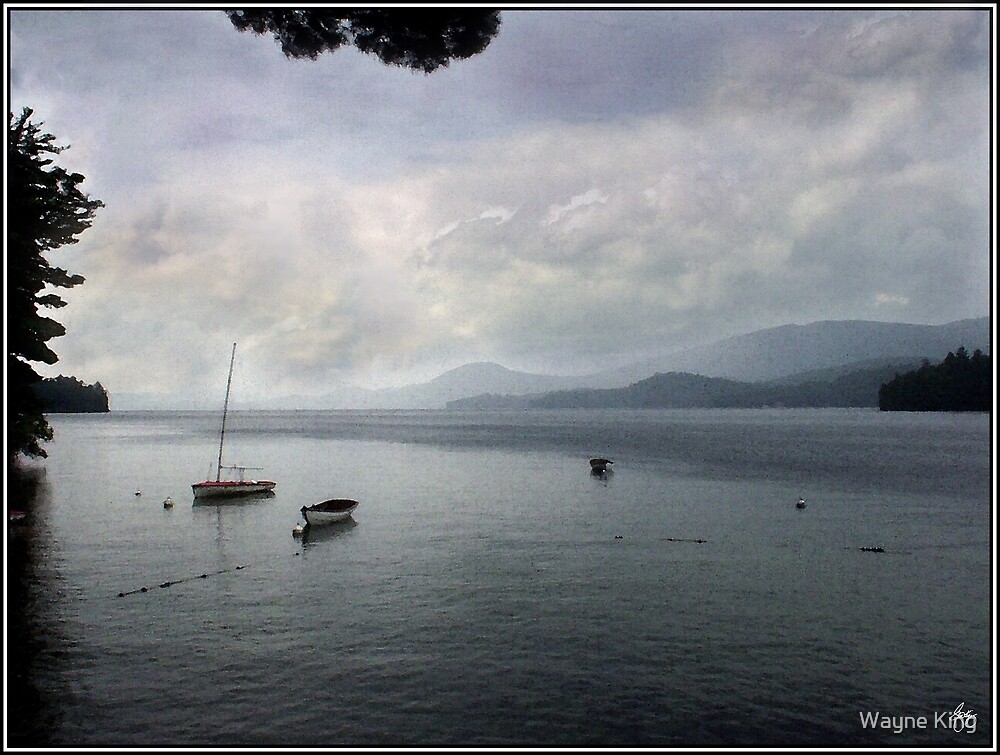
Rowboat at Wellington Beach


Painted Sky Over Newfound Lake

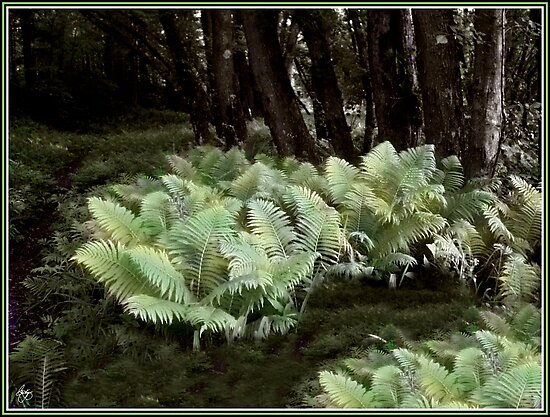
Ostrich Ferns Langdon Woods

The Rose and the Headdress


https://www.standingtrees.org/post/take-action-submit-a-comment-to-protect-lake-tarleton

https://blog.nhstateparks.org/lake-tarleton-state-park/


Wayne King is an author, podcaster, artist, activist and recovering politician. A three-term State Senator, he was the 1994 Democratic nominee for Governor and most recently the CEO of MOP Environmental Solutions Inc., a public company in the environmental cleanup space. His art (WayneDKing.com) is exhibited nationally in galleries and he has published four books of his images, most recently, "New Hampshire - a Love Story”. His novel "Sacred Trust" a vicarious, high voltage adventure to stop a private powerline as well as the photographic books are available at most local bookstores or on Amazon. He lives in Thornton, between Rattlesnake Ridge and the Waterville Range. He proudly flies both the American and Iroquois Flags. His website is: http://bit.ly/WayneDKing